Delhi Govt. Mandates 100 GSM Green Nets at Construction Sites
Delhi has introduced a new 100 GSM standard for green nets at construction sites to improve dust control, strengthen anti-pollution measures, and reduce harmful particulate pollution across the city.


- Delhi Govt. Mandates 100 GSM Green Nets at Construction Sites
- Move aims to reduce dust pollution from construction and demolition activities
- Authorities warn of strict action against sites violating the new norm
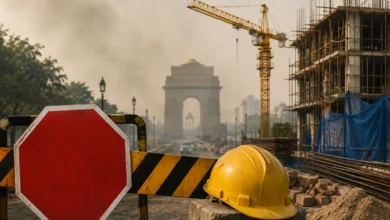
New Delhi: To control rising air pollution levels in Delhi, the Delhi Pollution Control Committee (DPCC) has made it compulsory for all construction and demolition (C&D) sites in the capital to use green nets with a minimum thickness of 100 GSM (grams per square metre). The decision comes after authorities found that many low-quality dust barriers currently being used were too thin to effectively prevent dust from spreading into surrounding areas.
The new rule is part of Delhi’s broader effort to tackle dust pollution, which remains one of the biggest contributors to poor air quality in the city, especially during peak summer and winter seasons.
According to officials, the DPCC recently reviewed the quality of green nets being installed at several construction sites and discovered that many were not capable of properly containing dust particles. While developers were technically following anti-dust guidelines by putting up green covers, the thin material often failed to stop fine dust from escaping.
Delhi Environment Minister Manjinder Singh Sirsa said the new standard has been introduced to ensure that pollution control measures are practical and effective rather than merely symbolic.
The government believes that setting a minimum quality benchmark will improve dust suppression at construction sites and reduce the amount of particulate matter entering the city’s atmosphere.
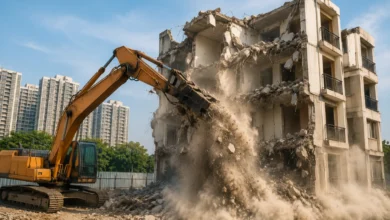
Dust generated from roads, soil, and construction activities contributes heavily to Delhi’s worsening air quality. Experts have repeatedly pointed out that construction dust is not a minor issue but a major environmental challenge for the city.
A joint study conducted by The Energy and Resources Institute and Automotive Research Association of India highlighted the scale of the problem.
The study found that:
- During winter, dust contributes nearly 25% of PM10 pollution and 17% of PM2.5 pollution
- In summer, the contribution rises sharply to around 42% of PM10 and 38% of PM2.5 pollution
This means a significant portion of Delhi’s harmful air pollution comes directly from dust generated by construction and related activities.
Green nets were already mandatory under Delhi’s existing 14-point anti-dust regulations for construction sites. However, there was previously no fixed technical standard specifying the quality or thickness of the nets.
The absence of a minimum specification allowed some sites to install cheaper and ineffective barriers simply to meet compliance requirements on paper.
Under the latest order, all construction and demolition sites must immediately switch to green nets with at least 100 GSM thickness. Authorities have also warned that strict action may be taken against violators.
The directive has been issued to several key government bodies and agencies, including:
- Municipal Corporation of Delhi
- New Delhi Municipal Council
- Delhi Development Authority
- Delhi Metro Rail Corporation
- Central Public Works Department
- Public Works Department
Officials have stated that implementation must begin immediately across all active construction zones.
Alongside the new net quality standards, the Delhi government is also working on Dust Portal 2.0, a centralised digital platform designed to improve monitoring of construction and demolition activities across the capital.
Authorities said construction site registration on the dust portal has already been made mandatory. The upgraded platform is expected to help regulators track compliance more efficiently and identify violations faster.
With stricter rules and tighter monitoring, the Delhi government hopes the latest measures will help reduce pollution levels and improve air quality for residents in the coming months.
Also Read: Stans Arize Sells 111 Homes in Just One Week After Mumbai Launch
Also Read: Structural Safety Concerns Rise at Great Value Sharanam Noida