West Asia War Pushes Up Construction Costs Across India
The Housing Ministry has urged RERA authorities to grant developers a four-month extension, citing rising construction costs and supply disruptions caused by the ongoing conflict in West Asia.

- Centre recommends 4-month extension for eligible real estate projects.
- Rising oil, freight and material costs have increased project expenses.
- Advisory aims to reduce delays and support timely project completion.
The Union Ministry of Housing and Urban Affairs has advised Real Estate Regulatory Authorities (RERAs) across the country to consider granting eligible real estate projects an additional four months for completion. The advisory, issued on Friday, comes as developers continue to face rising construction costs triggered by the ongoing conflict in West Asia.
The recommendation has been made under the force majeure provisions of the Real Estate (Regulation and Development) Act (RERA), acknowledging that global geopolitical tensions have disrupted supply chains and increased the cost of building materials, making timely project completion more challenging.
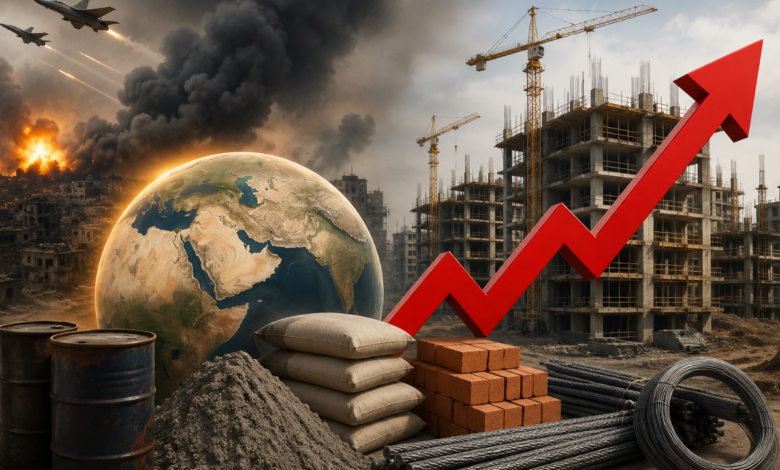
Although India imports very little cement or steel directly from the conflict-affected region, the war has increased construction costs through indirect economic factors. Three major drivers have affected developers across the country:
- Higher crude oil prices: Fuel is essential for manufacturing and transporting construction materials such as cement and steel. Rising crude prices have increased production and logistics costs.
- Expensive global shipping: Security concerns in the Red Sea and the Strait of Hormuz have forced many cargo vessels to take longer routes, raising freight charges and insurance costs for imported construction equipment and premium materials.
- A weaker rupee: As India imports most of its crude oil in US dollars, higher oil prices have put pressure on the rupee, making imported construction products more expensive.
Industry bodies have already reported significant increases in construction expenses. Developers in Andhra Pradesh said cement prices rose from around ₹240 to ₹300 per bag, while steel prices climbed from approximately ₹50,000 to ₹70,000 per tonne after the conflict began. In Gujarat, developers reported that several construction materials—including aluminium, tiles, PVC pipes, paints and waterproofing products—became 30% to 60% costlier than before the conflict.
The advisory is based on Section 6 of the Real Estate (Regulation and Development) Act, 2016, which allows project registration extensions when delays are caused by force majeure events such as war. Section 7(3) also allows regulators to keep project registrations active if doing so protects the interests of homebuyers.
Welcoming the move, NAREDCO President Parveen Jain said the ministry has recognised the impact of geopolitical tensions on the real estate sector.
He stated that rising construction material costs and supply disruptions have resulted in unavoidable project delays, and that recognising these circumstances under RERA’s force majeure provisions is a balanced and necessary decision for the industry.
The advisory is expected to provide relief to developers handling large housing projects across India. According to property consultancy Anarock Research, more than 5.4 lakh housing units are scheduled for completion during 2026 across the country’s seven largest residential markets.
Experts believe that while labour availability and on-site construction remain largely unaffected, sustained increases in material and transportation costs could delay project timelines and strain developers’ finances. The extension may help builders complete projects without facing immediate regulatory action while also reducing uncertainty for homebuyers.
The Housing Ministry’s advisory is not an automatic extension. Individual State RERAs will now decide whether to grant the additional four months to eligible projects based on the force majeure provisions under the RERA Act.
Industry stakeholders will closely watch how different states implement the recommendation, especially if geopolitical tensions in West Asia continue to keep oil prices, freight costs and imported material prices elevated.
Also Read: Mumbai Luxury Real Estate Records ₹18,512 Crore Sales in H1 2026
Also Read: Prestige Estates Q1 Profit Falls 19%, Announces Thane Project