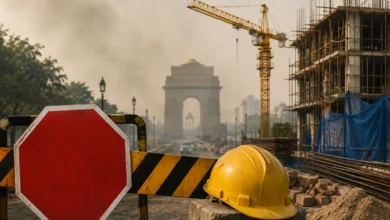
Home Construction Rules Near Highways in India Explained
Authorities have issued strict guidelines for residential construction near highways in India, warning that illegal structures built too close to roads may face penalties, demolition, and legal action.


- Construction within 40 meters of highways is illegal in many cases
- NOC from NHAI and local approvals are mandatory for nearby projects
- Violations can lead to demolition, fines, and legal complications
People planning to build homes near highways in India are being advised to carefully follow government regulations, as violations can lead to demolition notices, legal disputes, and major financial losses. Authorities say maintaining a safe distance from highways is necessary not only for legal compliance but also for public safety and future infrastructure expansion.
According to the Building Control Rules of 1964, residential construction near highways must follow specific setback norms. These rules determine how far a building should be from the centerline of a highway to prevent encroachment and avoid future complications during road widening or infrastructure development projects.
Minimum Distance Rules for Highway Construction
The rules specify different setback distances depending on the location of the property:
- In rural areas, construction must be at least 75 feet (approximately 22.86 meters) away from the highway centerline.
- In urban and industrial areas, the required distance is 60 feet (around 18.29 meters) from the centerline.
Authorities have also clarified that any construction carried out within 40 meters of a highway’s centerline may be treated as illegal and can face demolition action from the concerned departments.
Experts say these rules are becoming increasingly important as India rapidly expands its highway network under major infrastructure projects across the country.
Also Read: Delhi Govt. Mandates 100 GSM Green Nets at Construction Sites
NOC and Approvals Are Mandatory
Government agencies have made it clear that even if construction is planned between 40 and 75 meters from the highway centerline, homeowners and developers cannot proceed without obtaining prior approvals.
One of the most important requirements is a No Objection Certificate (NOC) from the National Highways Authority of India (NHAI). Along with this, approvals from local municipal bodies, gram panchayats, or development authorities are also required before construction begins.
Officials say the approval process helps ensure that the proposed structure does not obstruct future highway expansion plans, create traffic hazards, or violate environmental norms.
Documents Usually Required for Permission
Applicants are generally required to submit several important documents, including:
- Land ownership or title certificate
- Approved building plan from authorized architects
- Environmental clearance, where applicable
- Written permission from local civic authorities
Without these approvals, the structure may later be declared unauthorized, even if construction has already been completed.
Why Building Too Close to Highways Can Be Risky?
Apart from legal issues, experts warn that living very close to highways can expose residents to serious health and safety concerns.
Continuous vehicle movement often leads to high levels of air pollution, dust accumulation, and noise pollution, which can negatively affect daily life. Children, elderly residents, and individuals with respiratory conditions are considered especially vulnerable.
There is also a higher risk of accidents in homes located too close to busy highways. In many cases, future highway expansion projects may also affect nearby residential structures.
A senior NHAI official noted that maintaining proper distance from highways is not just a regulatory requirement but also a crucial public safety measure.
Also Read: NHAI Sets Four Guinness World Records on Bengaluru–Vijayawada Highway Corridor
Consequences of Violating Highway Construction Rules
Authorities have warned that individuals ignoring these rules may face strict action. Some of the major consequences include:
- Property being declared unauthorized
- Demolition without compensation
- Heavy fines and legal notices
- Loss of compensation eligibility during land acquisition for road widening projects
Legal experts say many homeowners unknowingly invest in properties near highways without verifying approval status, which later creates disputes during resale, registration, or redevelopment.
What Homebuyers and Builders Should Do?
Before purchasing land or starting construction near any national or state highway, experts advise consulting the NHAI and local development authorities. Proper verification of land records, zoning permissions, and setback norms can help avoid future financial and legal troubles.
As India continues to modernize its road infrastructure, compliance with highway construction regulations is becoming increasingly important for both individual homeowners and real estate developers.