10 Heat-Resistant Exterior Paint Colour Combinations for Indian Homes
Explore 10 practical exterior paint colour combinations that can help reflect sunlight, reduce heat absorption and protect home façades from harsh Indian weather.

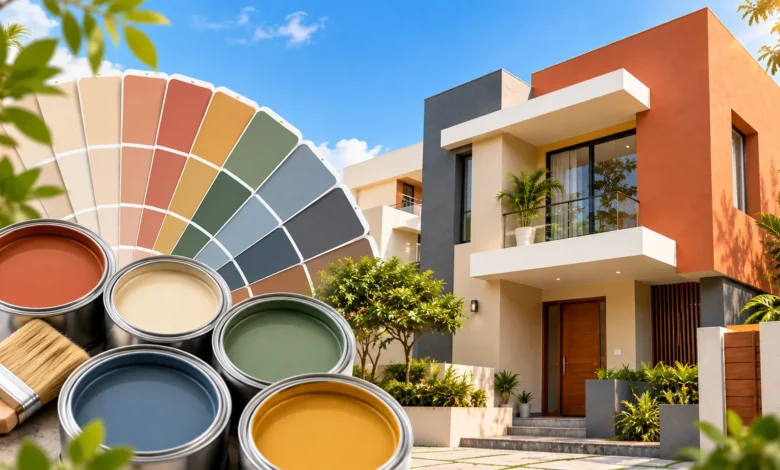
- Lighter exterior shades can reflect more solar heat than very dark colours.
- UV-resistant pigments and suitable exterior coatings can help reduce fading and surface deterioration.
- Ten practical colour combinations are covered, from sandstone and charcoal to driftwood grey and white.
Choosing an exterior paint colour is not only about how a house looks from the street. In regions that experience intense summer sunshine, the colour and type of coating used on outside walls can also influence how the surface responds to heat and ultraviolet (UV) exposure.
Dark shades can absorb more solar radiation, while lighter colours generally reflect a greater share of sunlight. The coating technology, pigment quality, surface preparation and local weather conditions also affect how long an exterior finish retains its colour and protects the wall.
For homeowners planning a repaint, a combination of practical performance and appearance can therefore be useful. Here are 10 exterior colour combinations that can work well for homes exposed to strong Indian summers.
1. Warm Sandstone and Deep Charcoal
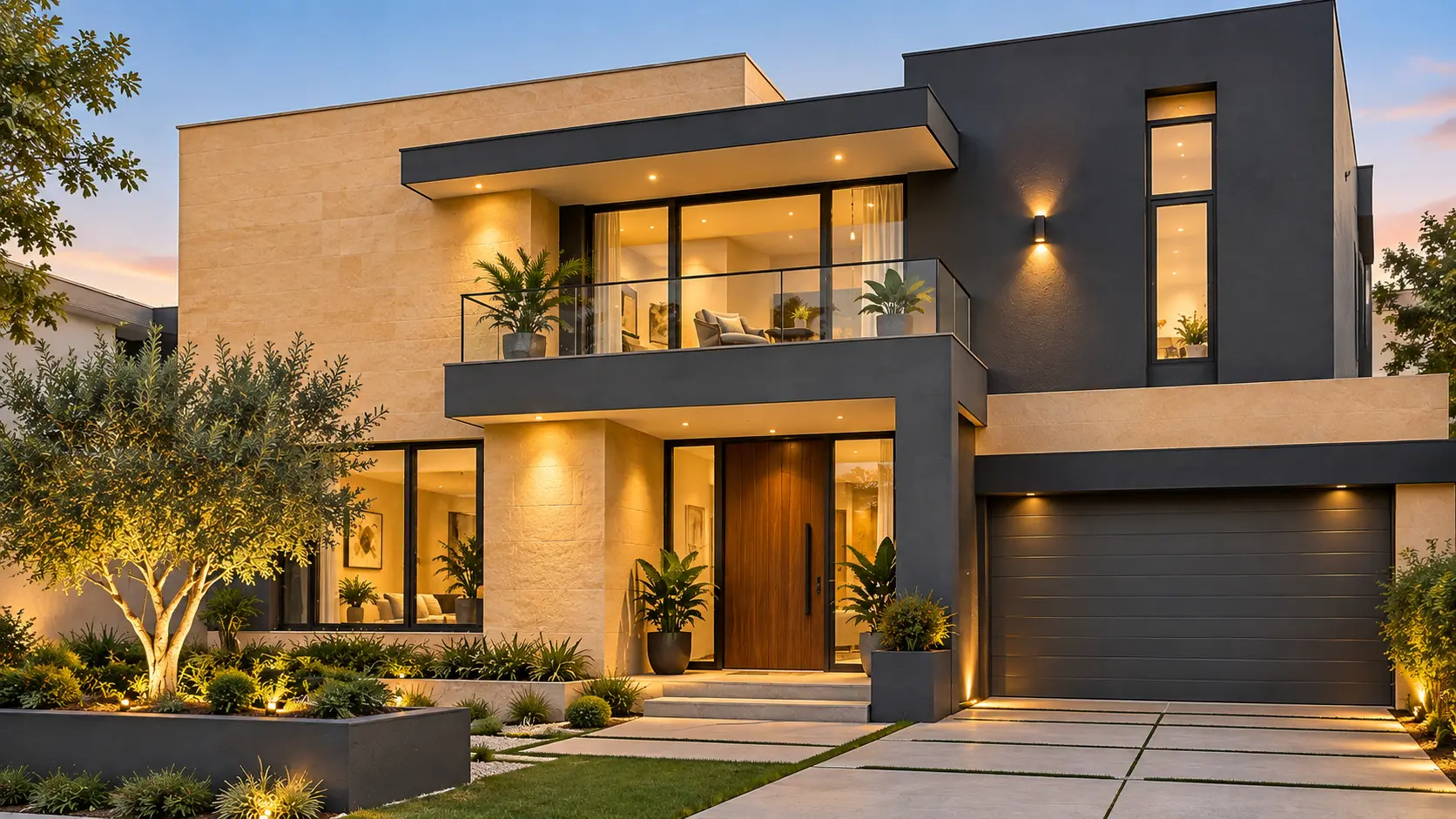
A warm sandstone or sandy beige shade creates a relatively light base for the exterior, while deep charcoal can be used selectively around columns, parapets, window borders or other architectural details.
The lighter main shade can help reduce the visual impact of heat absorption, while the darker charcoal provides contrast without covering the entire façade. For better durability, homeowners should choose an exterior-grade coating with good UV and weather resistance rather than selecting a colour on appearance alone.
2. Terracotta and Off-White
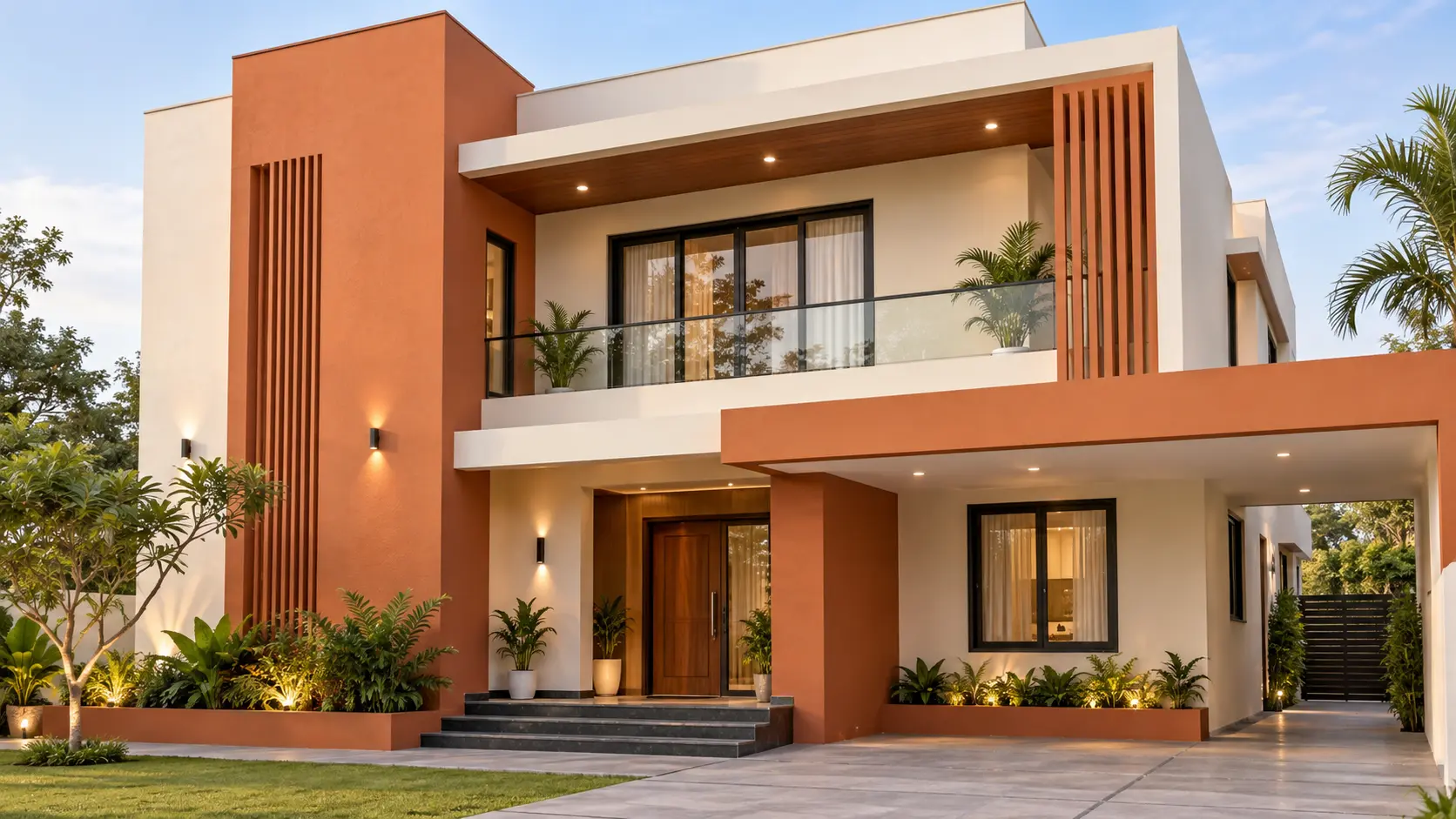
Terracotta brings an earthy, traditional character to an exterior and pairs naturally with off-white trims. The combination works particularly well around window frames, balconies and architectural projections.
When selecting the products, look for exterior formulations designed for strong sunlight and weather exposure. A good-quality off-white coating can provide a bright contrast, while the terracotta shade adds warmth without relying on very dark tones across the whole façade.
3. Pale Ivory and Muted Olive Green
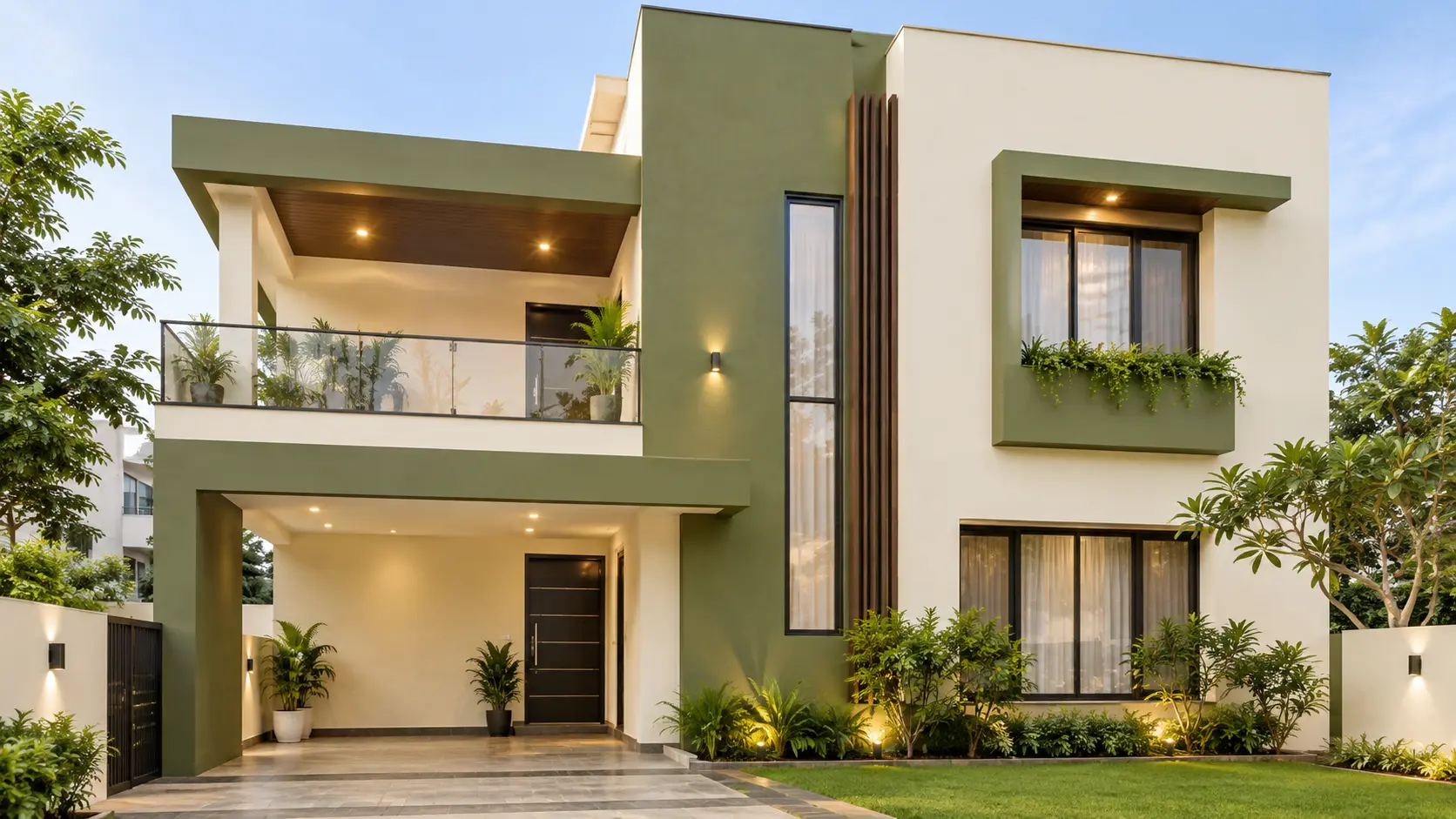
Pale ivory walls combined with muted olive green doors, gates or boundary accents create a softer, understated exterior. The ivory base keeps most of the façade visually light, while olive green adds depth in smaller areas.
This combination can suit independent houses as well as larger residences where homeowners want a natural colour palette. Light-fast exterior pigments and a suitable protective coating are important if the façade receives direct sunlight for much of the day.
4. Soft Ash Grey and Crisp White
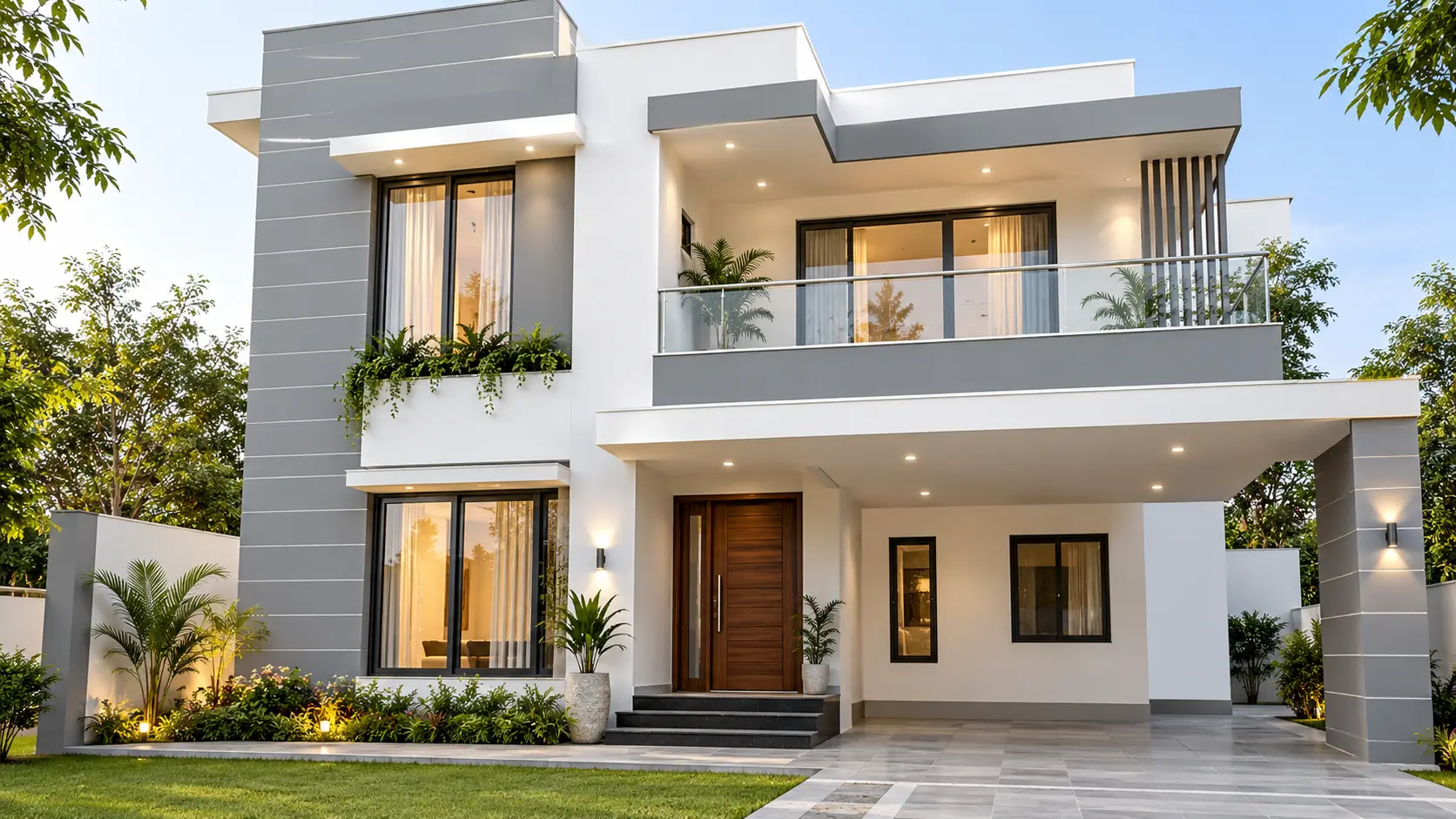
Ash grey has become a popular choice for contemporary façades because it offers a modern appearance without the intensity of very dark grey. Pairing it with crisp white trims creates a clean architectural look.
For homes in hot climates, homeowners can explore exterior paints formulated with reflective or cool-wall pigment technology. Such products are designed to reduce solar heat absorption at the surface, although actual performance depends on the specific product, application and building design.
5. Mustard Yellow and Slate Blue
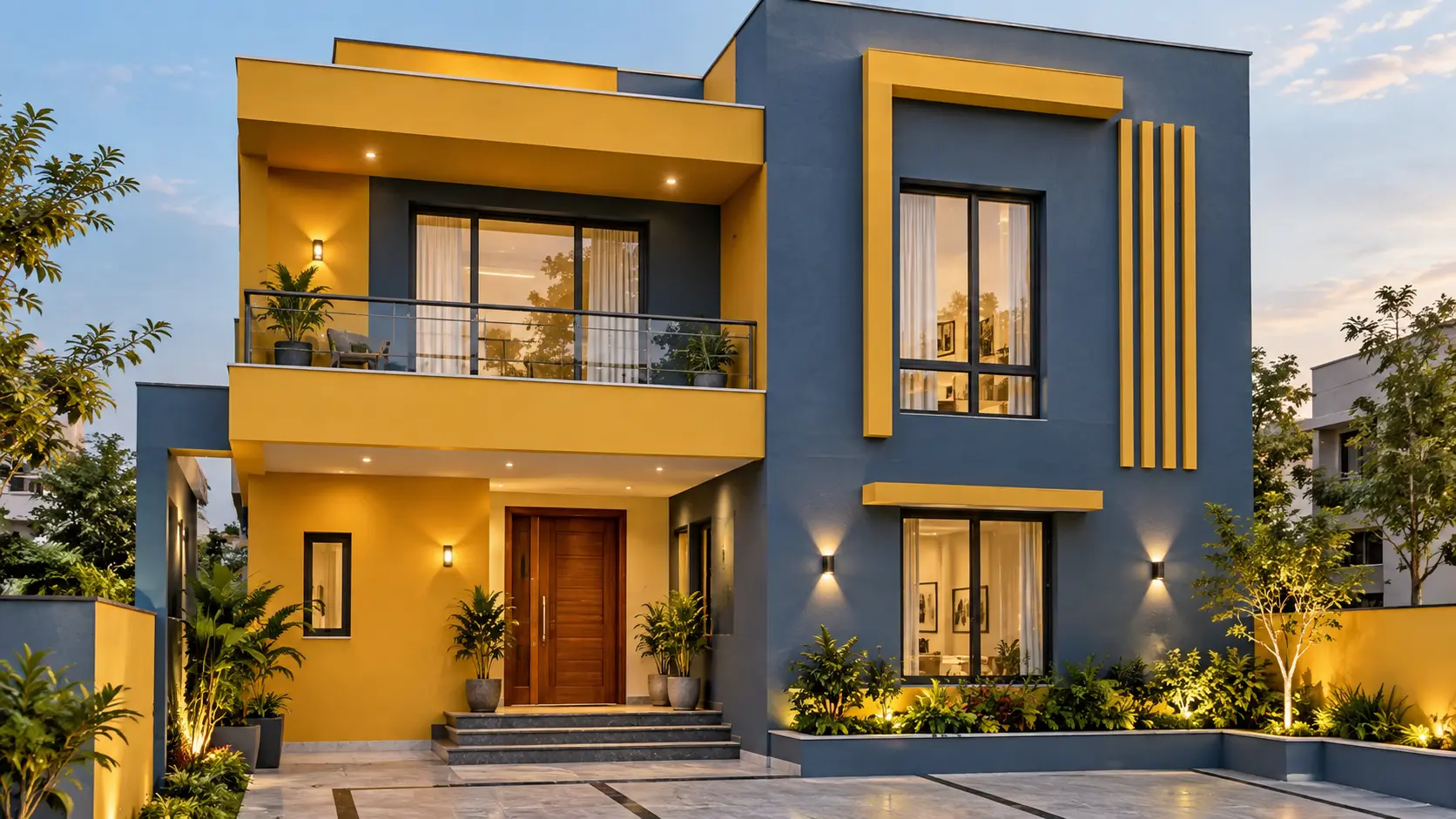
Mustard yellow provides a warm and distinctive exterior, while slate blue can be introduced on pillars, balcony features, doors or other accent areas. Keeping the darker blue limited to selected details prevents the façade from becoming visually heavy.
Exterior acrylic or acrylic-silicone coatings can be considered where strong weather resistance is required. As with any colour, the final durability depends on pigment quality, coating formulation, surface preparation and exposure conditions.
6. Warm Oatmeal and Coffee Brown
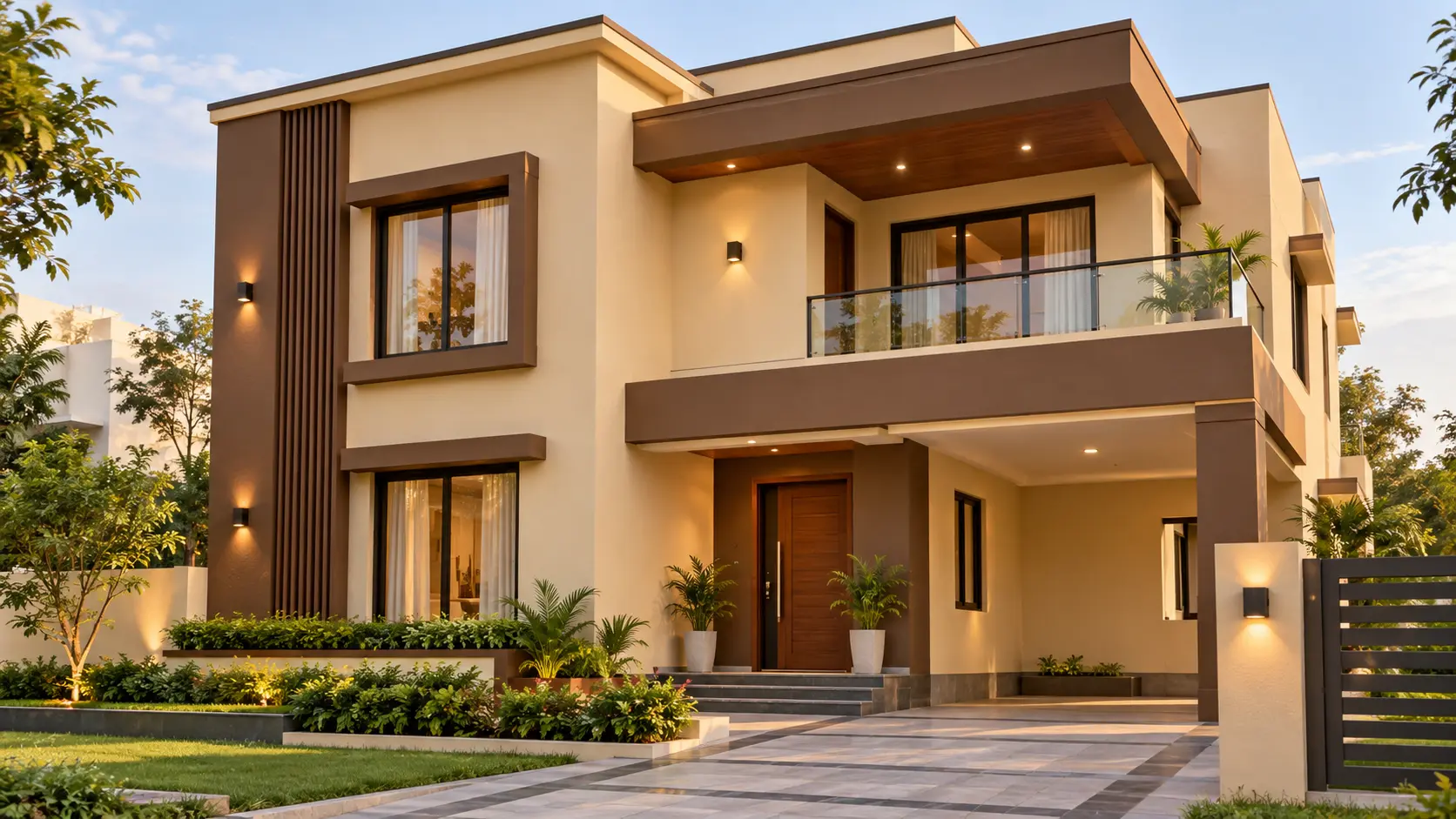
Warm oatmeal offers a light, neutral base, while coffee brown works well on the lower portion of the exterior, boundary walls or plinth areas. The darker lower section can also be practical because it is less likely to show everyday dust and splash marks.
The lighter upper façade helps maintain a brighter appearance and can be a sensible choice for houses exposed to strong sunlight. A weather-resistant exterior coating can further improve the longevity of the finish.
7. Chalky Lime White and Terracotta Accents
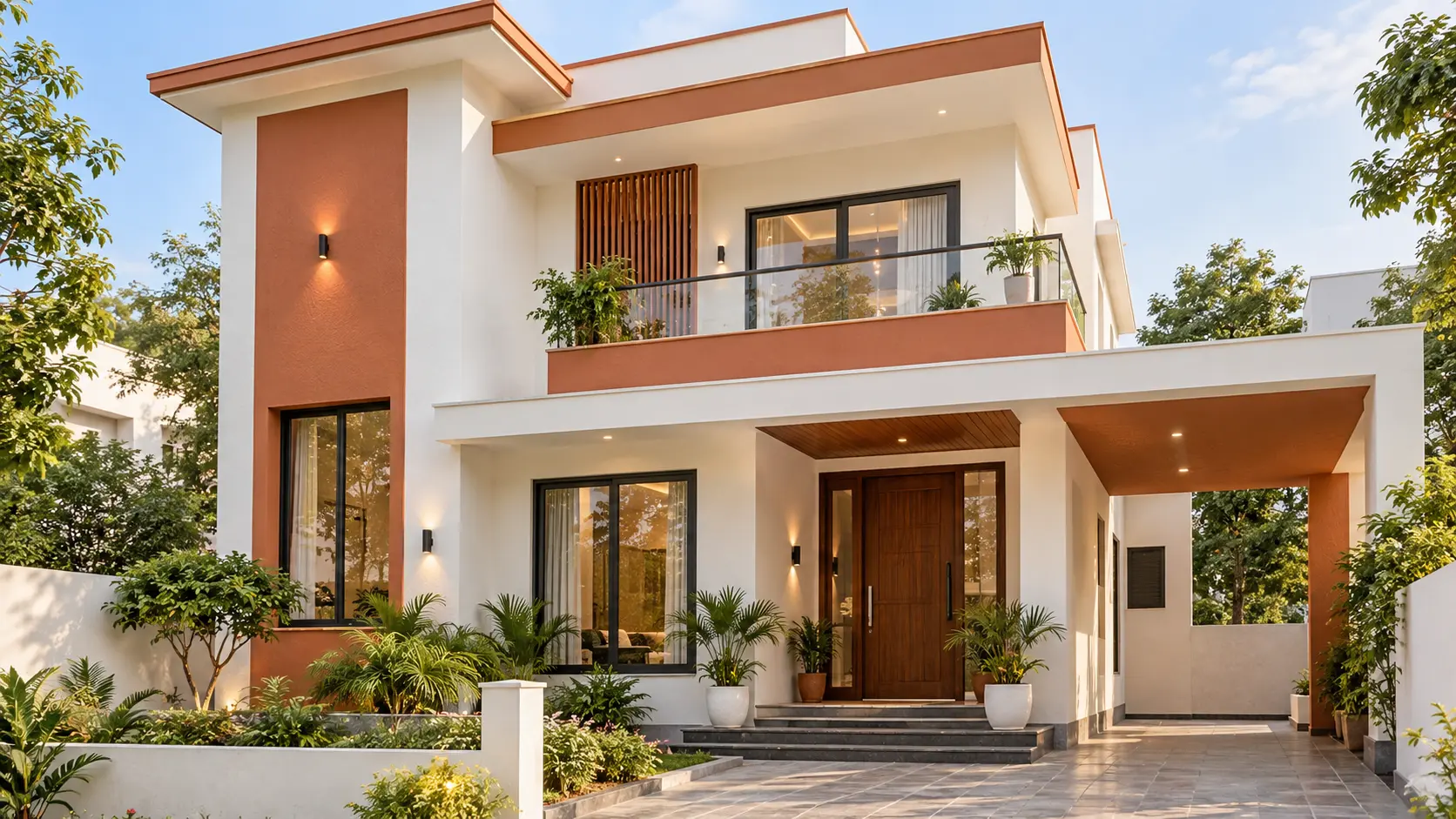
A predominantly white façade can create a bright and airy appearance, particularly when combined with terracotta around windows, doors or other architectural elements.
White and other very light shades generally reflect more sunlight than darker colours. However, homeowners should not assume that colour alone will prevent cracking or other wall problems. Proper waterproofing, surface preparation, primer selection and a compatible exterior coating remain essential for long-term protection.
8. Muted Sage Green and Limestone Beige
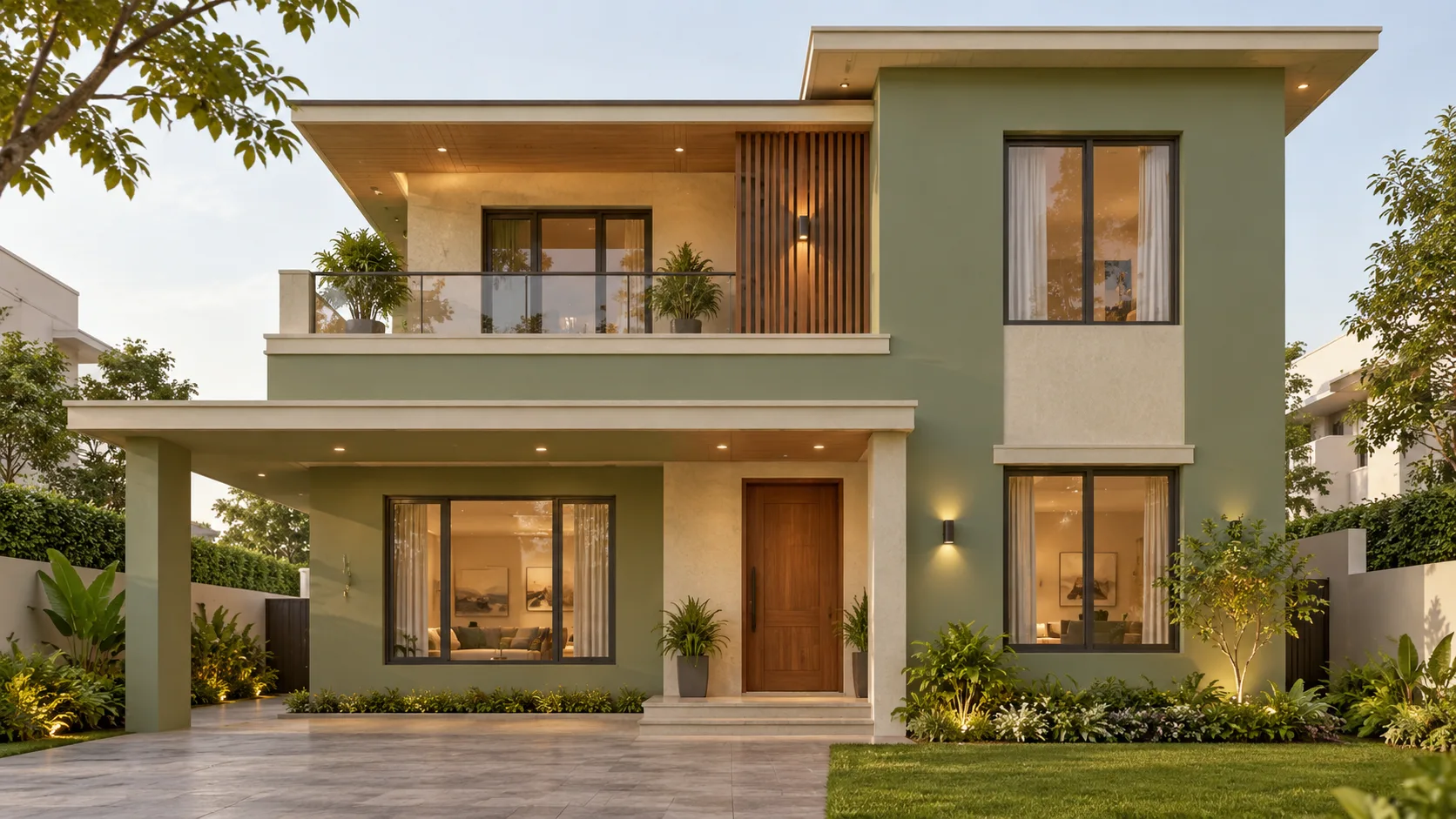
Muted sage green paired with limestone beige creates a natural palette that works well with gardens, balconies and stone-textured architectural elements. Beige can be used as the primary wall shade, with sage green reserved for selected sections.
When buying exterior paint, check the product’s technical information for UV resistance, weather durability and recommended application conditions. Light-stable pigments can help the colour retain its appearance when exposed to strong sunlight.
9. Golden Wheat and Deep Bronze
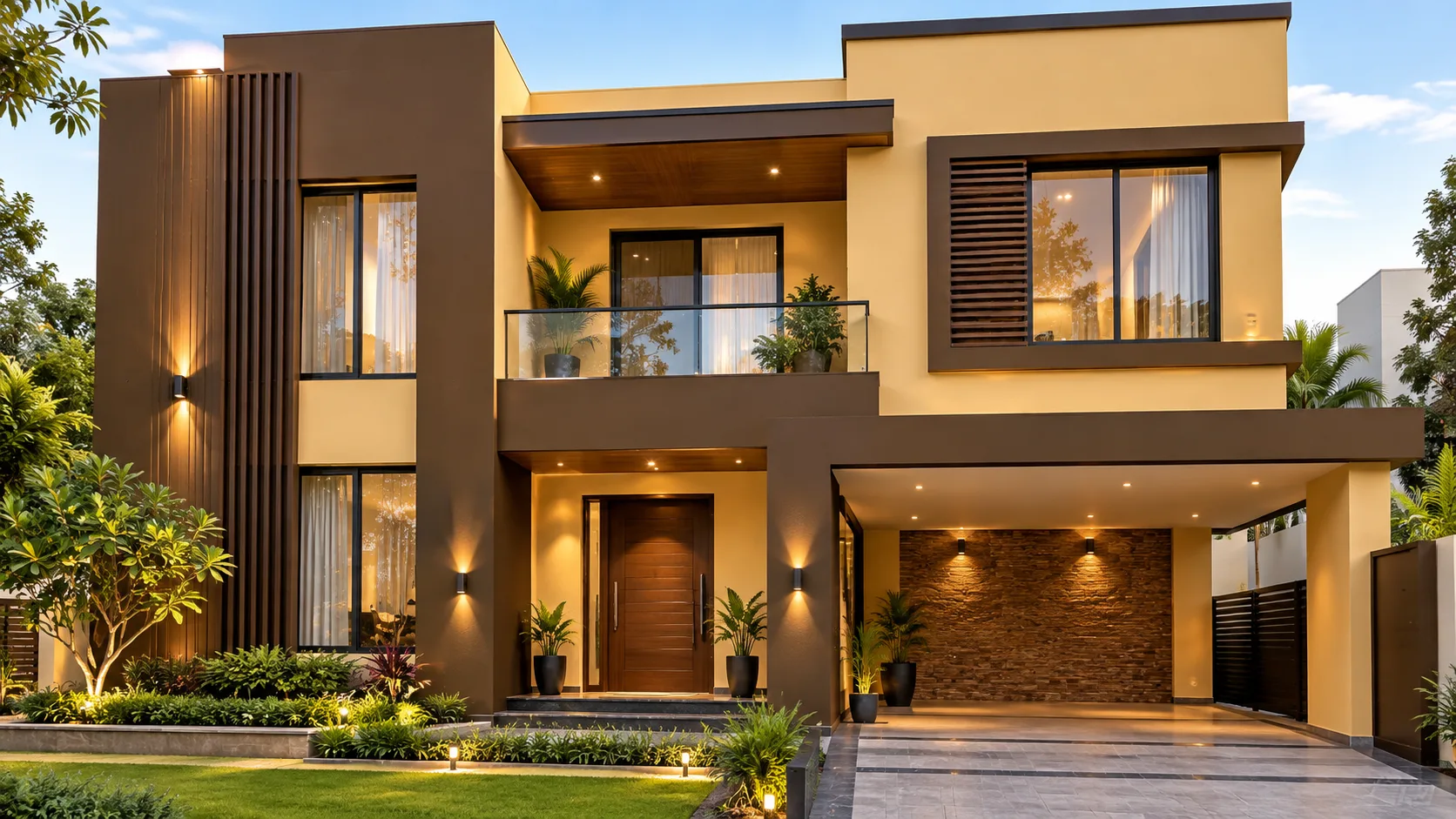
Golden wheat offers a warm appearance without making the entire façade excessively dark. Deep bronze can then be used for railings, doors, grills and other smaller features.
This pairing can give a traditional home a richer appearance while keeping the main wall colour comparatively light. For metal elements, use a coating specifically suited to the substrate and outdoor exposure rather than applying standard interior paint.
10. Coastal Driftwood Grey and Crisp White
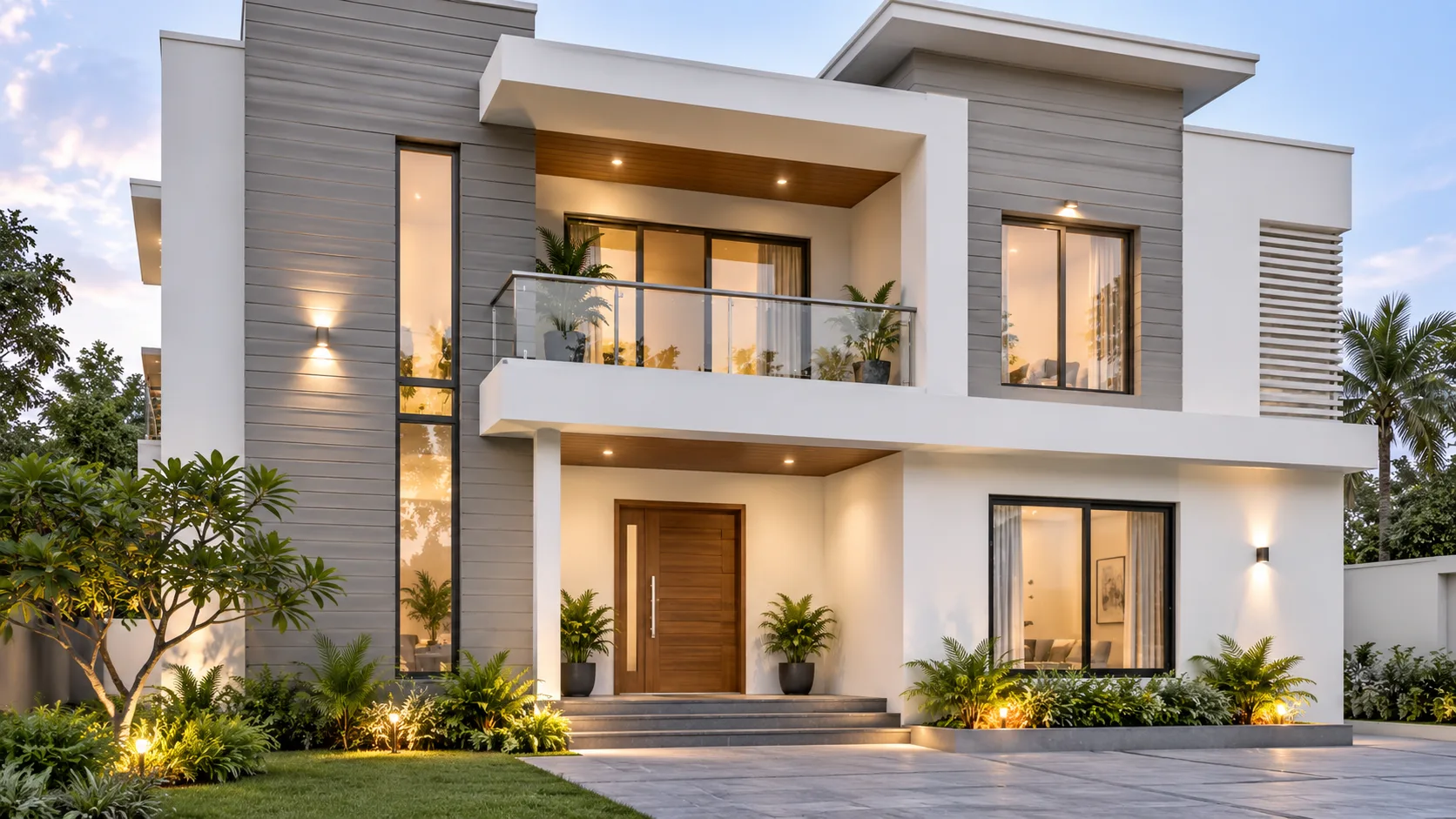
Driftwood grey and crisp white create a contemporary combination that works especially well on modern homes. Grey panels can be highlighted with white balcony borders, window frames or parapet details.
Some exterior coatings use infrared-reflective or other heat-management pigment technologies to reduce solar heat absorption. If reducing heat gain is a priority, compare the manufacturer’s technical specifications instead of relying only on the shade name.
Also Read: Vastu Tips for Study Room: Best Direction & Table Placement
What to Check Before Choosing Exterior Paint?
The colour combination is only one part of an exterior painting project. Before making a final selection, homeowners should consider the following factors:
- Sun exposure: Walls receiving direct afternoon sunlight may need coatings with stronger UV and weather resistance.
- Surface condition: Cracks, dampness, loose paint and damaged plaster should be repaired before repainting.
- Primer and preparation: Correct preparation improves adhesion and helps the topcoat perform as intended.
- Paint technology: Check whether the product is designed for exterior use and review its stated weather, UV and heat-reflective properties.
- Local climate: Heat, humidity, dust and monsoon rainfall can all affect exterior paint performance.
- Maintenance: Very light shades may show dirt more easily, while darker accents can be useful in high-contact or splash-prone areas.
Can Exterior Paint Colours Help Reduce Heat?
Colour can influence how much solar radiation a surface absorbs, but it is not a substitute for good building design or insulation. Light-coloured surfaces generally reflect more sunlight than dark surfaces, while specially formulated cool coatings can be designed to improve solar reflectance or reduce heat absorption.
The result inside a home depends on several factors, including wall construction, insulation, roof treatment, window area, ventilation and the direction in which the façade faces. Homeowners should therefore treat paint as one component of a broader approach to summer heat management.
Wrap Up
For homes exposed to intense Indian summers, exterior paint selection can combine aesthetics with practical considerations such as UV exposure, heat absorption and maintenance. Sandstone with charcoal, terracotta with off-white, ivory with olive green, ash grey with white and driftwood grey with white are among the combinations that can create a balanced exterior.
Before purchasing paint, compare the technical specifications of the shortlisted products and make sure the walls are properly repaired and prepared. The right colour can improve the appearance of a home, but long-lasting exterior protection depends equally on the coating system and quality of application.
Also Read: 6 Smart Ways to Reduce AC Electricity Bills During Hot Weather