Vastu Tips for Study Room: Best Direction & Table Placement
Learn the best Vastu tips for a study room, including ideal directions, study table placement, colours, lighting, bookshelf position and practical solutions for small or existing spaces.

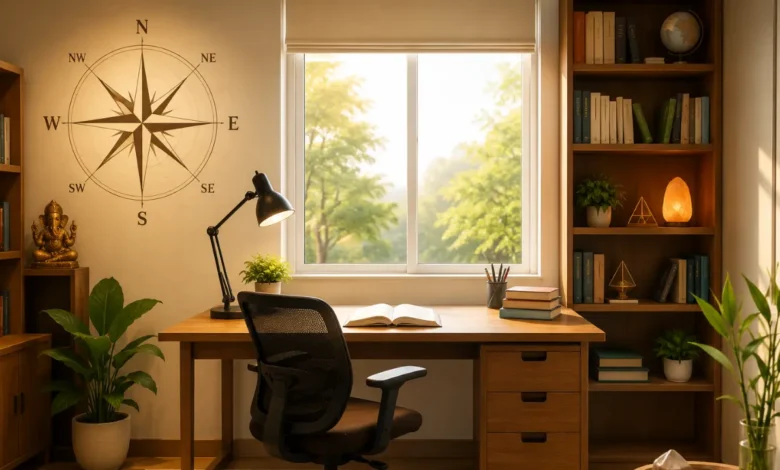
A well-planned study room can create a calm and focused environment for learning. According to Vastu Shastra, the direction of the room, placement of the study table, colours, lighting and overall arrangement can influence the energy and atmosphere of a study space.
If you are planning a new study room or want to improve an existing one, these Vastu tips for study room can help you decide where to place the table, which direction to face while studying, where to keep bookshelves and what arrangements to avoid.
Which Direction Is Best for a Study Room as per Vastu?
According to traditional Vastu principles, East, North and Northeast are generally considered favourable directions for a study room.
| Direction | Traditional Vastu View | Suitable For |
|---|---|---|
| Northeast | Highly preferred | Study rooms, meditation and focused learning |
| East | Favourable | Students and regular study |
| North | Favourable | Learning and professional work |
| West | Generally acceptable | Alternative when other directions aren’t possible |
| South/Southwest | Often avoided for study rooms | Better considered only when layout constraints exist |
Different Vastu traditions can have slightly different recommendations. Therefore, the overall layout and placement of furniture should also be considered rather than choosing a direction in isolation.
Which Direction Should You Face While Studying?
Facing East or North while studying is commonly recommended in Vastu Shastra.
East is traditionally associated with knowledge, learning and the rising sun, while North is associated with growth and opportunities.
If your room allows it, position the study table so that you can comfortably sit facing East or North.
However, don’t sacrifice basic comfort just to achieve a particular direction. Your eyes should also have sufficient light, the screen should not produce glare and the chair should allow you to maintain a comfortable posture.
Where Should the Study Table Be Placed?
The study table is one of the most important elements of a study room.
According to Vastu principles:
- Place the study table in a position where you can sit facing East or North.
- Keep sufficient space around the table.
- Avoid placing the table directly under a heavy beam.
- Avoid a position where the door is directly behind you, if possible.
- A solid wall behind the chair is traditionally considered preferable to an open space.
- Keep the area in front of the table relatively open.
- Avoid excessive clutter on the tabletop.
A practical tip is to position the table where natural light can enter without creating glare on your book, laptop or monitor.
Should the Study Table Touch the Wall?
A study table can be placed near a wall, but according to some Vastu practices, keeping a little space between the table and wall is preferred rather than pushing it tightly against the wall.
More importantly, the arrangement should allow comfortable movement and adequate ventilation.
If your room is small, don’t force a large gap simply to follow a Vastu recommendation. Good space utilisation is more important for a functional study area.
Best Shape for a Study Table as per Vastu
Simple rectangular or square study tables are commonly preferred in Vastu-based interiors.
A rectangular wooden table with rounded or reasonably smooth edges can also work well in a modern study room.
Avoid filling the room with excessively bulky furniture. A study table should provide enough space for books, stationery and a laptop without making the room feel crowded.
Where Should the Bookshelf Be Placed?
Bookshelves should be positioned so that they don’t make the study area feel heavy or cramped.
Traditional Vastu guidance commonly recommends placing bookshelves toward the West, Southwest or South, depending on the overall room layout.
Avoid stacking too many books directly above the student’s head or creating a visually heavy arrangement over the study table.
Keep frequently used books organised and accessible.
A practical rule:
Bookshelf = organised storage, not clutter storage.
An overloaded shelf can make even a well-designed study room feel distracting.
Best Colour for a Study Room as per Vastu
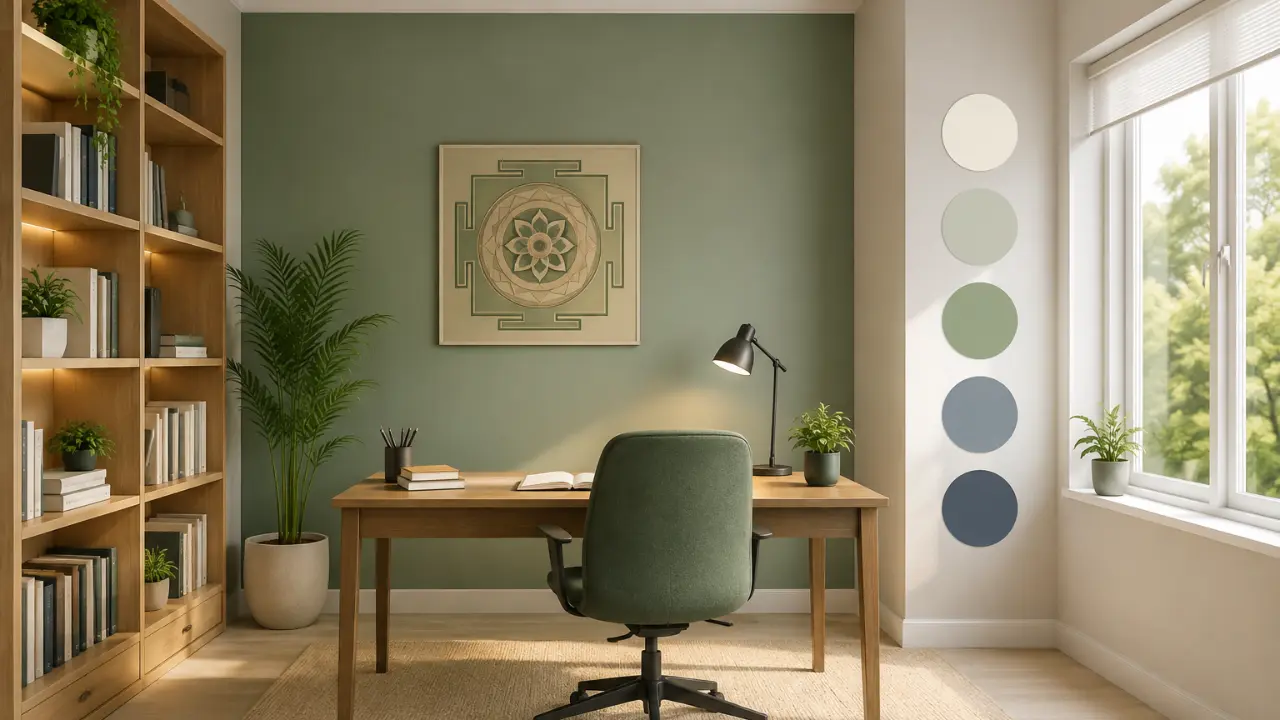
Light and soothing colours are generally preferred for study rooms.
Common Vastu-friendly colour choices include:
- Light green
- Light blue
- Cream
- White
- Beige
- Light yellow
These shades can make a room feel brighter and calmer.
Very dark or overly intense colours may make a small study room feel visually heavy. If you like stronger colours, consider using them as accents rather than covering the entire room.
Is Green a Good Colour for a Study Room?
Yes. Light green is commonly recommended for study spaces in Vastu-based interior design.
Green is traditionally associated with growth, freshness and learning.
Instead of using a very bright green across the entire room, consider a softer shade for the walls and add darker green through plants, cushions or small decorative elements.
Is Blue Good for a Study Room?
Light blue can be a suitable choice for a study room.
It can create a calm visual environment and works particularly well in rooms that receive sufficient natural light.
Avoid making the entire room extremely dark with deep shades if the space already has limited sunlight.
Study Room Lighting as per Vastu
Good lighting is essential for a productive study room.
Natural light is generally preferred, so allow daylight into the room whenever possible.
For artificial lighting:
- Use sufficient task lighting.
- Avoid harsh glare.
- Keep the study surface evenly illuminated.
- Position a desk lamp so your hand does not cast a shadow over your books.
- Avoid studying in a dimly lit room.
- Use warmer or neutral lighting according to your comfort.
A well-lit study room is useful regardless of whether you follow Vastu because poor lighting can cause eye strain and make reading uncomfortable.
Should a Study Room Have Windows?
Yes. Good ventilation and natural light can make a study room more comfortable.
Windows can help:
- Bring in daylight
- Improve ventilation
- Reduce the feeling of confinement
- Make a small room appear more spacious
According to traditional Vastu, windows are often preferred toward favourable directions such as East or North, although the actual placement depends on the building’s design.
Do not block the window with a large bookshelf or cabinet if doing so significantly reduces daylight.
What Should Be Behind the Study Chair?
According to traditional Vastu guidance, a solid wall behind the study chair is generally preferred.
The idea is to provide a sense of stability and support.
Practically, this arrangement can also reduce distractions because people are less likely to move behind you while you’re studying.
If your table has to face a different direction because of the room layout, don’t worry. Prioritise comfort, lighting and concentration.
Can You Study Facing a Window?
You can, but it isn’t always the most practical arrangement.
A window directly in front of your study table can provide excellent natural light, but it may also become a source of distraction.
You may find yourself looking outside instead of studying.
There can also be screen glare if you use a laptop.
If the window is directly in front of the desk, use curtains or blinds when necessary and position your screen to minimise glare.
Study Room Vastu for Children
For children’s study rooms, parents should focus on creating a space that is:
- Quiet
- Well-lit
- Comfortable
- Organised
- Free from unnecessary distractions
According to Vastu, East and North-facing study positions are commonly preferred.
Keep the study table free from unnecessary toys, gaming equipment and excessive decorative objects.
Children should also have enough space to move around comfortably.
Vastu Tips for Study Room for Students Preparing for Competitive Exams
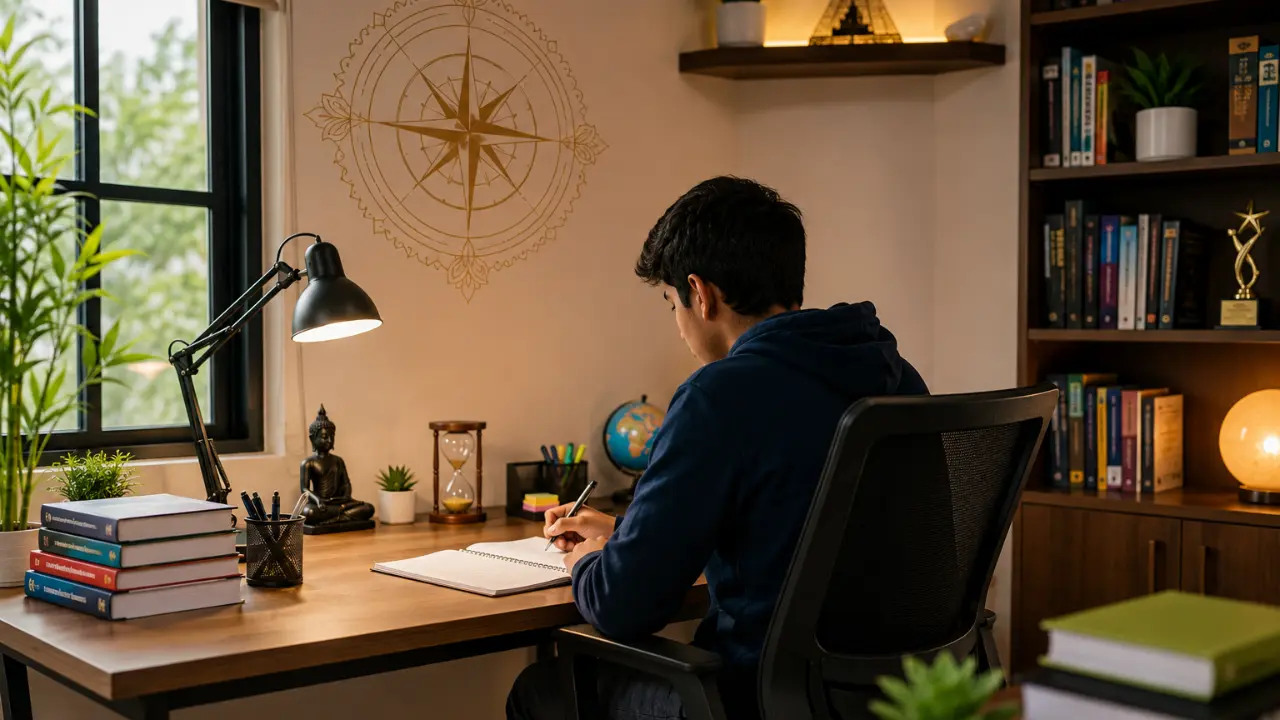
Students preparing for competitive exams often spend several hours at their desks.
In addition to traditional Vastu recommendations, create a setup that supports long study sessions.
Consider these tips:
- Position the table so you can comfortably face East or North.
- Keep the desk organised.
- Use a comfortable ergonomic chair.
- Ensure adequate lighting.
- Keep your phone away when studying.
- Maintain good ventilation.
- Avoid excessive decorative objects.
- Keep frequently used books within easy reach.
- Create separate spaces for books, stationery and electronics.
- Take regular breaks during long study sessions.
The last few points aren’t Vastu rules, but they can make the room substantially more functional.
Also Read: Top 5 Vastu Plants for Home & Their Benefits
Vastu Tips for a Small Study Room
You don’t need a large room to create a Vastu-friendly study space.
If you have a small bedroom or apartment, try these ideas:
- Use a compact rectangular desk.
- Keep the desk facing East or North where practical.
- Use wall-mounted storage instead of bulky cabinets.
- Keep the floor free of unnecessary objects.
- Maximise natural light.
- Use light wall colours.
- Avoid placing too many decorative items around the desk.
- Keep cables organised.
- Use multifunctional furniture.
What if you don’t have a separate study room?
A dedicated study room isn’t essential.
You can create a study corner in a bedroom, living room or other quiet area.
Choose a relatively peaceful corner, position the table appropriately and keep the area visually separate from entertainment spaces.
Vastu for a Study Corner
If your home doesn’t have a dedicated study room, choose a corner where you can study without frequent interruptions.
Ideally:
- Face East or North while studying.
- Keep a solid wall behind you where practical.
- Avoid placing the desk in a high-traffic area.
- Keep the area well lit.
- Avoid sitting directly beside a television.
- Keep the study surface clutter-free.
A small, dedicated study corner is often more useful than an entire room that is filled with distractions.
Study Room Vastu for a Rented House
You don’t need to make structural changes to follow basic Vastu principles in a rented home.
If you cannot change the room’s location, focus on things you can control:
- Study-table direction
- Chair placement
- Lighting
- Clutter
- Wall colour through removable solutions
- Storage
- Desk organisation
- Ventilation
If the room itself isn’t in your preferred direction, don’t panic. Adjust the study table and your sitting direction where possible.
What If Your Study Room Is in the Wrong Direction?
This is one of the most common concerns.
If your existing study room doesn’t fall in the traditionally preferred direction, you don’t necessarily need to renovate the house.
First look at the furniture arrangement.
Can you:
- Change the direction of the desk?
- Face East or North?
- Move the desk away from a beam?
- Improve natural lighting?
- Reduce clutter?
- Improve ventilation?
- Create a quieter study environment?
These changes may be considerably easier than changing the room itself.
Traditional Vastu practitioners may recommend additional remedies for specific layouts, but remedies vary depending on the exact floor plan.
Modern Study Room Vastu: Laptop, Computer and Phone Placement
Today’s study rooms are very different from traditional study spaces.
Students often use:
- Laptops
- Desktop computers
- Tablets
- Smartphones
- Headphones
- Chargers
- Wi-Fi devices
Keep electronics organised rather than allowing wires and devices to dominate the desk.
For laptop and monitor users, make sure:
- The screen is at a comfortable height.
- There is no strong glare.
- The keyboard and mouse are positioned comfortably.
- Charging cables don’t create a hazard.
- The phone is kept away during focused study sessions.
Traditional Vastu texts naturally don’t address modern devices, so practical ergonomics should be considered alongside Vastu preferences.
Things to Avoid in a Study Room as per Vastu
If you’re following Vastu principles, commonly recommended things to avoid include:
- Sitting directly under a beam
- Keeping the desk extremely cluttered
- Placing the study table where the door is directly behind you
- Excessive dark colours
- Broken furniture
- Unnecessary objects around the desk
- Heavy storage directly over the study position
- Poor ventilation
- Insufficient lighting
- Excessive distractions
- Turning the study area into an entertainment zone
Study Room Vastu Dos and Don’ts
| Do | Don’t |
|---|---|
| Face East or North where practical | Sit in a distracting location |
| Keep the desk organised | Allow clutter to accumulate |
| Use adequate lighting | Study in a poorly lit room |
| Maintain ventilation | Block windows unnecessarily |
| Keep books organised | Overload the study table |
| Use comfortable furniture | Ignore posture and ergonomics |
| Reduce distractions | Keep the TV or gaming setup nearby |
| Keep the room clean | Store unnecessary items around the desk |
Vastu Tips for Better Focus in the Study Room
Vastu can guide the arrangement of the space, but concentration also depends heavily on your study environment and habits.
For a more effective setup:
Keep the desk dedicated to studying.
Remove unnecessary notifications from your phone.
Use sufficient lighting.
Maintain a comfortable temperature.
Keep frequently used study materials within reach.
Avoid studying directly beside noisy entertainment areas.
Take regular breaks during long sessions.
A Vastu-friendly room should ultimately be a room where you can sit comfortably and focus.
Also Read: Brahmasthan Explained: Why Your Home’s Center Matters
Frequently Asked Questions
Q1. Which direction is best for a study room according to Vastu?
East, North and Northeast are commonly considered favourable directions for a study room in traditional Vastu Shastra.
Q2. Which direction is best to face while studying?
Facing East or North is commonly recommended according to Vastu principles.
Q3. Which colour is best for a study room?
Light green, light blue, cream, beige, white and light yellow are commonly used for Vastu-friendly study rooms.
Q4. Can a study table face West?
West can be considered an alternative when East or North isn’t practical. Vastu recommendations can vary between traditions.
Q5. Can I place my study table near a window?
Yes. A window can provide useful natural light and ventilation. However, make sure it doesn’t create excessive distraction or screen glare.
Q6. Where should bookshelves be placed in a study room?
Traditional Vastu guidance commonly suggests West, South or Southwest areas for bookshelves, depending on the overall layout.
Q7. Is a separate study room necessary?
No. A dedicated study corner can work well if it is quiet, organised, well-lit and free from unnecessary distractions.
Q8. What should I do if my study room is in the Southwest?
If changing the room isn’t possible, focus on the placement of the study table and your sitting direction. Where practical, arrange the desk so that you can face East or North.
Q9. Is Vastu scientifically proven to improve academic performance?
Vastu Shastra is a traditional architectural and spatial belief system, and there is no established scientific evidence that following Vastu directly improves academic performance. A comfortable, well-lit, quiet and organised study environment can nevertheless support effective studying.
Wrap Up
The most commonly recommended Vastu tips for a study room include choosing a favourable direction, facing East or North while studying, keeping the study table properly positioned, using light colours, maintaining good lighting and ventilation, and keeping the room organised.
However, you don’t need to completely redesign your home if your existing room doesn’t perfectly match traditional Vastu recommendations.
Start with the things you can control: study-table placement, sitting direction, lighting, storage, cleanliness, noise and distractions.
The best study room is ultimately one that combines the preferences of your household with a comfortable and practical environment for learning.