Asian Paints Berger Advances Coating Systems to Strengthen Gulf Buildings
Asian Paints Berger is developing advanced coating and concrete-protection solutions designed to improve durability, energy efficiency, fire safety and long-term building performance across Gulf developments.

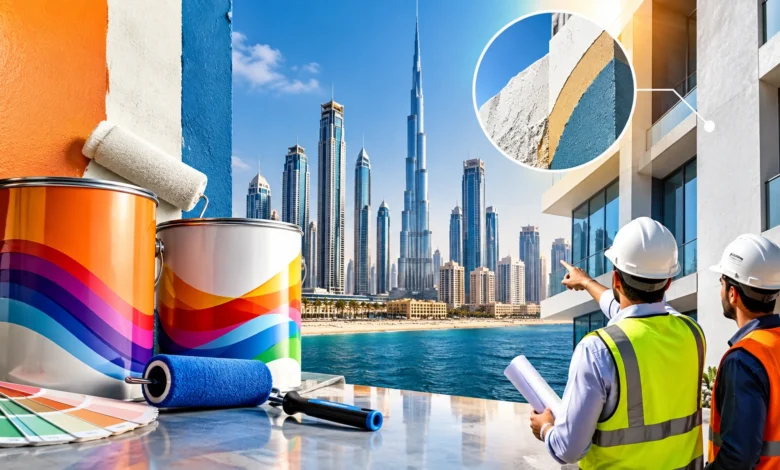
- Advanced coatings are being designed for extreme Gulf heat, humidity, UV exposure and salinity.
- SmartCare CureAssure can reduce the need for conventional water-intensive concrete curing.
- Passive fire protection and anti-corrosion systems aim to improve structural safety and extend asset life.
Asian Paints Berger is placing greater emphasis on advanced coating systems for Gulf buildings, as developers increasingly look beyond aesthetics and focus on durability, energy efficiency, safety and long-term asset performance. The company outlined its approach during a recent Q&A with A. K. Paranthaman, Business Head – UAE at Asian Paints Berger, highlighting how engineered surface-protection technologies can help buildings cope with the region’s demanding climate.
The discussion focused on developments across the Gulf region, where buildings face intense ultraviolet exposure, high humidity, coastal salinity and extreme surface temperatures. Paranthaman explained that modern coatings are increasingly being treated as an engineered component of a building rather than simply its final decorative layer. This shift matters because developers are now assessing materials based on their contribution to operating costs, sustainability, maintenance requirements and the overall lifespan of an asset.
According to Paranthaman, future-ready communities need to remain safe, efficient and functional long after construction and handover. That requires materials capable of responding to changing environmental conditions, higher temperatures, energy costs and increasingly demanding sustainability standards.
Advanced coating systems can provide protection against issues such as concrete carbonation, steel corrosion and UV-related degradation. Some systems can also reflect solar heat, potentially helping reduce the cooling demand of buildings in a region where air conditioning represents a significant operational requirement.
This approach changes the role of coatings from a cosmetic finishing material to part of a building’s overall protection strategy.
One of the technologies highlighted in the discussion was SmartCare CureAssure, an internal curing additive developed for concrete applications.
Traditional concrete curing in hot and dry climates can require continuous external water application for several days. In water-stressed regions such as the Gulf, reducing this requirement can have environmental and operational significance.
CureAssure is designed to retain moisture within the concrete mix, supporting more controlled hydration. According to Asian Paints Berger, the technology can help reduce shrinkage cracking while supporting compressive strength, durability and integral waterproofing.
The company says the technology has the potential to save up to eight billion litres of water in the UAE alone, if adopted at scale.
Environmental considerations are also influencing the way developers and contractors select coating products.
Paranthaman noted that specifications are increasingly considering factors such as volatile organic compound (VOC) levels, embodied environmental impact, energy performance and compatibility with green-building certification systems.
Asian Paints Berger says its portfolio includes low-VOC interior products, formulations designed without heavy metals, lead and formaldehyde, as well as exterior systems designed to reflect heat.
Durability is another part of the sustainability equation. Longer-lasting coatings can reduce the frequency of repainting and the associated consumption of materials, labour and resources.
The broader shift is therefore from coatings being merely compliant with environmental requirements to products that can actively contribute to a building’s sustainability objectives.
Building safety is another area where advanced coatings can play a functional role.
Structural steel can lose significant strength when exposed to high temperatures during a fire. Intumescent coatings are designed to address this risk by expanding when exposed to fire and forming an insulating layer around the protected steel.
The resulting char layer slows the transfer of heat to the steel, potentially providing additional time for evacuation and firefighting operations. Because the system remains in place and does not require electricity or manual activation, it forms part of a building’s passive fire-protection strategy.
Asian Paints Berger also highlighted anti-carbonation and anti-corrosion systems, which are intended to protect concrete and embedded reinforcement from long-term deterioration. Such protection can be particularly relevant in Gulf environments exposed to humidity, salt and carbon dioxide.
Looking ahead, Paranthaman expects the construction industry to place greater emphasis on lifecycle value rather than focusing primarily on upfront material costs.
Over longer periods, developers are likely to examine how building materials affect durability, maintenance expenses, energy consumption, occupant health and eventual end-of-life considerations.
This could also encourage the development of multifunctional coating technologies using more sustainable raw materials, climate-specific formulations and potentially bio-based components. Digital technologies may further influence how coating systems are specified, applied and monitored throughout a building’s lifecycle.
For Gulf markets, where large-scale developments are being constructed in challenging climatic conditions, the emphasis on long-term resilience could make surface protection an increasingly important part of building design.
Asian Paints Berger’s approach indicates that the future of coatings could extend well beyond colour and appearance. The company is continuing to focus on research and product development around durability, sustainability, structural protection and extreme-climate performance.
As Gulf developers increasingly evaluate buildings over 15- to 20-year periods rather than only at handover, coating systems could become a more strategic component of construction specifications. The focus is gradually moving toward materials that can help buildings remain safer, more efficient and easier to maintain throughout their operational life.