
SC Allows Conveyance Deeds for Parsvnath Homebuyers
The Supreme Court has allowed verified Parsvnath homebuyers to execute conveyance deeds for completed projects while easing certain financial restrictions to address essential company expenses.

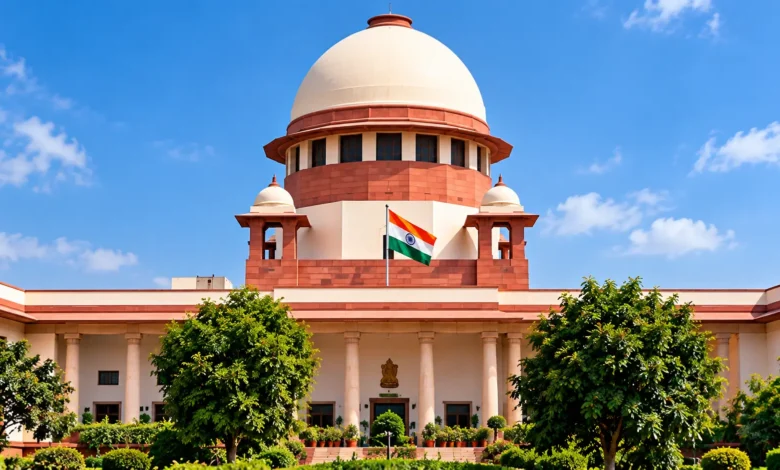
- Verified allottees of completed Parsvnath projects can now execute conveyance deeds.
- The court partially relaxed the bank account freeze to facilitate electricity payments and employees’ outstanding dues.
- Lending institutions must provide funds to the Resolution Professional for essential expenses.
The Supreme Court on November 5, 2026, permitted eligible homebuyers of Parsvnath Developers to execute conveyance deeds for residential properties in completed projects. The decision provides relief to existing allottees who have been waiting for legal ownership documents amid the developer’s financial difficulties and ongoing insolvency proceedings.
The court also partially modified its earlier order freezing the company’s bank accounts to ensure that essential operational expenses could be paid.
The directions were issued by a bench comprising Chief Justice of India Surya Kant and Justice Joymalya Bagchi. Along with allowing conveyance deeds, the court permitted limited financial transactions to meet electricity expenses and clear employees’ outstanding dues. The lending financial institutions associated with Parsvnath Developers have been directed to make adequate funds available to the Resolution Professional (RP) for these payments.
The Supreme Court has clarified that the permission to execute conveyance deeds will apply only after the Resolution Professional verifies the relevant property allotments.
The court has also imposed a restriction against creating third-party rights in these properties through the permission granted. This condition is intended to ensure that the relief benefits genuine existing allottees and does not lead to unauthorised property transactions.
The order follows submissions made by senior advocate Shyam Divan, who urged the court to allow the Resolution Professional to take practical steps towards addressing homebuyers’ grievances.
The bench’s latest directions are part of broader proceedings concerning the difficulties faced by Parsvnath homebuyers, including those who have been awaiting possession for several years.
During the proceedings, the bench expressed concerns about the imbalance between financial creditors and homebuyers in the Committee of Creditors (CoC). It observed that the commercial interests of lending institutions could potentially overshadow the legitimate concerns of individual property buyers.
The court also indicated that the conventional corporate insolvency resolution framework may not adequately address the different circumstances of individual real estate projects.
While certain Parsvnath developments are reportedly 70% to 90% complete, others continue to face significant construction and infrastructure-related issues. Some projects have allegedly remained abandoned or have seen little development.
The court is examining how individual projects and their homebuyers can receive appropriate protection rather than treating the developer’s entire portfolio as a single insolvency matter.
The latest relief follows the Supreme Court’s July 13, 2026, order, in which the bench criticised Parsvnath Developers for what it described as a disregard for homebuyers’ rights and non-compliance with orders passed by the Haryana Real Estate Regulatory Authority (HRERA).
At that time, the court ordered the freezing of bank accounts belonging to Parsvnath Developers Ltd, Parsvnath Hessa Developers Pvt Ltd and their directors. It also issued bailable warrants against the company’s leadership.
The proceedings initially arose from a petition filed by Rita Tikku, a cancer survivor, and her husband, Lokaish Tikku. The couple had invested their life savings in Parsvnath Exotica, a residential project in Sector 53, Gurugram.
According to their petition, they were allotted residential units in 2006 and entered into a Builder-Buyer Agreement in early 2007. The total consideration was approximately ₹1.78 crore. Although the contractual possession timeline was 36 months, the couple allegedly did not receive their homes despite making the full payment.
The homebuyers subsequently approached HRERA, which passed orders directing the developer to provide compensation. The Supreme Court noted that these orders had attained finality as the developer had not challenged them. However, the company allegedly failed to comply with the directions.
Following intervention by the Supreme Court, the petitioners eventually received their homes. The proceedings were subsequently expanded to address grievances raised by other Parsvnath homebuyers.
The November 5 order offers an important legal step for existing allottees of completed Parsvnath projects. Execution of conveyance deeds can help eligible buyers move towards securing formal ownership documentation, subject to verification and applicable legal requirements.
The partial relaxation of the bank account freeze also addresses immediate operational concerns. Electricity payments and employee dues are essential for maintaining the functioning of projects and the developer’s operations during insolvency proceedings.
However, the relief does not automatically resolve the problems faced by buyers in incomplete or abandoned developments. Their possession and compensation issues will continue to require appropriate resolution through the ongoing legal and insolvency processes.
The Resolution Professional will need to verify the allotment records of eligible homebuyers before facilitating the execution of conveyance deeds. The lending institutions must also make sufficient funds available for the essential payments permitted by the Supreme Court.
Meanwhile, the court is continuing to examine the broader concerns surrounding Parsvnath’s stalled developments, including the position of homebuyers, project completion and the role of financial creditors in insolvency proceedings.
The November 5 directions represent a step towards providing legal ownership relief to buyers in completed projects. The outcome of the ongoing proceedings will be important for thousands of other homebuyers awaiting possession, compensation or resolution of their property-related claims.
Also Read: UP RERA Approves 17 Real Estate Projects Worth ₹4,844 Crore
Also Read: Jaypee Wish Town Residents’ Complaints Reach Noida Authority After Nearly Two-Week Protest



One Comment