
Noida turns 50 today: From Industrial Township to NCR’s Real Estate Powerhouse
As Noida completes 50 years, the city has transformed from a modest industrial township into a major economic and real estate hub, driven by planning, infrastructure, and sustained investor confidence.

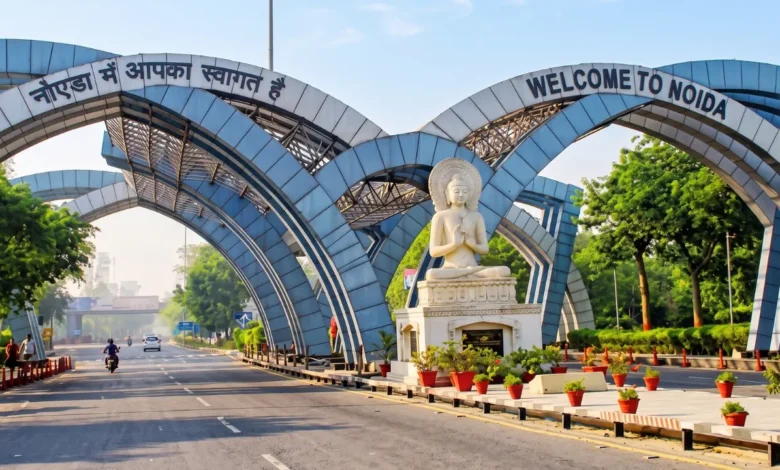
- Noida now contributes nearly 10% to Uttar Pradesh’s GSDP
- Property prices have more than doubled in the last five years
- Jewar Airport and Expressway corridors driving next growth phase
Noida: Fifty years after its foundation, Noida has emerged as one of India’s most structured and fast-evolving urban centres. What began in 1976 as an industrial township under the Uttar Pradesh Industrial Area Development Act has now become a key driver of economic growth in North India.
Originally conceptualised during the Emergency period under the vision of Sanjay Gandhi, Noida’s role was limited to reduce the burden on Delhi and create space for industries. However, over the decades, the city has significantly outgrown that brief.
Today, Noida is not just an extension of Delhi. It stands as a self-sustained ecosystem, attracting global corporations, investors, and homebuyers alike.
A Planned Beginning That Built Long-Term Trust
In its early years, Noida was largely dominated by farmland and scattered villages. Industrial development came gradually, but what set the city apart was its disciplined planning. Wide roads, clearly defined sectors, and zoning for industrial, residential, and commercial use laid a strong foundation.
This structured approach created long-term confidence among investors. Manufacturing giants were among the first to bet on the region, followed by major global corporations in the technology sector. Over time, this led to job creation, migration of skilled professionals, and a steady rise in housing demand.
Unlike many rapidly growing cities, Noida’s growth was not chaotic, it was consistent. This consistency became its biggest strength.
From Villages to Commercial Hubs
One of the most visible transformations in Noida has been its changing geography. Areas that were once villages have evolved into thriving business and residential zones.
Regions like Chhalera and Sorkha have transformed into IT and commercial hubs, while Sarfabad has become a key retail and business district near Sector 18 and Sector 62. This large-scale land-use conversion reflects how urban planning has reshaped the city’s identity.
Strong Economic Indicators
Noida’s economic rise is backed by impressive numbers. The city currently has over 43 million sq ft of office space, including a significant share of Grade A developments. It is home to more than 10,000 industrial units and contributes nearly 10% to Uttar Pradesh’s Gross State Domestic Product (GSDP).
The city’s per capita income, estimated at over ₹8 lakh annually, is significantly higher than the national average. This highlights the concentration of high-value jobs and the presence of global businesses.
In fact, Noida’s economic output has surpassed that of several major cities and even some smaller states, underlining its importance as a regional economic engine.
Real Estate: The Biggest Growth Story
If there is one sector that clearly reflects Noida’s transformation, it is real estate. Property values in the city have witnessed a sharp rise over the years.
Between 2020 and 2025, average housing prices increased by nearly 92%, crossing ₹10,000 per sq ft in many areas by 2026. In some prime locations, land rates have surged from ₹500–₹1,000 per square yard decades ago to premium levels today.
This growth has been driven by multiple factors, including improved infrastructure, low interest rates in recent years, and strong demand from both end-users and investors.
Commercial real estate has also gained traction, offering rental yields between 6% and 9%, which has attracted institutional investors into the market.
Office Market Gains Momentum
For years, Noida was considered secondary to Gurugram in the NCR corporate landscape. That perception is now changing.
The Noida Expressway has emerged as a major business corridor, with sectors like 132, 135, and 142 housing multinational companies and Global Capability Centres (GCCs). Leasing activity has increased steadily, with the Expressway accounting for a significant share of NCR office demand.
Improved infrastructure, better planning, and competitive costs are prompting companies to consider Noida as a preferred destination.
Infrastructure Driving the Next Phase
Infrastructure has played a central role in Noida’s growth story. Metro connectivity, expressways, and policy support have consistently unlocked new areas for development.
Looking ahead, the biggest catalyst is expected to be the Noida International Airport. The project has already triggered a surge in property prices along the Yamuna Expressway corridor, with appreciation levels touching up to 95% in some areas.
This development is expected to further strengthen Noida’s position as a global investment destination.
A Balanced Real Estate Market
One of Noida’s key strengths is its balanced housing market. Unlike cities that rely heavily on luxury segments, Noida offers a mix of premium, mid-income, and affordable housing.
Established sectors like 44, 47, and 93 continue to command premium pricing, while areas like Greater Noida West and sectors 73–78 cater to mid-income buyers. Newer sectors such as 150 are emerging as lifestyle-driven residential hubs.
This diversity has helped maintain steady demand and reduce volatility in the market.
The Road Ahead
As Noida enters its next phase, several growth drivers are already in place—airport connectivity, data centres, AI hubs, and expanding infrastructure networks.
Experts believe property prices could continue to rise in the coming years, supported by strong demand and global interest. More importantly, Noida has transitioned from being a support city to becoming a primary economic hub in the NCR region.
At 50, Noida’s journey reflects the power of long-term planning and execution. What started as an industrial solution for Delhi has evolved into a city that generates its own demand, investment, and opportunities.