Noida-Greater Noida Metro Extension Approved at ₹2,390 Crore
The 8.449-km metro extension will add five elevated stations, improve connectivity between Noida and Greater Noida, and provide access to major commercial and employment hubs.

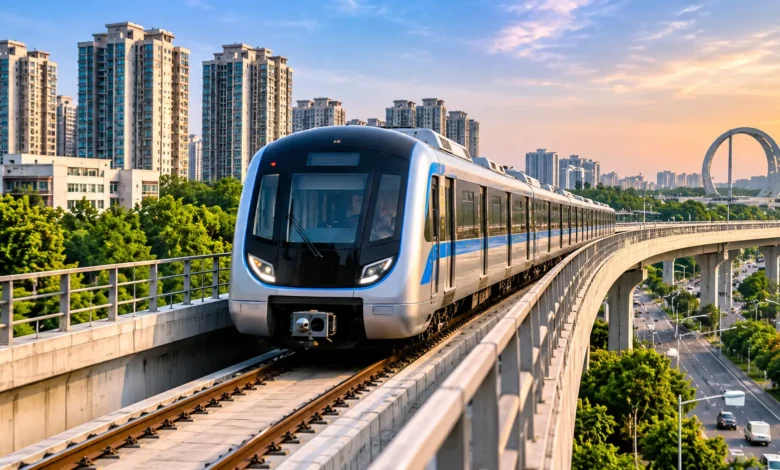
- The Union Cabinet has approved the project at an estimated cost of ₹2,390 crore.
- The proposed corridor will cover 8.449 km with five elevated metro stations.
- The project is targeted for completion within four years and will connect with the Delhi Metro Blue Line.
Noida: The Union Cabinet has approved a ₹2,390 crore extension of the Noida-Greater Noida Aqua Line Metro corridor, connecting Noida Sector 51 with Greater Noida Sector 4. Announced following a Cabinet meeting chaired by Prime Minister Narendra Modi, the project will cover approximately 8.449 km and include five elevated stations. The expansion is expected to improve daily commuting and strengthen public transport connectivity between residential, commercial and employment centres across the two cities.
The proposed metro extension will provide access to several important locations, including commercial developments, shopping centres and office hubs. A key feature of the project is its planned interchange connectivity with the Delhi Metro Blue Line at Noida Sector 61. Once operational, the additional corridor will take the combined active metro network in Noida and Greater Noida to approximately 71.878 km.
According to the government, the project is intended to address growing transportation requirements as Noida and Greater Noida continue to expand. Prime Minister Narendra Modi highlighted its potential benefits in a post on X, stating that the extension would improve access to offices, schools, hospitals and commercial centres while helping reduce traffic congestion and commuting time.
Five Elevated Stations to Be Developed Along the 8.449-km Corridor
The approved corridor will introduce approximately 8.449 km of elevated metro infrastructure. With five proposed stations, the extension is expected to improve connectivity for people travelling between Noida and Greater Noida.
The project will also strengthen connections to important commercial locations, including:
- Gaur City Mall
- H&S Mall
- Blue Sapphire Mall
- Commercial developments in Greater Noida Sector 4
- IKEA at Noida Sector 51
- Anthurium Mall in Noida Sector 73
These locations are among the commercial and retail destinations expected to benefit from improved metro access.
IT Offices and Employment Centres to Get Better Metro Access
Apart from retail and commercial destinations, the proposed corridor is expected to improve connectivity to several corporate offices and employment centres.
Major organisations and business locations identified in the project details include Tech Mahindra and TCL Tech offices in Noida Sector 60, the Oil Industry Development Board in Sector 73, and Golden I and other commercial developments in Greater Noida Sector 4.
The improved connectivity could make daily travel easier for employees and visitors commuting to these business districts. It may also provide an alternative to road-based transportation for people travelling between residential neighbourhoods and office locations.
Project to Be Completed Within Four Years
Union Minister for Information and Broadcasting Ashwini Vaishnaw announced the four-year completion timeline while briefing reporters after the Cabinet meeting.
He described the extension as an important addition to the existing metro infrastructure in Noida and Greater Noida. Once the new section becomes operational, the combined active metro network across the two cities is expected to reach 71.878 km.
The government has highlighted improved urban mobility, reduced road congestion and better access to key destinations as the major objectives of the project.
What the Metro Extension Means for Noida and Greater Noida
The proposed extension could have implications beyond public transportation. Better metro access may improve connectivity for residents, employees, students and people visiting commercial establishments across the corridor.
For the real estate sector, improved public transport accessibility can make residential and commercial locations more convenient for prospective buyers, tenants and businesses. Areas connected to metro stations may also attract greater interest from developers and investors, although the actual impact on property prices will depend on local demand, supply and project execution.
The extension is also expected to support more sustainable urban mobility by encouraging commuters to use public transport instead of relying entirely on private vehicles.
Also Read: Ghaziabad Homebuyers Wait 13 Years as LIG Housing Construction Remains Incomplete