Prateek Laurel Residents Oppose New Electricity Billing Structure
Prateek Laurel residents in Sector 120, Noida, have opposed the revised electricity billing structure, seeking transparency, financial details and proper resident participation before such changes are implemented.

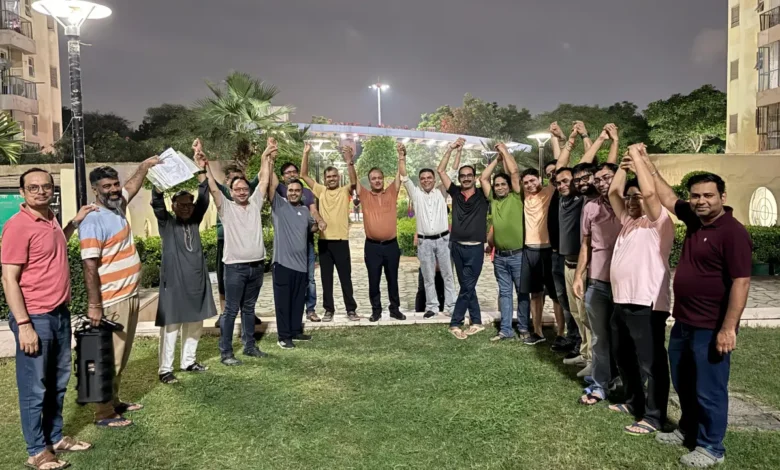
Noida: Residents of Prateek Laurel in Sector 120, Noida, organised a “Chai Par Charcha” meeting at the society’s amphitheatre on September 5 to protest against changes made by the Apartment Owners Association (AOA) to the electricity billing structure.
A large number of residents participated in the gathering and expressed concerns over the manner in which the revised billing system was introduced. While the AOA has cited GST notices, compliance requirements and proportional distribution of common-area electricity expenses as reasons for the changes, residents say their primary concern is the decision-making process and lack of adequate transparency.
What Has Changed in the Electricity Billing Structure?
According to the AOA circular cited by residents, the electricity consumption charge has been reduced from ₹7.00 to ₹6.30 per unit. At the same time, a separate Common Area Electricity (CAE) charge of ₹0.40 per square foot has been introduced.
The AOA has reportedly stated that the revised structure is linked to GST compliance and the need to distribute common-area electricity expenses proportionately among residents.
However, residents argue that the introduction of a new charge needs to be supported by a clear calculation, financial disclosure and a transparent decision-making process.
Residents Question Timing and Decision-Making Process
During the meeting, residents questioned why such a significant change to the society’s electricity billing structure was implemented at midnight and why residents were not given sufficient information or an opportunity to raise objections before it came into effect.
They also questioned whether a change that could affect electricity bills for thousands of families should have been discussed with residents and placed before the General Body Meeting (GBM) for consideration and approval.
Residents said the issue is not limited to the additional ₹0.40 per square foot. According to them, it concerns the broader principle of how financial decisions affecting residents are taken within the society.
They argued that if a major billing component can be changed without adequate resident participation, similar changes could potentially be made to other charges, meter-related arrangements or billing components in the future.
Residents have sought clarification from the AOA on several aspects of the revised electricity billing structure, including:
- On what basis was the ₹0.40 per square foot CAE charge calculated?
- What is the actual cost of electricity consumed in the society’s common areas?
- How much revenue will the new CAE charge generate for the society each month and year?
- What will be the overall financial impact of reducing the consumption charge from ₹7 to ₹6.30 per unit while adding the CAE charge?
- Why was the proposed change not placed before the GBM?
- Why were residents not given prior, clear information and an opportunity to raise objections?
Residents clarified that their objection is not against GST compliance or the need to maintain proper financial records.
Instead, they said that any financial change introduced in the name of compliance should be accompanied by a clear calculation, legal and financial basis, and transparent explanation to residents.
According to residents who attended the “Chai Par Charcha” meeting, transparency and accountability are essential when financial decisions affect the entire community.
The residents said the electricity billing issue has raised wider concerns about accountability within the society. They maintained that residents should have meaningful participation in important financial and administrative decisions that directly affect them.
A question repeatedly raised during the discussion was:
“If the billing structure can be changed at midnight today, who will stop a change to any meter or any other charge tomorrow?”
Residents said they would continue to raise the matter through peaceful and democratic means and seek greater transparency, accountability and resident participation in the society’s financial decisions.
Also Read: Cleo County Residents Protest Against 40% Maintenance Hike
Also Read: Noida High Rise Federation raises concerns over AOA complaint handling