
Documents Checklist for Buying a Plot in 2026
Planning to buy a plot in 2026? Check these essential property documents, ownership records, land approvals, RERA registration and legal clearances before making any payment.

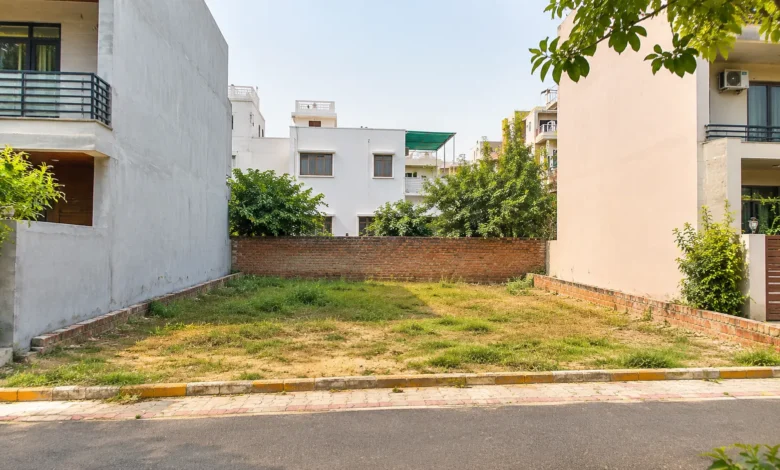
Buying a plot of land is an important financial decision. Whether you are purchasing land to build your dream home or investing in property for the future, checking the legal documents is one of the most important steps.
In India, property-related disputes often arise because buyers do not properly verify land ownership, previous transactions, land-use permissions or outstanding loans. A plot may look perfectly suitable for residential use, but its legal status could be different.
In 2026, buyers should be particularly careful about checking ownership documents, government land records, approved layouts and registration details. Recent legal developments and government initiatives have also made accurate land records and document verification increasingly important.
Here is a simple checklist of documents you should verify before buying a plot in India.
1. Registered Sale Deed or Title Deed
The sale deed is one of the most important documents when purchasing a plot.
It establishes the transfer of ownership from the seller to the buyer through a legally registered transaction.
Before proceeding, ask the seller for the original registered sale deed and check:
- Name of the current owner.
- Complete property address and plot details.
- Plot area and boundaries.
- Survey number, khasra number or other land identification details.
- Registration number and date.
- Details of the previous transaction.
Make sure the seller’s name and property details match the official registration records.
Important: An agreement to sell, a notarised document or a General Power of Attorney alone should not be treated as a substitute for a registered sale deed transferring ownership.
2. Chain of Previous Ownership Documents
Checking only the seller’s latest sale deed is not enough.
You should also examine the previous ownership documents to understand how the property was transferred from one owner to another.
This is commonly known as the chain of title.
For example, if the current seller purchased the plot from another person, ask for that previous sale deed as well. Continue checking earlier ownership documents to establish a clear history.
Ideally, get a property lawyer to conduct a title search covering around 30 years or the available ownership history, as appropriate.
Check whether:
- Every previous transfer was legally documented.
- The seller obtained ownership through a valid transaction.
- There are any missing documents in the ownership chain.
- The property was inherited, gifted or transferred through a partition.
- Any ownership dispute exists between family members or legal heirs.
If the plot is inherited, also examine relevant documents such as the previous owner’s death certificate, Will (where applicable), succession or legal heir documents, and partition or family settlement documents.
3. Encumbrance Certificate (EC)
An Encumbrance Certificate (EC) is an important document that helps buyers identify registered financial or legal liabilities associated with a property.
It provides information about registered transactions and encumbrances recorded against the property during the period searched.
Before purchasing a plot, check whether it has:
- An existing bank loan or registered mortgage.
- Any registered sale or transfer to another person.
- A registered lease or other financial charge.
- Any recorded attachment or other encumbrance.
Ask for an EC covering a sufficiently long period, as advised by your property lawyer.
If the property has an existing mortgage, obtain the bank’s loan closure documents and release confirmation before proceeding.
Remember that a clean EC does not automatically establish clear ownership or rule out every pending court case or unregistered claim. It should always be examined along with the title documents and other legal records.
4. Khatauni, Khasra and Mutation Records
Revenue records are particularly important when buying land in rural areas or on the outskirts of a city.
Different states use different names for their land records. In Uttar Pradesh, buyers commonly check the following:
Khatauni: This is a record of rights that contains details of recorded landholders, land areas and related land information.
Khasra: It contains information identifying individual land parcels and their details.
Mutation (Dakhil-Kharij): This refers to updating government revenue records after a transfer or change in ownership.
These records help buyers cross-check the seller’s recorded interest in the land.
Make sure the following details match:
- Seller’s name.
- Khasra or gata number.
- Total land area.
- Ownership share.
- Land classification.
- Any remarks regarding disputes or restrictions.
In Uttar Pradesh, buyers can check land records through the official UP Bhulekh Portal.
Important: Mutation does not independently establish ownership. The Supreme Court reiterated in its May 6, 2026 judgment that revenue entries and mutation records serve a fiscal purpose and are not conclusive proof of property title. Therefore, always verify the registered ownership documents as well.
5. Approved Layout Plan and Map
If you are buying a plot in a residential colony or plotted development project, always ask for the approved layout plan.
The layout plan shows how the land has been divided into individual plots and identifies important features such as:
- Individual plot numbers and sizes.
- Internal roads and access routes.
- Parks and green areas.
- Community facilities.
- Open spaces.
- Other designated areas.
Check whether the layout has been approved by the concerned development authority or competent local planning authority.
Also compare the plot being offered to you with the approved layout.
Do not rely only on a brochure, marketing map or drawing provided by the property dealer.
6. Land Use Conversion Certificate
This document is especially important when purchasing agricultural land for residential or commercial purposes.
Land may be recorded as agricultural even when someone is selling it as a residential plot.
Before purchasing, check whether the proposed use is legally permitted.
Depending on the state and location, the required documents may include:
- Land-use conversion order.
- Change of Land Use (CLU) permission.
- Non-agricultural (NA) permission.
- Relevant development authority approval.
- Master plan or zoning confirmation.
In Uttar Pradesh, buyers should particularly check Section 80 of the Uttar Pradesh Revenue Code, which deals with the declaration of non-agricultural land use.
2026 update for Uttar Pradesh: The Uttar Pradesh Revenue Code (Amendment) Act, 2026, received the Governor’s assent on August 13, 2026, and was given effect from April 8, 2026. Under the amendment, certain approvals for building construction, development or layout plans granted by specified authorities in their notified areas can be treated as a declaration under Section 80(2), subject to the prescribed verification. The corresponding revenue record entry is required within 15 days after the verification process.
However, this provision applies to specified areas and qualifying approvals. Buyers should not assume that every agricultural plot has automatically received residential land-use permission.
7. RERA Registration Certificate
If you are purchasing a plot in a developer-led plotted residential project, check whether the project requires registration under the Real Estate (Regulation and Development) Act, 2016.
Under Section 3 of RERA, promoters generally cannot advertise, market, book or sell plots in a covered real estate project in a planning area without registering the project with the relevant RERA authority.
There are statutory exemptions, including projects where the development area does not exceed 500 square metres or the number of apartments does not exceed eight, subject to applicable state provisions.
Before purchasing a plot in a RERA-registered project, verify:
- RERA registration number.
- Project name and promoter details.
- Land ownership and title documents.
- Approved layout plan.
- Plot number and availability.
- Project development details.
- Quarterly Progress Reports (QPRs).
- Complaints filed against the developer.
For projects in Uttar Pradesh, buyers can verify these details on the UP RERA website.
In its advisory dated May 14, 2026, UP RERA specifically asked buyers to check land ownership, sanctioned maps, available inventory, project bank accounts, quarterly progress reports and complaints against promoters.
8. Seller’s Identity and Ownership Proof
Before making any payment, verify the identity of the person selling the property.
Ask for:
- Aadhaar card or another valid government-issued identity document.
- PAN card, as applicable.
- Address proof.
- Recent photographs, where required.
- Relevant ownership documents.
Check whether the person’s name matches the sale deed and revenue records.
If the property has multiple owners, ensure that all necessary owners consent to the sale and execute the required documents.
If someone is selling the property through a Power of Attorney, verify the document’s validity, scope and authority to execute the transaction. Have a lawyer examine it before proceeding.
9. Property Tax Receipts and No-Dues Certificate
Before purchasing a plot, confirm that there are no outstanding government or authority dues.
Depending on the property, ask for:
- Latest property tax receipts.
- Land revenue payment receipts.
- Development authority dues clearance.
- Water and sewerage dues, where applicable.
- Maintenance or other applicable charges.
- No-Dues Certificate from the concerned authority, where available or required.
If any outstanding amount exists, clarify who will be responsible for clearing it before the sale is completed.
10. NOC and Transfer Permission (Where Applicable)
Not every plot requires a No-Objection Certificate (NOC). However, certain categories of properties have additional transfer requirements.
For example, if a plot has been allotted by a development authority or housing board, check whether the allotment conditions require:
- Transfer permission.
- Authority NOC.
- Allotment letter.
- Possession certificate.
- Lease deed or conveyance deed.
- Freehold conversion documents, if applicable.
- No-dues certificate.
Also check whether the plot is subject to any restrictions on resale or transfer.
11. Physical Verification and Boundary Documents
Document verification should always be accompanied by a physical inspection of the plot.
Visit the property and check whether its actual location matches the documents.
You should verify:
- Actual plot dimensions.
- Boundary measurements.
- Access road and approach.
- Physical possession.
- Any encroachment.
- Disputes with neighbouring landowners.
- Whether the plot falls within the approved layout.
Where necessary, hire a qualified surveyor to measure the land and compare it with the official map.
Do not finalise a purchase simply because the plot number appears in the seller’s documents.
Important Government and Legal Updates for Plot Buyers in 2026
Apart from the documents mentioned above, buyers should be aware of some important developments in 2026.
1. DILRMP 3.0 launched by the Central Government
On September 10, 2026, the Ministry of Rural Development launched the operational guidelines for Digital India Land Records Modernisation Programme (DILRMP) 3.0, with an approved outlay of ₹565.50 crore for 2026–2031.
The initiative focuses on integrating land records, property registration information, georeferenced maps and relevant court information through a GIS-based Land Stack. It also aims to provide a 14-digit unique identification number, known as Bhu-Aadhaar or ULPIN, to land parcels.
Buyers should check whether the plot already has a ULPIN and whether its details match the land records and map, wherever this facility is available.
2. Supreme Court reiterates the importance of proper title documents
In its May 6, 2026 judgment, the Supreme Court reiterated that revenue records and mutation entries are not independent proof of ownership. Buyers should therefore examine the actual title documents instead of relying only on the seller’s name in government land records.
3. UP RERA issues a fresh advisory
On May 14, 2026, UP RERA issued an advisory asking property buyers to verify six important aspects before investing in a project, including land ownership, approved maps, inventory, project bank accounts, quarterly progress reports and developer complaints.
4. Changes to land-use declaration rules in Uttar Pradesh
The Uttar Pradesh Revenue Code Amendment Act, 2026, introduced changes to Section 80 to simplify certain land-use declaration procedures in specified authority areas. However, the relevant approvals and verification requirements still need to be checked for the particular plot.
Documents Required at the Time of Property Registration
Once all legal and ownership checks are complete, buyers can prepare the documents required for executing and registering the sale deed.
These generally include:
- Original or required copies of the sale deed and supporting ownership documents.
- Buyer and seller identity documents.
- PAN details, wherever applicable.
- Passport-size photographs, wherever required.
- Details and identity documents of witnesses.
- Draft sale deed.
- Applicable stamp duty and registration fee payment details.
- NOC or transfer permission, wherever required.
The exact requirements depend on the state and the concerned Sub-Registrar Office. Check the relevant state registration department before booking your registration appointment.
Under Section 54 of the Transfer of Property Act, 1882, a sale of immovable property of the value of ₹100 and above is made through a registered instrument. The sale deed should therefore be properly stamped and registered according to the applicable law.
What Should You Do After Buying the Plot?
Your responsibilities do not end after the sale deed is registered.
After completing the purchase:
- Collect the registered sale deed.
- Obtain physical possession of the plot.
- Get the plot boundaries properly demarcated.
- Apply for mutation in the relevant revenue records.
- Update the municipal or development authority ownership records, where applicable.
- Preserve all original documents and payment receipts.
Keep digital and physical copies of the complete property file for future reference.
Final Checklist Before Buying a Plot in 2026
Use this checklist before making your final payment:
- Registered sale deed or title deed verified.
- Previous ownership documents checked.
- Encumbrance Certificate obtained and examined.
- Khatauni and Khasra records verified, where applicable.
- Mutation and ownership details cross-checked.
- Approved layout plan verified.
- Residential land-use permission confirmed.
- RERA registration checked, where applicable.
- Seller’s identity and ownership verified.
- All relevant NOCs and transfer permissions obtained.
- Property dues and outstanding payments checked.
- Physical plot inspection completed.
- Independent legal opinion obtained.
Also Read: Gifting Property in India: Legal Rules, Taxes and Everything You Should Know
Wrap Up
Buying a plot requires more than checking its location and price. A property that looks attractive may still have ownership disputes, outstanding loans, incorrect land records or missing development approvals.
Before investing your hard-earned money, verify every important document and get the ownership history examined by an independent property lawyer. Taking these precautions before purchasing can help you avoid unnecessary legal disputes and financial losses in the future.




One Comment