AI Is Transforming Construction Site Safety, but Can It Really Prevent Workplace Accidents?
Artificial intelligence is helping construction companies identify hazards, streamline inspections and reduce paperwork, but experts say its actual impact on preventing workplace accidents remains uncertain.

- AI tools can identify potential workplace hazards, predict project risks and reduce administrative work.
- Software company FYLD reports that some clients have recorded up to 48% fewer serious incidents and injuries.
- Researchers caution that AI cannot replace human supervision, and evidence of its effectiveness in preventing accidents remains limited.
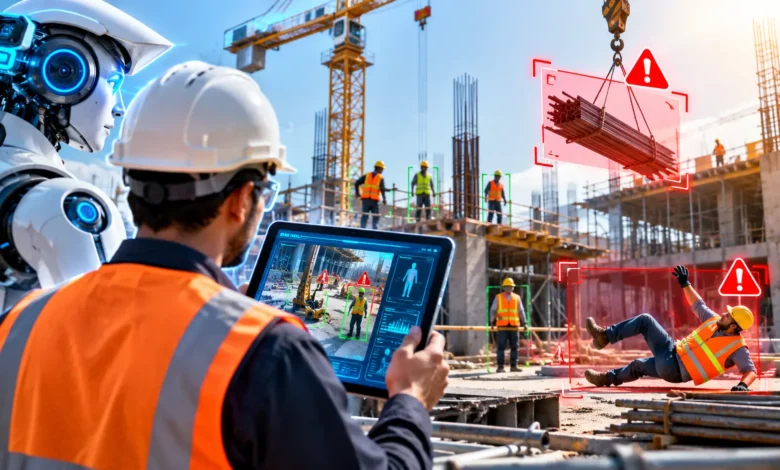
Artificial intelligence is increasingly finding applications across construction, infrastructure and utility projects, with companies using the technology to improve workplace safety and manage on-site operations. AI-powered platforms are helping supervisors identify potential hazards, plan construction activities and monitor field workers. However, questions remain about whether these technologies can actually prevent accidents and save lives.
The growing adoption of AI is also changing how construction teams handle routine responsibilities. From analysing short videos recorded by workers to identifying missing safety permits and generating inspection reports, these systems aim to reduce administrative workloads and provide managers with better visibility of site conditions. London-based software company FYLD is among the firms developing AI solutions for construction and infrastructure operations.
According to FYLD CEO Shelley Copsey, the technology is designed to address problems faced by frontline workers rather than focusing exclusively on office-based project management. She highlighted how AI can make field operations more efficient by helping workers prepare for potential difficulties before they reach a construction site.
How AI Is Helping Construction Workers Identify Risks?
One of the major applications of AI in construction is improving project planning and identifying safety concerns before work begins.
FYLD’s platform allows field workers to record short videos explaining their daily tasks, site conditions and potential safety issues. AI analyses these recordings and helps identify possible problems that may require attention from workers or supervisors.
The technology can also assist with construction planning by identifying permit requirements and helping teams schedule activities according to weather conditions. For example, heavy lifting operations can be rescheduled when strong winds are forecast, reducing the risks associated with working in unsuitable conditions.
Another important benefit is the reduction in paperwork. According to Copsey, field workers can spend approximately 20% to 25% of their working time handling administrative responsibilities.
With AI-assisted reporting, photographs, videos and job-related information can be converted into draft reports. Tasks that previously required around 30 minutes can reportedly be completed in just two to three minutes.
Infrastructure services provider Amey announced in March that it would introduce FYLD’s platform to approximately 2,500 field workers to improve highway operations, workplace safety and real-time monitoring.
FYLD has also reported that some customer case studies recorded reductions of up to 48% in workplace incidents and injuries. However, these figures are company-reported results and should not be treated as proof that AI delivers the same safety improvements across the entire construction industry.
AI-Powered Inspections Are Reducing the Need for Site Visits
Beyond monitoring construction workers, artificial intelligence is also being used to inspect roads, railways and other infrastructure assets.
Bentley Systems, a US-based infrastructure engineering software company, uses its Blyncsy platform to analyse images captured by vehicles travelling along roads. The technology can identify maintenance issues such as damaged guardrails, roadside debris and overgrown vegetation.
According to Bentley Systems’ senior vice president for Europe, the Middle East and Africa, Nathan Marsh, analysing existing images through AI can provide wider infrastructure coverage in significantly less time than traditional manual inspections.
AI is also being applied to workplace incident reporting. Dutch maintenance software company Ultimo has developed tools that analyse work orders and shift records to identify possible safety incidents that may not have been formally reported.
For instance, if a warehouse maintenance report mentions damage to a door that may have been caused by a forklift, the system can flag the information and prepare a draft incident report for human review.
Ultimo CEO Steven Elsham explained that the technology is intended to identify incidents that employees may have overlooked, rather than replacing the responsibility of workers to report safety concerns.
Researchers Question Whether AI Can Actually Prevent Accidents
Despite its growing use, researchers say there is still insufficient evidence to establish whether AI systems directly reduce workplace injuries and fatalities.
Waleed Umer, an assistant professor at Northumbria University in England, pointed out that much of the existing research focuses on how accurately AI models can identify hazards rather than whether their use leads to fewer accidents.
Construction environments are constantly changing, making it difficult for cameras and automated monitoring systems to detect every potential danger.
There are also concerns about false alarms. If workers repeatedly receive inaccurate warnings, they may gradually stop taking automated alerts seriously. Excessive dependence on AI could also create a false sense of security among supervisors and construction teams.
Billy Hare, a professor of construction management at Glasgow Caledonian University, highlighted that many research projects have concentrated on productivity improvements. The assumption is that reducing workers’ exposure to dangerous environments will automatically improve safety, but this relationship still needs further investigation.
A digital twin project supported by Bentley Systems provides an example of how technology can reduce physical exposure. The project involving Network Rail’s Severn Tunnel reportedly reduced physical site visits by 50% and manual surveys by 70%.
Although fewer visits to hazardous locations could reduce workers’ exposure to risks, researchers say more evidence is needed to establish the direct effect on accident prevention.
UK Construction Fatalities Fall, but AI’s Contribution Remains Unclear
The discussion around construction safety comes as Great Britain recorded a decline in fatal workplace incidents in the construction industry.
According to the UK’s Health and Safety Executive (HSE), 25 construction workers died in work-related incidents during 2025/26, compared with 35 in the previous year. The figure was also below the five-year average of 37 fatalities.
While the decline is encouraging, experts caution against directly linking the improvement to the adoption of AI.
Professor Billy Hare noted that the reduction could partly reflect slower economic activity and fewer construction operations, making it difficult to measure the actual contribution of technology to workplace safety.
This highlights an important challenge for the industry: lower accident numbers do not necessarily mean that AI-powered safety systems are responsible for the improvement.
Human Supervision Remains Essential Despite AI Adoption
Experts agree that artificial intelligence should support construction safety teams rather than replace human decision-making.
Northumbria University’s Waleed Umer warned that AI systems can generate more information and recommendations than supervisors can realistically examine. If managers begin approving automated suggestions without properly reviewing them, the technology could introduce additional risks.
The effectiveness of AI also depends on how construction companies use the time and resources saved through automation.
Ultimo CEO Steven Elsham argued that businesses should focus on improving workplace safety, reducing equipment breakdowns and increasing the number of tasks completed correctly the first time.
He cautioned that using AI merely to increase the workload of existing employees could undermine its potential benefits. Instead, companies should ensure that productivity improvements also make difficult jobs safer and more manageable.
What Lies Ahead for AI in Construction Safety?
AI adoption in construction is expected to expand as companies look for better ways to manage infrastructure, monitor worksite conditions and reduce operational costs.
However, its long-term value will depend on more than identifying hazards or completing reports faster. Construction companies will need to establish whether these systems produce measurable improvements in worker safety.
Researchers are likely to focus increasingly on real-world evidence, including accident rates, the accuracy of automated warnings, worker exposure to hazardous conditions and the effectiveness of human supervision.
For now, AI is emerging as a useful additional tool for construction safety teams, but it cannot replace trained workers, experienced supervisors or established safety procedures. Its real success will ultimately depend on whether it makes construction sites safer for the people working on them.
Also Read: IBBI Introduces New Insolvency Rules for Real Estate Projects, Puts Homebuyer Interests First
Also Read: UP Plans Singapore City Near Noida International Airport in Jewar to Attract Global Investments