GDA Makes Rooftop Solar Space Mandatory in Building Plans
GDA mandates rooftop solar provisions in building maps with refundable fees under PM Surya Ghar scheme, aiming to boost clean energy adoption and make Ghaziabad a solar-powered city.

- Building plans without solar provision will be rejected
- Refundable fee linked to plot size introduced
- Target to meet 10% energy demand via solar by 2027
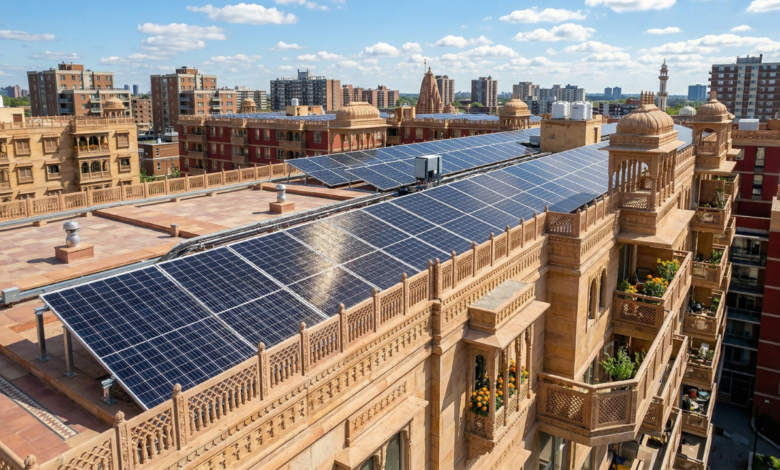
Ghaziabad: Ghaziabad Development Authority (GDA) has made it compulsory for builders and plot owners to allocate space for rooftop solar panels in building plans submitted for approval.
Officials have clarified that any map lacking solar provisions will be rejected, making compliance essential for all new constructions. The move is part of a broader strategy to transform Ghaziabad into a solar city under national renewable energy goals.
To ensure implementation, the authority has also introduced a refundable fee system under the PM Surya Ghar scheme. Applicants must deposit a fixed amount during map approval, which will be returned after officials verify that solar panels have been installed.
The fee structure varies based on plot size:
- Rs 20,000 for 200–500 sqm plots
- Rs 50,000 for 500–1,000 sqm plots
- Rs 1 lakh for 1,000–5,000 sqm plots
- Rs 2 lakh for plots above 5,000 sqm
This policy aligns with Ghaziabad’s inclusion among 18 cities selected under India’s solar cities initiative, with a target to meet 10% of its energy requirements through renewable sources by 2027.
According to estimates by the Uttar Pradesh New and Renewable Energy Development Agency (UPNREDA), the city has a solar generation potential of 2,858 MW, with residential buildings contributing the largest share. Currently, Ghaziabad’s peak electricity demand ranges between 1,400 MW and 1,600 MW, indicating strong potential for solar integration.
Authorities are also promoting rooftop solar by highlighting its cost benefits. Solar energy is currently around 30% cheaper than conventional power, and both central and state governments are offering subsidies and technical assistance to encourage adoption.
An added advantage for homeowners is net metering, which allows surplus electricity generated from solar panels to be fed back into the grid. This not only reduces electricity bills but can also create an additional income stream through power credits.
With this move, GDA aims to ensure that future developments in Ghaziabad are more sustainable, energy-efficient, and aligned with India’s long-term renewable energy goals.
Also Read: Gurugram RWA Names Defaulters Publicly, Recovers Rs 15 Lakh in Maintenance Dues
Also Read: Noida Authority Approves ₹10,290 Crore Budget, Pushes Stalled Projects and OTS Scheme