MahaRERA Orders Mumbai Developer to Refund Over ₹38 Lakh to Homebuyers Over Missing Promised Balconies
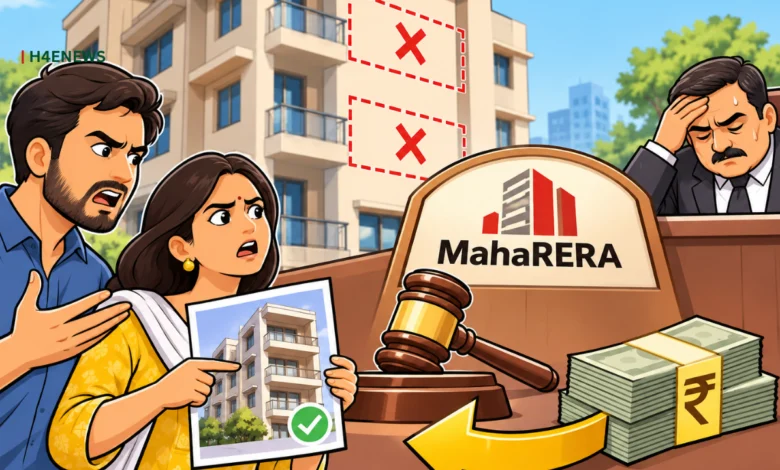
MahaRERA has directed the developer of Gyan Gold Crest in Jogeshwari East to refund two sets of homebuyers after finding that promised balcony areas were removed without proven buyer consent.

- MahaRERA ordered refunds of ₹17.32 lakh and ₹21.08 lakh to two sets of homebuyers.
- The dispute concerns the removal of promised four-foot sun decks from apartments at Gyan Gold Crest, Mumbai.
- The developer must pay interest at SBI’s highest MCLR plus 2% annually and has 30 days to comply.
The Maharashtra Real Estate Regulatory Authority (MahaRERA) has directed a Mumbai-based developer to refund more than ₹38 lakh to two sets of homebuyers over changes to the promised balcony and deck areas in a residential project in Jogeshwari East, Mumbai. In an order dated November 16, 2026, the authority ruled in favour of the buyers, who had booked apartments at Gyan Gold Crest after being shown plans featuring four-foot sun decks.
The dispute arose after the developer reportedly modified the project’s sanctioned plans, resulting in the removal of the balcony or deck spaces originally represented to buyers. The two complaints involved refund claims of ₹17.32 lakh and ₹21.08 lakh, respectively. MahaRERA also directed the developer to pay interest at the State Bank of India’s highest Marginal Cost of Lending Rate (MCLR) plus 2% per annum, calculated from the respective payment dates until the refunds are realised.
In the first complaint, two buyers jointly booked adjoining apartments at Gyan Gold Crest on December 24, 2023. Each apartment was priced at approximately ₹82.31 lakh, taking the combined property value to around ₹1.64 crore.
The buyers alleged that the project’s marketing brochure prominently showed a four-foot sun deck. They said this feature influenced their decision to purchase the apartments. However, after the plans were modified, the promised deck space was no longer available. The buyers subsequently sought cancellation and a refund of the ₹17.32 lakh booking amount they had paid.
According to their complaint, the developer offered to return only ₹5 lakh and indicated that the remaining amount could be forfeited.
The second complaint concerned another apartment in the same project. The buyers had registered an Agreement for Sale on February 12, 2024, for a property valued at ₹84.33 lakh. They alleged that both the brochure and agreement referred to a four-foot deck or patio area that was included without any additional charge.
The buyers later claimed that the developer informed them about changes to the apartment layout, an increase in the building’s height and a proposed shift to another floor. They sought cancellation and a refund of the ₹21.08 lakh already paid.
The developer disputed the allegations in both complaints. In the first case, it argued that marketing brochures were illustrative and carried disclaimers stating that project details could change. It maintained that the buyers had voluntarily withdrawn from the project and that the cancellation was not caused by any default or delay on the developer’s part.
The developer also claimed that it was entitled to deduct 10% of the total sale consideration, along with brokerage commissions and other marketing-related expenses.
In the second complaint, the developer argued that the changes to the apartment had been made with the buyer’s consent and in accordance with approvals obtained from the competent authorities. It further claimed that the buyers had failed to make subsequent instalment payments, including delays in arranging the required home loan. According to the developer, the agreement was terminated because of these payment defaults.
However, MahaRERA found that the developer had acknowledged changes to the original project plans. In the second case, the authority observed that the buyers had denied providing consent for the modifications. Since the developer claimed that consent had been obtained, it was responsible for producing documentary evidence to support that position.
The authority noted that the developer had failed to establish that the buyers had given the necessary consent. It also held that the termination of the agreement on the grounds of non-payment and the proposed forfeiture of the amount under the agreement could not be justified in the circumstances.
MahaRERA concluded that the changes to the sanctioned plans had affected the apartments and the amenities originally promised to the buyers. It observed that purchasers had made their investment decisions based on the information provided in the marketing materials and agreements.
The authority relied on Section 12 of the Real Estate (Regulation and Development) Act, 2016, in the first complaint, concerning incorrect information or representations made in advertisements and prospectuses. It also considered the consent requirements under Section 14(2), which regulates changes to sanctioned plans and specifications.
The developer has been directed to refund ₹17.32 lakh to the first set of buyers and ₹21.08 lakh to the second set within 30 days. Both refunds will carry interest at SBI’s highest MCLR plus 2% per annum, calculated from the dates on which the respective payments were made until the amounts are repaid.
The developer has indicated that it will challenge MahaRERA’s decision before the Maharashtra Real Estate Appellate Tribunal. In its response to Hindustan Times, the developer’s legal representative described the order as unfair and argued that it contained several legal and factual shortcomings.
The developer maintained that the buyers had repeatedly failed to follow the construction-linked payment schedules and that the terminations were legally valid. It also claimed that the project modifications were made in accordance with approvals from the planning authority and after obtaining consent from more than 90% of purchasers.
The legal representative further argued that MahaRERA had not properly considered expenses such as GST and other statutory payments that could not be recovered by the developer. The developer said it would present additional grounds in its appeal. The homebuyers were not available for comment.
The dispute highlights the importance of checking approved building plans, apartment layouts and promised amenities before purchasing a property. Under RERA, developers cannot freely alter sanctioned plans or previously disclosed specifications without following the applicable consent requirements.
Legal experts point out that consent for changes must be informed and specific. A general or blanket approval from buyers may not automatically qualify as valid consent for every subsequent modification under Section 14 of RERA.
For prospective homebuyers, a few precautions can help avoid similar disputes:
- Check the registered agreement: Ensure that promised balconies, decks, parking spaces and other amenities are clearly mentioned in the Agreement for Sale.
- Compare approved plans: Verify the sanctioned layout and apartment specifications against the details shown in the brochure and booking documents.
- Keep written records: Preserve brochures, payment receipts, emails, allotment letters and written communication about changes to the property.
- Question proposed modifications: Ask the developer for written clarification and evidence of the required approvals and buyer consent.
- Approach MahaRERA: If a developer makes significant changes without the required consent or fails to honour contractual commitments, buyers can consider filing a complaint with the regulatory authority.
The next stage of the dispute will depend on the developer’s proposed appeal before the Maharashtra Real Estate Appellate Tribunal. The case also highlights how changes to promised apartment specifications can become a significant legal issue, particularly when buyers have already paid substantial amounts based on the original project plans.
Also Read: ED Attaches Vatika Group Assets Worth ₹545.96 Crore
Also Read: Residents of KBNOWS Apartment in Greater Noida West Faces Another Power Cut Over ₹49 Lakh Dues