CREDAI NATCON 2026: India’s Real Estate Market Projected to Hit $1 Trillion by 2030
India’s real estate sector could reach $1 trillion by 2030, with rising housing demand, commercial investments, AI adoption and infrastructure development driving long-term growth.

- India’s real estate market is projected to grow from $600 billion in 2025 to $1 trillion by 2030.
- Residential sales across the top seven cities reached ₹6.10 lakh crore in FY26.
- CREDAI plans to train 50,000 construction workers during the current financial year.
India’s real estate market is projected to expand to $1 trillion by 2030, up from an estimated $600 billion in 2025. The projection was highlighted in a report released by the Confederation of Real Estate Developers’ Associations of India (CREDAI) during its 24th National Convention, NATCON 2026, held in Kolkata. The report also estimates that the sector could reach nearly $5.8 trillion by 2047.
Titled Indian Real Estate: Growth Trajectory, Sectoral Outlook and Geopolitical Crosscurrents, the report was prepared in collaboration with ANAROCK Research & Advisory. It highlights the scale of development underway in the country, with the value of real estate under construction increasing more than five-fold, from $94 billion in 2009 to $503 billion in 2025. The findings underline the sector’s expanding role in India’s economic growth and urban development.
Residential real estate continues to be a major growth driver. According to the report, the combined value of residential property sales across India’s top seven cities increased from ₹2.35 lakh crore in FY22 to ₹6.10 lakh crore in FY26. Quarterly residential sales have also remained above ₹1.3 lakh crore for seven consecutive quarters, reflecting sustained market activity.
The commercial real estate segment is also witnessing a shift in demand. Global Capability Centres (GCCs) accounted for approximately 45% of office leasing activity during the first half of 2026. The trend highlights the growing importance of India’s office market as multinational companies expand their operations and establish business centres in the country.
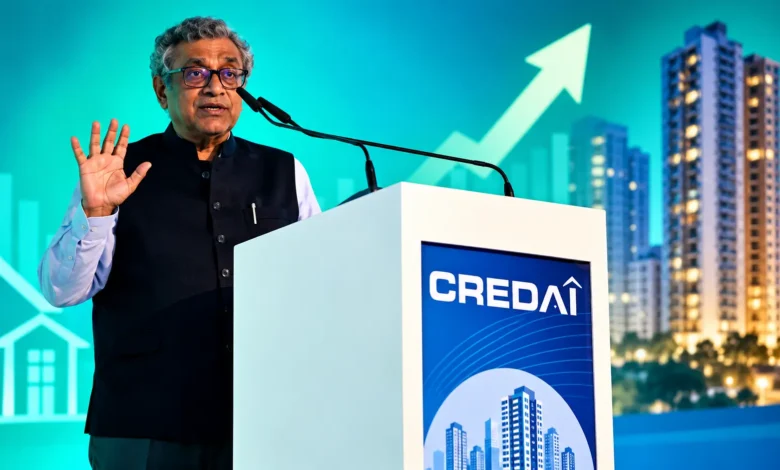
Addressing the inaugural session, West Bengal Finance Minister Dr Swapan Dasgupta invited developers and investors to explore opportunities in Kolkata and other parts of the state. He emphasised the need to address regulatory and development-related challenges, including restrictions under the Urban Land Ceiling framework. He also called for greater involvement of organised developers in large infrastructure and urban development projects.
CREDAI President Shekhar G. Patel highlighted the growing influence of artificial intelligence in the real estate industry. He pointed to its potential applications in project planning, construction, marketing, customer engagement and business decision-making. According to him, technology can improve operational efficiency, transparency and productivity across the sector.
CREDAI Chairman Boman Irani also stressed the need to combine technological progress with sustainable construction practices and workforce development. As real estate projects become more technology-driven, equipping workers with relevant skills will remain an important part of the industry’s long-term expansion.
Workforce development was another key focus of NATCON 2026. The CREDAI CSR Foundation, in partnership with Tata Capital Housing Finance, will provide training to approximately 1,250 construction workers as part of its ongoing skill development efforts.
The initiative contributes to CREDAI’s broader target of training 50,000 construction workers during the current financial year. The programme aims to strengthen workforce capabilities and support the industry’s growing demand for skilled labour as construction activity expands across the country.
The convention also examined investment opportunities beyond India’s major metropolitan markets. Tier-II and Tier-III cities are attracting greater attention as infrastructure expansion, urbanisation and economic activity create new real estate opportunities.
Other sectors discussed at the convention included data centres, warehousing, hospitality and infrastructure-led urban expansion. These segments are expected to play an increasingly important role in diversifying real estate investments and supporting the development of emerging urban centres.
With India’s real estate sector targeting a $1 trillion valuation by 2030, the discussions at NATCON 2026 highlighted the importance of investment, technological adoption, regulatory improvements and workforce readiness. The industry’s longer-term growth will also be closely connected to infrastructure development and India’s broader vision of Viksit Bharat.