
7 Easy Ways to Keep Your Home Odour-Free During the Monsoon
Monsoon humidity can cause dampness, mould and unpleasant smells inside your home. Follow these practical cleaning, ventilation and moisture-control tips to keep every room fresh, healthy and comfortable all season.


- Reduce moisture before mould and mildew develop.
- Keep wardrobes, kitchens and bathrooms smelling fresh.
- Easy natural and budget-friendly monsoon odour solutions.
The arrival of the monsoon brings cooler weather and much-needed relief from the summer heat. But it also increases indoor humidity, making homes more vulnerable to dampness, mould and unpleasant smells. If left unchecked, these odours can spread through wardrobes, kitchens, bathrooms and even furniture, affecting both comfort and indoor air quality.
Why Homes Smell During the Monsoon?
Monsoon weather often brings humidity levels above 80%, making it difficult for moisture to evaporate. Wet walls, furniture, carpets and clothes remain damp for longer, creating ideal conditions for mould, mildew and bacteria.
These microorganisms release tiny spores and volatile organic compounds (VOCs), which are responsible for the familiar musty smell found in damp homes. Areas with poor ventilation, such as wardrobes, bathrooms, shoe cabinets and kitchen cupboards, are usually affected first.
Common Causes of Bad Smells Indoors
If your home develops an unpleasant odour during the rainy season, one or more of these issues may be responsible:
- Damp walls caused by seepage or rainwater
- Wet carpets, curtains and upholstery
- Clothes that haven’t dried properly
- Poor airflow in enclosed rooms
- Blocked drains or stagnant water
- Damp shoes stored in closed cabinets
- Food waste left in the kitchen
- Plumbing leaks or hidden moisture
Identifying the source is the first step towards keeping your home fresh throughout the season.
7 Easy Ways to Keep Your Home Odour-Free During the Monsoon
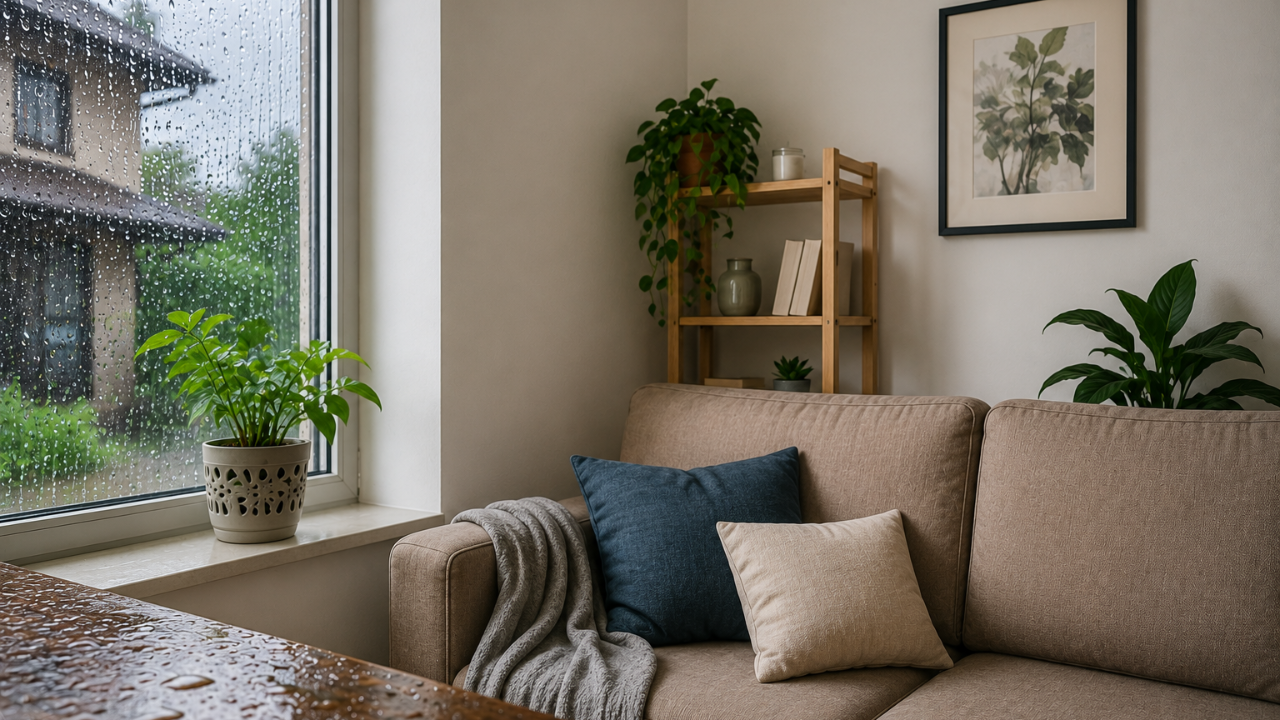
1. Improve Air Circulation
Fresh air helps reduce humidity and prevents mould growth.
- Open windows whenever the rain stops.
- Use ceiling, pedestal or exhaust fans.
- Keep bathrooms and kitchens well ventilated.
- Avoid keeping rooms completely closed for long periods.
Good airflow is one of the simplest ways to prevent stale indoor air.
2. Control Indoor Humidity
Lower humidity means fewer chances for mould and mildew to grow.
You can use:
- Electric dehumidifiers for bedrooms and living rooms
- Silica gel packs for wardrobes and shoe cabinets
- Bamboo charcoal bags
- Rock salt in small containers to absorb excess moisture
Remember to clean dehumidifiers regularly for better performance.
Must Read: How to Check Vastu for Home Entrance
3. Use Natural Odour Absorbers
Natural ingredients work surprisingly well in removing bad smells.
Try these options:
- Baking soda inside refrigerators and shoe racks
- Activated charcoal in cupboards
- White vinegar spray for hard surfaces
- Camphor or neem leaves inside wardrobes
These affordable solutions help absorb both moisture and unpleasant odours.
4. Keep Your Home Clean and Dry
Regular cleaning prevents bacteria and fungi from multiplying.
Simple habits include:
- Mop floors daily with a disinfectant.
- Clean bathroom floors and drains frequently.
- Don’t leave wet dishes overnight.
- Vacuum carpets, sofas and mattresses regularly.
- Dispose of kitchen waste every day.
A clean home naturally smells fresher during the rainy season.
5. Dry Clothes Properly
Indoor drying is common during monsoon, but damp clothes can quickly create unpleasant smells.
To avoid this:
- Dry clothes near windows or fans.
- Never store clothes before they are completely dry.
- Iron garments after drying to remove leftover moisture.
- Avoid leaving wet laundry in baskets for too long.
Fresh clothes also help wardrobes stay odour-free.
6. Make the Most of Sunlight
Whenever the sun appears, use it wisely.
Place these items outdoors:
- Pillows
- Mattresses
- Cushions
- Blankets
- Shoes
- Books
Sunlight naturally removes moisture, kills bacteria and reduces musty smells.
7. Pay Extra Attention to the Kitchen
The kitchen is one of the most moisture-prone areas in any home.
Keep it fresh by:
- Cleaning sinks with vinegar or lemon.
- Emptying dustbins daily.
- Drying utensils before storing them.
- Checking refrigerators regularly for spoiled food.
Small cleaning habits make a noticeable difference.
Why Monsoon Home Care Matters
A fresh-smelling home is more than just pleasant, it also supports better health. Damp indoor spaces encourage mould growth, which may trigger allergies, asthma and respiratory problems, especially in children, older adults and people with existing breathing conditions.
By controlling humidity, improving ventilation and cleaning consistently, you can enjoy the rainy season without worrying about stale indoor air.
Must Read: Top 5 Vastu Plants for Home & Their Benefits
Wrap Up
Keeping your home odour-free during the monsoon doesn’t require expensive products or complicated routines. A combination of good ventilation, moisture control, regular cleaning and natural odour absorbers is enough to keep your living space fresh throughout the season.
With a little preventive care, you can stop mould, mildew and damp smells before they spread, making your home healthier, cleaner and far more comfortable during the rains.
Frequently Asked Questions
1. Why does my house smell musty during the monsoon?
High humidity slows down drying and encourages mould, mildew and bacteria to grow. These microorganisms release compounds that create a musty smell.
2. Are air fresheners enough to remove monsoon odours?
No. Air fresheners only mask unpleasant smells temporarily. Removing excess moisture and cleaning regularly provides a long-lasting solution.
3. How often should carpets and upholstery be cleaned during the rainy season?
Vacuum them at least twice a week. If they become damp, dry them immediately using fans or direct sunlight whenever possible.
4. Can indoor plants increase humidity?
Yes. Overwatered indoor plants can slightly raise humidity levels. Water them only when necessary and ensure proper drainage.
5. What health problems can indoor mould cause?
Long-term exposure to mould may lead to allergies, skin irritation, coughing, asthma flare-ups and other respiratory issues, particularly in children, older adults and people with weak immune systems.