
Supreme Court Says Banks Must Assess Homebuyer Liability Before Recovering Home Loans
The Supreme Court has directed courts to examine possible collusion between banks and builders before ordering homebuyers to repay loans for housing projects that remain incomplete.

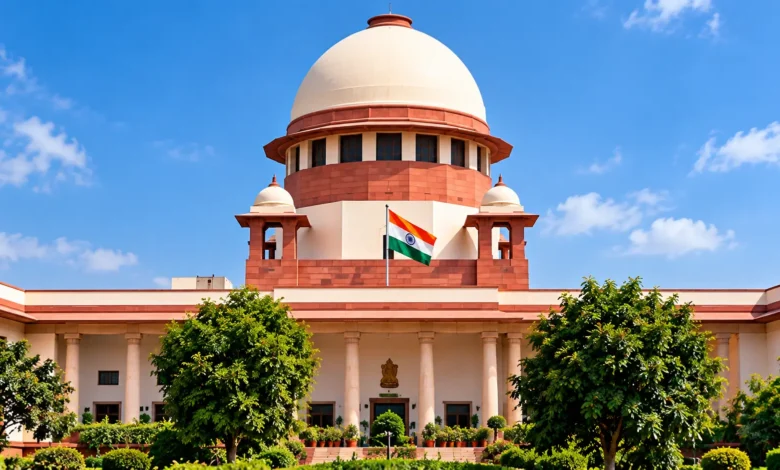
- SC says banks cannot automatically recover home loans from buyers without examining their liability.
- Courts must investigate whether banks released loan instalments in violation of tripartite agreements.
- No coercive recovery action should be taken until homebuyers’ actual default is established.
The Supreme Court has ruled that homebuyers caught in stalled housing projects cannot automatically be held responsible for repaying bank loans without a proper examination of their circumstances. The direction came in a case involving the Krishna housing project in Gurugram, developed by Raheja Developers, which is currently facing insolvency proceedings. The ruling is significant for buyers who continue to face loan repayment demands despite not receiving possession of their homes.
The case was brought before a bench comprising Chief Justice of India Surya Kant and Justices Joymalya Bagchi and V. Mohana. The petitioners informed the court that a bank had initiated recovery proceedings against them before a commercial court in Saket, New Delhi, even though their flats had not been handed over. They argued that loan amounts had been released to the developer despite the project’s incomplete construction.
While hearing the matter, the Supreme Court emphasised that commercial courts, the National Company Law Tribunal (NCLT) and the National Company Law Appellate Tribunal (NCLAT) must examine the circumstances surrounding loan disbursements before making homebuyers liable for repayment.
The bench observed that courts have a responsibility to investigate whether there was any understanding between the builder and bank officials and whether loan payments were released according to the terms of the tripartite agreement.
The court stated that it is the responsibility of the commercial court to determine whether the bank disbursed funds to the developer strictly in accordance with the agreement signed between the homebuyer, builder and lender.
Under a typical tripartite agreement, banks release home loan instalments directly to developers based on the actual progress of construction. This arrangement is intended to ensure that payments remain linked to the project’s development stage.
However, allegations in several stalled housing projects suggest that financial institutions released substantial loan amounts to developers without adequately considering the construction progress. In some instances, developers allegedly received funds far ahead of the actual work completed at the project site.
When construction stopped or projects remained unfinished for years, banks initiated recovery proceedings against buyers. Many affected families were left paying home loan EMIs while also bearing rental expenses because they could not move into their promised homes.
The Supreme Court has now clarified that a categorical finding must first establish that the homebuyer is actually in default before any interim direction requiring payment of instalments can be issued.
In its order, the Supreme Court directed the commercial court not to take coercive action against the petitioners or other similarly placed homebuyers until the alleged bank-builder nexus and the circumstances of loan disbursement have been examined.
The direction could provide important relief to buyers facing recovery proceedings despite incomplete housing projects. It also places greater responsibility on financial institutions to demonstrate that loan amounts were released in accordance with the agreed construction-linked payment schedule.
For affected families, the issue goes beyond loan repayment. Many have spent years waiting for possession while managing both housing loan obligations and the cost of alternative accommodation.
The latest development follows an earlier intervention by the Supreme Court in September 2025, when a bench led by Justice Surya Kant ordered a CBI investigation into alleged collusion involving builders and banks across the country.
The investigation concerned the alleged misuse of tripartite subvention schemes, under which developers were accused of exploiting arrangements between banks and homebuyers, leaving buyers exposed to financial liabilities despite projects remaining incomplete.
The latest order reinforces the need to examine the conduct of both developers and lending institutions before placing the entire financial burden on homebuyers.
Going forward, commercial courts will need to examine the terms of tripartite agreements, construction progress and the timing of loan disbursements before determining a buyer’s repayment liability. The ruling does not automatically cancel home loans, but it makes clear that homebuyers’ responsibility must be established through proper judicial examination before coercive recovery measures are taken.
Also Read: Allahabad HC Halts Construction on Jaypee Greens Golf Course Land
Also Read: NCLT Orders Separate Resolution Process for Six Ajnara Projects to Protect Homebuyers’ Interests