Ansal Esencia Residents Protest M3M Construction Access Route in Gurugram
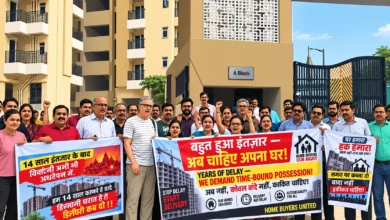
Residents of Ansal Esencia in Sector 67, Gurugram, have objected to alleged construction traffic using their internal road, citing safety risks, dust and road damage.


- Residents question why construction vehicles are using the society’s internal road.
- Heavy vehicle movement is allegedly causing dust, traffic and road damage.
- Residents want authorities to clarify whether the access route is legally authorised.
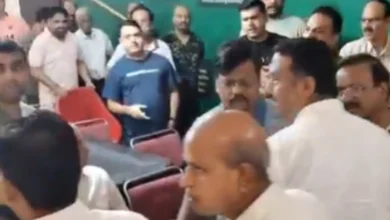
Residents of Ansal Esencia in Gurugram’s Sector 67 have raised objections over the alleged movement of construction vehicles linked to nearby M3M projects through the residential society’s internal road. The issue has emerged amid concerns about road damage, dust and the safety of residents, particularly children and pedestrians who regularly use the route.
According to residents, the road is already an important internal access route for school buses, daily commuters and pedestrians. They allege that repeated movement of trucks and other heavy construction vehicles is putting additional pressure on the road and creating traffic and safety concerns. The residents are now seeking clarity on why the route is being used for construction activity outside the society.
Residents have alleged that the internal road had remained in poor condition for a long period before members of the community contributed money to carry out repairs. They say the road was improved after residents themselves stepped in to address infrastructure problems.
The alleged movement of construction vehicles has now raised concerns that the repaired sections could deteriorate again. Residents have also pointed to dust generated by heavy vehicles as another problem, particularly for people living close to the access route.
The central issue for the community is whether a residential road should be handling construction traffic associated with projects located outside the society and, if so, who is responsible for maintaining the road.
Residents have questioned the basis on which construction vehicles are allegedly being permitted to use the route. They want the concerned authorities and stakeholders to clarify the approved access arrangements and establish whether the road has been formally designated for construction-related traffic.
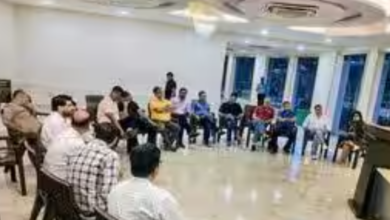
The residents have also warned that they may consider a sit-in protest or other measures if the issue remains unresolved. However, the legal status of the access route and any permissions governing its use have not been independently established from the information currently available.
An official response from M3M, the Ansal Esencia residents’ association and the relevant planning or infrastructure authorities would therefore be important to establish the facts.
Safety is one of the biggest concerns raised by residents. The internal road is used by children, pedestrians and school buses, meaning an increase in heavy vehicle movement could create additional risks, particularly during busy hours.
Residents are also concerned that construction traffic could increase as work on the nearby M3M projects progresses. More frequent movement of trucks could potentially add to congestion, dust and wear on the internal road.
For the residents, the dispute is therefore not limited to the condition of the road. They are also seeking a traffic arrangement that protects regular residential movement and keeps heavy construction vehicles away from areas with significant pedestrian activity, if alternative authorised access is available.
The latest objection comes against a wider backdrop of infrastructure and access-related concerns raised by residents of Ansal Esencia. Residents had previously highlighted issues involving entry points, vehicle movement and the use of internal roads by heavy vehicles.
They have also raised concerns in the past regarding roads, drainage, sewage and other civic infrastructure. These previous complaints have made access and road management particularly sensitive issues within the community.
The current disagreement over construction traffic has therefore added another layer to existing concerns about infrastructure and the management of vehicle movement around the residential complex.
The immediate requirement is for the concerned parties to establish the status of the disputed access route and determine whether construction vehicles have the necessary permission to use it. If the route is authorised, residents are likely to seek clarity on traffic management, road maintenance and safety measures.
If it is not authorised for such use, residents are seeking an alternative arrangement for construction traffic so that the society’s internal road is not subjected to continued heavy vehicle movement.
With construction activity continuing in the Sector 67 area, resolving the access dispute could become increasingly important. A clear decision from the relevant authorities, along with responses from M3M and the residents’ association, could help determine how construction traffic should be managed without compromising residential safety or infrastructure.