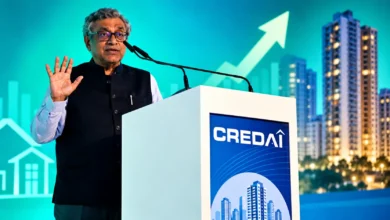
Adani Group is building air-conditioned housing for 50,000 workers
Adani Group’s new strategy prioritises local hiring, worker dignity, and entrepreneurship while leveraging strong capital to accelerate infrastructure projects and improve execution efficiency across India’s rapidly expanding development landscape.

- Focus on local hiring and community-driven employment at project sites
- Housing for 50,000 workers and 100,000 daily meals planned in Gujarat
- Faster project execution backed by strong liquidity and simplified decision-making
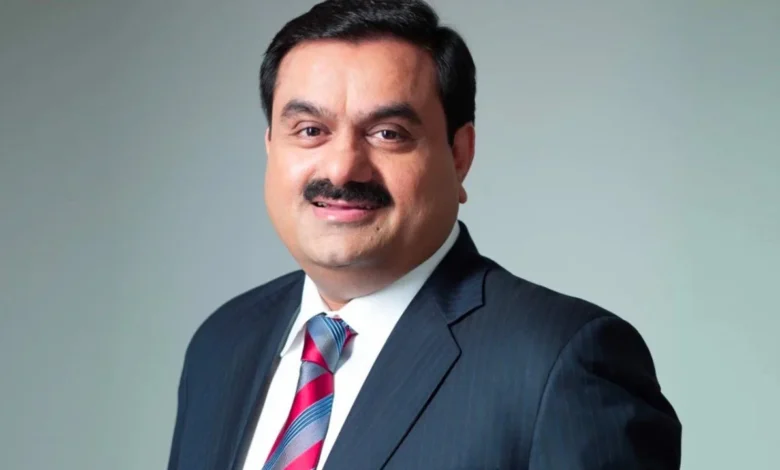
Ahmedabad: On the occasion of International Labour Day, Gautam Adani, Chairman of the Adani Group, unveiled a comprehensive growth strategy that places worker welfare, local employment, and grassroots entrepreneurship at the centre of the company’s expansion plans.
Addressing a vast workforce that spans over 400,000 employees, contractors, and partners, Adani emphasised that the group’s progress will not just be measured in terms of assets built, but also by the number of livelihoods created and communities strengthened. With operations spread across more than 700 assets in 24 states, the group is positioning its workforce as a key driver of nation-building.
“You are not just employees, you are nation builders,” Adani said, underlining the role of workers in shaping India’s infrastructure future.
One of the key pillars of the strategy is a local-first hiring model. The group plans to prioritise employment opportunities for communities living near project sites, followed by candidates within the state and then from across the country if required. This approach aims to generate regional employment while strengthening local economies.
The initiative is also expected to reduce migration pressures and create sustainable job ecosystems in remote and semi-urban areas where large infrastructure projects are being developed.
Worker dignity and living standards have been placed at the forefront of the company’s roadmap. Large-scale welfare initiatives are already underway in Gujarat, particularly in Mundra and Khavda.
Adani stressed that such initiatives are not optional but essential. “Every worker has the right to live and work with dignity,” he said.
The group’s expansion is being powered by strong liquidity and access to capital, enabling accelerated capital expenditure (capex) and quicker project delivery. A new three-layer organisational structure is being introduced to streamline operations.
This system is designed to reduce bureaucratic delays by allowing site-level decisions to be made within hours rather than days. By simplifying approval processes and improving accountability, the company aims to significantly enhance execution speed.
Another key shift is in the group’s contractor engagement model. Instead of working with a large number of smaller contractors, the company plans to collaborate with fewer but more capable partners who can handle end-to-end responsibilities.
These partners will benefit from better access to capital, long-term contracts, and assured returns. The move is expected to improve coordination and reduce project delays.
At the same time, the strategy is encouraging grassroots entrepreneurship. Adani cited the example of a local entrepreneur from Kutch who expanded from operating a single water tanker to running a multi-equipment business supporting large infrastructure projects, while also generating local employment.
The third pillar of the strategy revolves around learning and development. The upcoming Adani Skills Centre aims to provide structured training pathways, enabling workers to move from unskilled roles to supervisory and leadership positions.
The company highlighted real-life examples of internal growth, showcasing how employees can build long-term careers within the organisation through continuous skill development.
Adani also connected the group’s major infrastructure projects—including Mundra Port, Khavda Renewable Energy Park, Navi Mumbai International Airport, and the Ganga Expressway—to India’s broader development goals.
“These projects are not just assets. They are instruments of national progress,” he said, highlighting their role in strengthening logistics, energy infrastructure, and connectivity across the country.
The overall strategy reflects a shift towards a more inclusive and execution-focused growth model. By combining worker welfare, local employment, faster decision-making, and strong financial backing, the Adani Group is aiming to align its expansion with India’s long-term economic ambitions.