
RWAs and Homebuyers’ Societies Cannot Intervene in Builder Insolvency Cases: Supreme Court
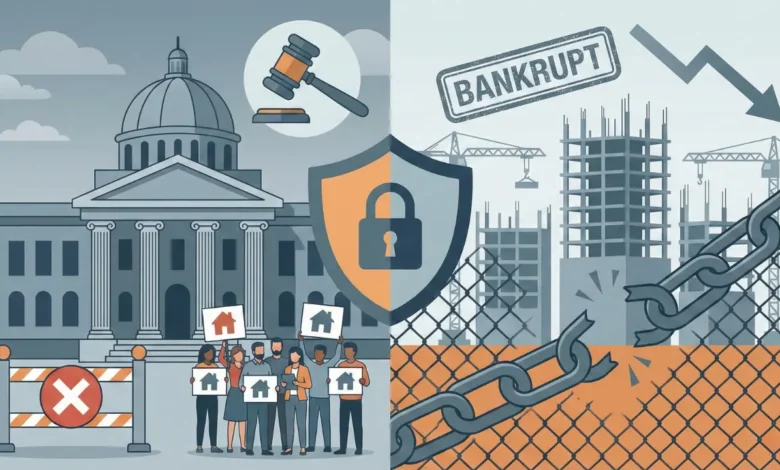
The Supreme Court rules that Resident Welfare Associations and homebuyers’ societies have no legal right to intervene in insolvency proceedings against developers under the Insolvency and Bankruptcy Code.
-
RWAs and housing societies lack legal standing in insolvency cases
-
Only recognised financial creditors can participate under IBC
-
Court warns against using IBC as a shortcut for debt recovery
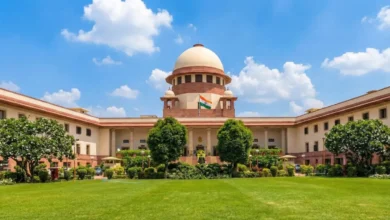
In a significant judgment, the Supreme Court has clarified that Resident Welfare Associations (RWAs) and homebuyers’ societies do not have the legal right to intervene in insolvency proceedings initiated against real estate developers.
A bench comprising Justices JB Pardiwala and R Mahadevan ruled that such societies, which are generally formed for maintenance and management of housing projects, cannot participate in cases filed under the Insolvency and Bankruptcy Code (IBC), 2016.
The verdict came while upholding insolvency proceedings against Takshashila Heights India Private Ltd. The court dismissed an appeal filed by Elegna Co-operative Housing and Commercial Society Ltd, stating that the society lacked “locus standi” (legal standing) to intervene in the matter.
IBC Participation Limited to Recognised Creditors
The bench emphasized that the IBC is a self-contained law that allows participation only to entities that fall under clearly defined statutory categories. Under the Code, only a “financial creditor” – someone to whom a financial debt is owed – has the right to initiate or participate in insolvency proceedings.
While individual homebuyers are treated as financial creditors under the law, this status does not automatically extend to housing societies or RWAs unless they themselves have directly lent money or are recognised as authorised representatives under IBC provisions.
“A society is a separate legal entity from its members. Unless it has advanced funds or is part of the original financial transaction, it cannot claim the rights of a financial creditor,” the court observed.
IBC Not a Recovery Tool
The Supreme Court also cautioned that the Insolvency and Bankruptcy Code should not be misused as a quick recovery mechanism.
“If creditors invoke IBC, they must do so with the genuine intention of reviving the corporate debtor. If recovery alone is the objective, other legal remedies such as SARFAESI and civil laws remain available,” the bench noted.
The court further explained that insolvency proceedings at the initial stage are strictly between the financial creditor and the corporate debtor. Third parties, including RWAs or other groups, do not have any independent right to participate before the admission of the case.
No Ad-Hoc Representation Allowed
Justice Mahadevan, writing the judgment, clarified that RWAs are primarily meant for managing common facilities in housing projects and cannot claim to represent homebuyers in legal proceedings unless explicitly authorised by law.
Allowing such interventions, the court said, would create unnecessary delays and could be misused by defaulting builders to obstruct insolvency processes.
“Permitting societies to intervene would add an extra layer of representation not envisaged under the Code and undermine the structured insolvency framework,” the bench stated.
Focus on Collective Resolution
The Supreme Court reiterated that the proper course for homebuyers is to engage constructively with the Committee of Creditors (CoC) after insolvency proceedings are admitted, rather than attempting to interfere through separate bodies or associations.
The judgment reinforces the principle that insolvency matters must proceed in an orderly, time-bound manner as intended under the IBC, without interference from entities that are not legally recognised participants.
This ruling is expected to bring greater clarity to ongoing real estate insolvency cases and prevent procedural delays caused by unauthorized interventions.