Net-Zero and Low Energy Trends Transform Construction in Lucknow
Net-Zero and Low Energy Trends are reshaping Lucknow’s architecture, with energy-efficient materials, automation systems, and sustainable design concepts driving cost savings, reduced emissions, and smarter building performance.

-
Net-Zero and Low Energy Trends reduce long-term operating costs
-
Sustainable materials replace traditional high-emission resources
-
Automation and solar integration improve energy efficiency
Lucknow: Net-Zero and Low Energy Trends are rapidly changing the way buildings are designed and constructed across the city. From corporate offices and commercial complexes to residential housing projects, developers are increasingly adopting energy-efficient solutions to lower operational costs and reduce environmental impact.
The growing influence of Net-Zero and Low Energy Trends was evident at the fourth edition of Design Confluence and Building Materials, organised by the Indian Institute of Interior Designers (IIID), Lucknow regional chapter. The event highlighted how sustainable design is no longer a niche concept but a practical necessity in modern construction.
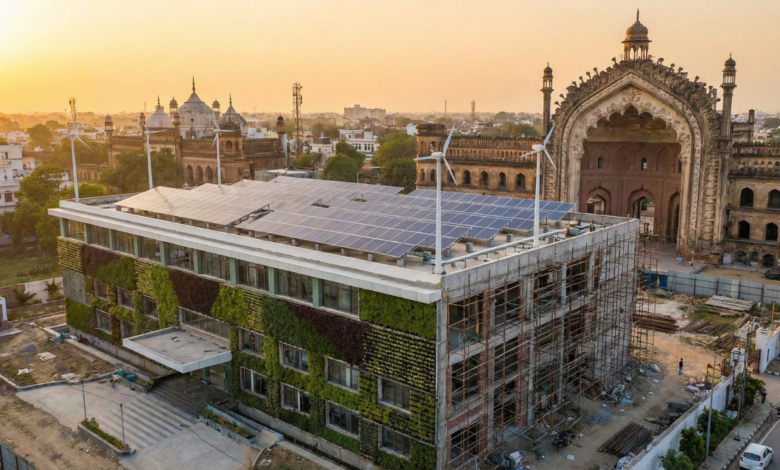
Several projects showcased during the event demonstrated how Net-Zero and Low Energy Trends are being implemented locally. Green office spaces in Gomtinagar Extension and solar-powered residences along Shaheedpath illustrated the city’s steady shift toward environmentally responsive design.
Architects participating in the event noted that while Net-Zero and Low Energy Trends may increase initial construction costs by approximately Rs 300–800 per square foot—depending on facade systems, automation, and renewable integration—the long-term savings are substantial. Reduced electricity bills and lower maintenance expenses typically allow developers and homeowners to recover the additional investment within four to seven years.
Architect Anurag Jain explained that clients today are more focused on operating expenses than just aesthetics. According to him, double-glazed façades and advanced insulation panels help stabilise indoor temperatures, significantly cutting down energy consumption.
Material selection plays a crucial role in advancing Net-Zero and Low Energy Trends. Builders are increasingly replacing traditional high-emission materials with recycled wood, fly ash bricks, bamboo composites, and low-carbon cement.
Architect Anupam emphasised that responsible material choices now define quality design. Sustainable construction no longer means compromising on strength or visual appeal. Instead, it offers durability while reducing environmental damage.
Another major pillar of Net-Zero and Low Energy Trends is automation. AI-based lighting systems, sensor-enabled controls, energy management dashboards, and intelligent security systems allow occupants to monitor and regulate power usage in real time.
Architect Shikhar Singh noted that automation improves both efficiency and comfort. Sensor lighting and intelligent systems prevent unnecessary energy wastage while enhancing user experience inside buildings.
Net-zero buildings—designed to generate as much energy as they consume—are becoming increasingly popular. Through solar panel integration, smart ventilation planning, and energy-efficient facades, these structures are setting new benchmarks in sustainable construction.
Net-Zero and Low Energy Trends are also supported by modular prefabricated construction methods. Factory-manufactured components reduce material waste, ensure higher precision, and shorten project timelines.
Architect Arun Kapoor highlighted the importance of Building Information Modelling (BIM) and digital planning tools in predicting building performance before construction begins. These technologies help minimise errors, reduce debris, and improve overall efficiency.
Experts believe that Net-Zero and Low Energy Trends are not temporary innovations but represent a long-term transformation in the construction industry. Rising electricity costs, environmental awareness, and regulatory pressure are pushing developers to prioritise energy-efficient solutions.
As Lucknow continues to expand, Net-Zero and Low Energy Trends are expected to become standard practice rather than optional upgrades. The focus has clearly shifted from merely constructing buildings to creating smarter, more sustainable spaces that balance cost, comfort, and environmental responsibility.
Also Read: Noida Sector 44 Residents Raise Alarm Over Poor Infrastructure and Frequent Power Outages
Also Read: Signature Global and RMZ Invest ₹7,500 Crore in Gurugram Commercial Project