
Solar-Integrated Buildings Can Cut India’s Construction Emissions
Experts say embedding solar technology directly into building design can help India reduce carbon emissions, improve energy efficiency, and create climate-resilient cities amid rapid urban growth.

-
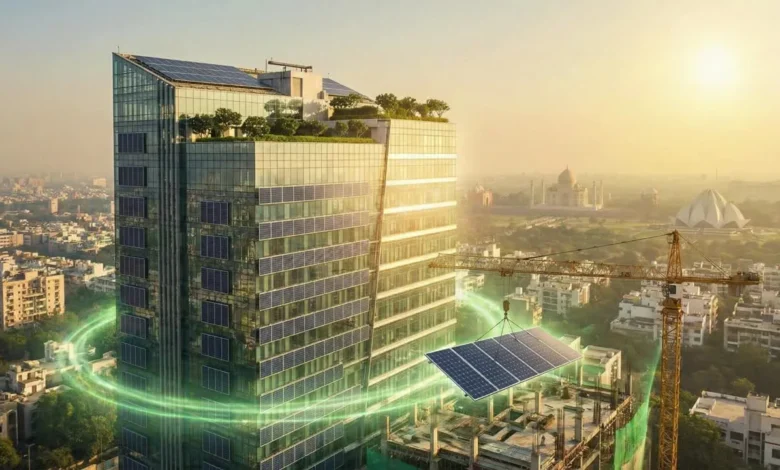
Building Integrated Photovoltaics (BIPV) generates energy from roofs, walls, and windows
-
India’s construction sector contributes nearly 17% of national emissions
-
Solar integration from the design stage is more effective than later retrofits
As global urbanisation accelerates, the way new buildings are designed and constructed will play a decisive role in tackling climate change. Experts believe that integrating solar technology directly into building structures offers one of the most effective solutions to reduce emissions from the fast-growing construction sector.
By 2060, the total built-up floor area across the world is expected to double, with most of this growth taking place in developing regions of Asia, Africa, and Latin America. In countries like India, where cities are expanding at an unprecedented pace, every new building constructed today will shape energy consumption and environmental impact for decades to come.
Traditional methods—such as adding solar panels to existing buildings—are proving inadequate to meet the speed and scale of urban growth. Retrofitting older structures is expensive and often inefficient. This is where Building Integrated Photovoltaics (BIPV) is emerging as a smarter alternative.
Unlike conventional rooftop solar panels, BIPV systems embed solar cells directly into the building envelope, including roofs, facades, and even windows. Instead of being an add-on feature, solar power generation becomes an essential part of the building’s architecture.
India stands to benefit enormously from this approach. The country’s construction sector was responsible for around 17 percent of national greenhouse gas emissions in 2019, driven by both energy use in buildings and the carbon-intensive production of construction materials. With millions of new homes and offices being built every year, reducing emissions from this sector has become a national priority.
Solar-integrated buildings can help address this challenge by turning structures into small, decentralised power plants. When buildings generate their own electricity, cities become less dependent on centralised power grids and more resilient to energy disruptions.
The advantages go well beyond lower emissions. BIPV systems can improve thermal comfort, enhance building aesthetics, and even protect external surfaces, increasing the lifespan of construction materials. By generating energy where people live and work, these buildings help lower electricity costs while supporting a cleaner urban environment.
Experts argue that sustainability must be built into projects from the very beginning. Designing new developments with integrated solar technology is far more effective than trying to modify them later. This approach also supports denser, vertical development—helping cities grow without consuming excessive land or resources.
However, for this vision to succeed, accessibility is crucial. Solar-integrated buildings should not remain limited to luxury developments or high-end commercial projects. Affordable housing must also adopt BIPV solutions so that low- and middle-income communities can benefit from reduced energy costs and improved living conditions.
Transforming homes and offices into decentralised energy assets offers a practical path toward cleaner, more resilient cities. As India continues its rapid urban journey, embedding solar power into the very fabric of buildings could become one of the most powerful tools for a sustainable future.