
Low-AQI Homes Redefine Luxury Housing as Air Pollution Worsens in Indian Cities
As air quality deteriorates across urban India, developers are positioning low-AQI homes with advanced filtration systems and green buffers as the next big upgrade in luxury real estate living.
-
Low-AQI homes emerge as a new differentiator in premium housing
-
Developers deploy air-filtration tech and forest-style landscapes
-
Experts warn clean air should not become a paywalled luxury
As air pollution tightens its grip on India’s major cities, low-AQI homes are fast emerging as a new marker of luxury in the real estate market. What was once considered a basic necessity—clean, breathable air—is now being actively marketed as a premium lifestyle feature, bundled with advanced technology and green design.
Developers across Delhi-NCR, Mumbai, Gurugram, and other urban hubs are increasingly showcasing residential projects equipped with air-filtration systems, sensor-driven ventilation, treated fresh air units, and in-project forests, positioning them as healthier alternatives in polluted environments. The shift reflects growing buyer anxiety over air quality and long-term health risks, especially in cities that routinely rank among the world’s most polluted.
Clean air as a sellable asset
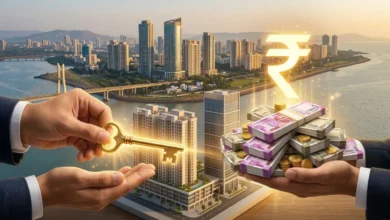
A recent LinkedIn post by author and photographer Vivek Joshi captured the sentiment behind this transformation. He argued that clean air has quietly transitioned from being an assumed right to a marketable commodity. Housing, he noted, has evolved over decades—from simple shelter to lifestyle branding—progressing from “golf-facing” and “sea-view” apartments to today’s newest sales pitch: “low AQI location.”
Joshi warned that environmental degradation is steadily converting essentials into luxuries. “If low AQI sells homes today,” he wrote, “imagine what we’ll be paying for tomorrow.” His observation struck a chord, triggering a wider debate on whether clean air should be monetised or protected as a public good.
From water scarcity to air scarcity
Industry observers note that real estate has already normalised scarcity as a selling point. Drinking water, once freely accessible, is now bottled, priced, and distributed based on affordability. Clean air, experts say, is following a similar path.
Joshi linked this trend to unchecked urbanisation—rapid construction, loss of green cover, soil degradation, and shrinking biodiversity—factors that are outpacing environmental regulation. In such a scenario, developers are able to repackage environmental damage as “luxury solutions,” rather than addressing root causes.
Earlier this year, Zerodha co-founder Nithin Kamath reignited the conversation by proposing that property prices be linked directly to environmental quality. He suggested that areas with higher pollution levels should see lower property valuations, arguing that air and water quality should directly influence real estate pricing.
However, while homes overlooking parks, lakes, or forests often attract steep premiums, polluted neighbourhoods rarely see price discounts, exposing a gap in how environmental costs are accounted for in property markets.
How developers are positioning low-AQI homes
Developers are now embedding air quality narratives deeply into project branding.
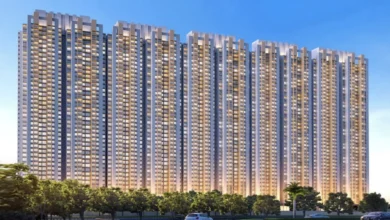
Godrej Properties, for example, has introduced a centralised treated fresh air (CTFA) system at its South Delhi project on Mathura Road. The system draws outdoor air, filters pollutants such as PM2.5, and circulates cleaner air indoors. Integrated with VRF air-conditioning technology, the project claims reduced indoor volatile organic compounds (VOCs) and carbon dioxide levels. The premium residences—2, 3, and 4 BHK units—are priced from around ₹2.4 crore onwards, with air quality positioned as a key differentiator.
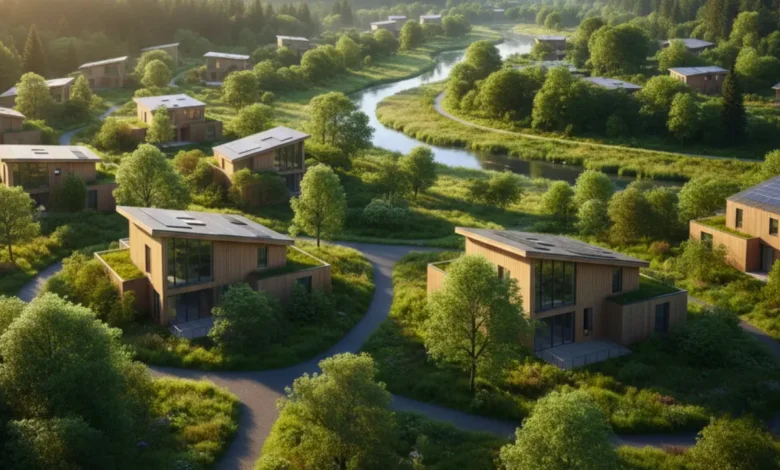
Similarly, Max Estates is leaning on landscape-led planning. Its Dwarka Expressway and Gurugram projects emphasise large-scale green buffers and forest ecosystems. Estate 361 in Sector 36A, Gurugram, is built around a “LiveWell” philosophy, featuring over 2.5 lakh sq ft of forest greens, more than 1,000 indigenous trees, and over 50 plant species tailored to local climate conditions.
According to Gaurav Mavi, co-founder at real estate consultancy BOP, air-purification systems are likely to become standard features in upcoming residential launches—much like air-conditioning became mainstream over the past two decades.
Experts urge caution on marketing claims
While the rise of low-AQI homes reflects genuine demand, experts caution against oversimplified claims.
Sarang Kulkarni, Managing Director at Descon Ventures, explained that maintaining low indoor AQI is technically complex. “The easiest way to keep AQI low indoors is to restrict ventilation. The moment you bring in fresh outdoor air, dust and smog follow,” he said.
Commercial buildings solve this through treated fresh air (TFA) systems, where incoming air is filtered before circulation. Residential buildings, however, function differently. “Homes have windows, balconies, and natural ventilation. To truly control indoor AQI, buildings would need sealed envelopes and centralised filtration supplying purified air to each apartment through extensive ducting,” Kulkarni said.
Such systems require continuous operation, skilled maintenance, higher electricity loads, and dedicated infrastructure space, adding significantly to construction costs. Even a modest increase of ₹3 per square foot at the construction stage can translate into several lakh rupees for homebuyers, he noted.
Can green spaces really clean the air?
Green buffers and in-project forests also play a role—but with limitations. Trees absorb carbon dioxide and act as partial barriers to particulate matter, but they do not “filter” polluted air the way mechanical systems do.
“Green spaces and filtration systems must work together,” Kulkarni said, adding that project-level interventions alone cannot offset city-wide pollution. “You can build a forest inside a project, but if the surrounding urban environment remains polluted, AQI challenges will persist.”
A larger urban question
The rise of low-AQI homes raises an uncomfortable but urgent question: should access to clean air depend on purchasing power? While technology can improve indoor environments at a micro level, experts stress that sustainable urban planning, stricter emissions control, and preservation of natural ecosystems remain the only long-term solutions.
Until then, clean air—once invisible and free—is increasingly becoming the most expensive amenity in India’s luxury housing market.