

Jeddah Tower Nears 80 Floors, Set to Surpass Burj Khalifa by 2028
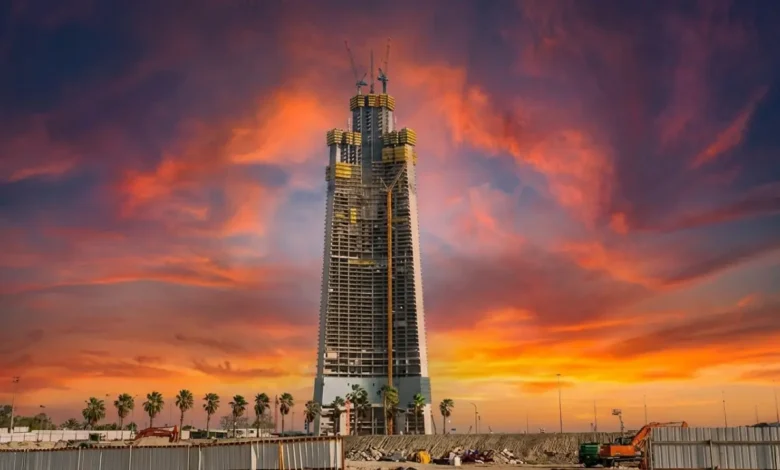
Saudi Arabia’s Jeddah Tower is rapidly rising toward the one-kilometre mark, positioning itself to overtake Dubai’s Burj Khalifa and redefine global skyscraper records by the end of the decade.
-
Construction resumes pace with one new floor every 3–4 days
-
Tower to exceed 1,000 metres, becoming the world’s tallest structure
-
Project forms a core pillar of Saudi Arabia’s Vision 2030
Saudi Arabia’s ambition to host the world’s tallest building is taking concrete shape as the Jeddah Tower has climbed to nearly 80 floors, following the resumption of construction in January 2025. With work progressing swiftly, developers are now targeting 2028 for completion, positioning the tower to overtake Dubai’s iconic Burj Khalifa.
Rising to a planned height of over 1,000 metres, the Jeddah Tower will stand around 172–180 metres taller than the Burj Khalifa, which currently holds the global height record at 828 metres. Once completed, it will become the first building in history to reach the one-kilometre mark.
Originally known as the Kingdom Tower, the project is located within Jeddah Economic City and is a flagship development aligned with Saudi Arabia’s Vision 2030, aimed at transforming the Kingdom into a global hub for tourism, business, and innovation. Reports indicate that a new floor is being added every three to four days, reflecting renewed momentum after years of delays.
The mixed-use skyscraper will feature more than 160 floors, housing a Four Seasons Hotel, luxury residences, serviced apartments, and premium office spaces. One of its standout attractions will be a record-breaking observation deck, offering sweeping views of the Red Sea and the city skyline.
Designed by renowned architect Adrian Smith, who also co-designed the Burj Khalifa, the Jeddah Tower incorporates advanced sustainability and cooling technologies tailored for desert conditions. High-speed elevators, capable of travelling at over 10 metres per second, will ensure rapid vertical movement across the tower’s immense height.
Looking further ahead, Saudi planners have also floated the idea of an even more ambitious structure—the Rise Tower, which could reach two kilometres in height, though the project remains at a conceptual stage.
Burj Khalifa: The Benchmark to Beat
Dubai’s Burj Khalifa remains one of the most celebrated engineering achievements in the world. Completed in 2010 after nearly six years of construction, the tower features 163 floors, multiple observation decks, and At.mosphere, the world’s highest restaurant. Built at an estimated cost of $1.5 billion, it involved over 12,000 workers and engineers and continues to symbolise Dubai’s architectural ambition.
As Jeddah Tower rises steadily, the global spotlight is once again on the Middle East, where a new chapter in the race for vertical supremacy is rapidly unfolding.