

Home Furnishings Industry at a Crossroads as AI Adoption Becomes Critical, Says Wonder CEO
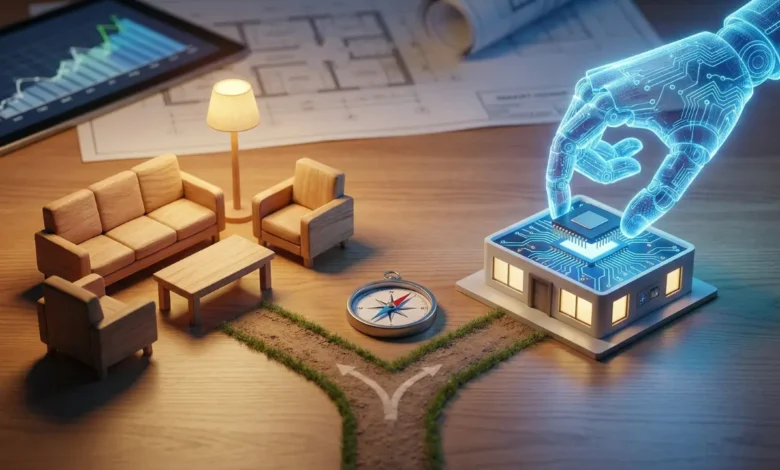
AI is no longer optional for furniture retailers and manufacturers, warns Wonder CEO Kaspar Fopp, as digital buying habits accelerate and businesses risk invisibility if they fail to adapt.
-
AI adoption is becoming essential for sales visibility and customer engagement
-
Poor understanding of AI tools can expose businesses to data and security risks
-
Wonder urges companies to focus on foundational AI models and data control
Tampa, Florida:
The global home furnishings industry is approaching a decisive moment when it comes to artificial intelligence adoption, with companies that delay or ignore AI at risk of falling behind, according to Kaspar Fopp, CEO of Wonder, an AI-powered software company serving furniture and home décor businesses.
In an interview with Furniture Today, Fopp cautioned that artificial intelligence is rapidly reshaping how consumers discover, evaluate, and purchase products online. Retailers and manufacturers that fail to understand and deploy AI tools effectively could soon find their products invisible in a market increasingly driven by AI-assisted search and purchasing decisions.
“AI tools are no longer optional,” Fopp said. “If you don’t understand the tools you’re using, you are at a major disadvantage. Businesses need to know what they are outsourcing, what systems they are signing up for, and how much control they truly have over their creative work and data.”
AI and the risk of digital invisibility
Fopp warned that the consequences of delayed AI adoption may not be immediately visible but could become critical within the next few years. As consumers increasingly rely on generative AI platforms such as GPT-based assistants to research and shop, products that are not properly optimized for AI discovery may simply not appear in search results.
“If adoption continues at the pace we’ve seen over the past two years, millions of people will be making purchases through AI tools,” he said. “If your products don’t show up there, it’s as if they don’t exist.”
According to Fopp, this shift could significantly impact peak shopping periods in the coming years, particularly major retail events like Thanksgiving and Black Friday, where digital discovery will play an even larger role.
Understanding the hidden layers of AI
Fopp compared AI technology to an iceberg, where the visible interface is only a small part of a much larger system beneath the surface. While users interact with applications and chat tools, the real work happens at deeper levels, including data models, infrastructure, and governance systems.
He cautioned that many AI solutions marketed to retailers are little more than surface-level “wrappers” built on top of existing platforms such as ChatGPT. While these tools may appear convenient, they can pose serious risks if businesses do not understand how their data is being handled.
“You have even less control if you’re just using a wrapper,” Fopp explained. “You don’t know where your data is stored, what the security standards are, or how that information is being used. Your data could be out there, and you may have no control over it.”
Choosing the right AI strategy
Wonder advises larger retailers and manufacturers to rely on foundational AI models or trusted open tools for specific tasks such as content creation, research, coding, and advertising. Fopp pointed to platforms like Google’s AI tools, Claude by Anthropic for coding, and Higgsfield for image and video recreation as examples of safer, more transparent options when used correctly.
For internal communication and knowledge management, Fopp recommends building customized AI systems that operate within clear boundaries. “Create a custom GPT that is restricted to your organization’s data and not shared externally,” he said. “That way, companies retain ownership and control of their information.”
AI’s limits in creativity
Despite AI’s rapid progress, Fopp emphasized that the technology still has limitations, particularly in creative thinking — a core requirement in the home furnishings industry.
“AI does not create new ideas,” he said. “It recycles existing intellectual property. It can only imagine based on what already exists, not truly think outside the box.”
This limitation, he noted, makes human creativity, design intuition, and brand storytelling more important than ever, even as AI takes over repetitive and data-driven tasks.
The evolution of Wonder
Wonder was founded in 2013 under the name WonderSign, initially focusing on interactive digital kiosks and signage solutions. Early adoption by major furniture retailers, including Ashley, helped the company scale quickly and establish a strong footprint in the industry.
Over time, the company realized that the real value was not in hardware but in data and platform capabilities. In 2025, it rebranded as Wonder to reflect its transformation into a full-scale AI software provider for the home furnishings sector.
“One manufacturer calls it a bedroom group, another calls it a bedroom suite,” Fopp explained. “We normalize all of this information so retailers can operate from one universal product catalog across any application.”
Focusing on fundamentals
Wonder now updates its platform every two weeks to keep pace with the rapidly evolving digital retail environment. According to Fopp, the platform has changed so significantly over the years that it is barely recognizable from its early versions.
Looking ahead, the company plans to focus less on simply displaying manufacturer-provided data and more on optimizing how product information is structured, understood, and delivered to consumers.
The goal, Fopp said, is to help shoppers find, understand, and purchase furniture more easily, while enabling retailers and manufacturers to remain competitive in an AI-driven marketplace.
As AI adoption accelerates across industries, the home furnishings sector faces a clear choice: adapt early and strategically, or risk being left behind in a digital economy where visibility increasingly depends on intelligent systems.