
Gurgaon Real Estate Growth Corridors and Future Investment Hotspots
Real estate success in Gurgaon has always followed new business hubs and infrastructure. The next wave of growth is already visible for investors who focus on future corridors, not past regrets.
-
Missed opportunities like DLF Phase 5 shaped Gurgaon’s growth story
-
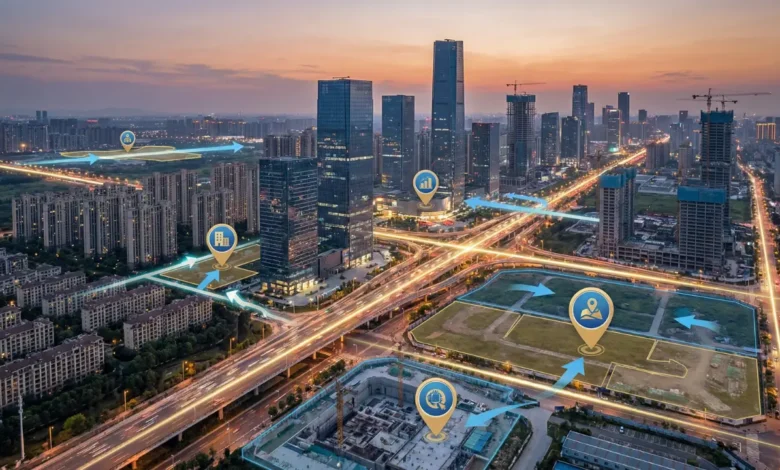
City expansion follows jobs, infrastructure, and available land
-
New residential belts are emerging as Gurgaon’s next value hotspots
Real estate regret is rarely about losing money.
More often, it’s about missing the conviction to invest when the opportunity was clear in hindsight.
In Gurgaon, one of the most common regrets among senior professionals is not buying early in DLF Phase 5. What once looked expensive and far away later became one of the city’s most premium and valuable addresses.
But regret does not create wealth. Understanding how cities grow does.
A few decades ago, Delhi’s business activity was centred around Connaught Place and Bhikaji Cama Place. Then Gurgaon emerged as a new commercial destination. With better planning, wider roads, and modern office spaces, the city pulled economic activity nearly 20 kilometres outward.
DLF Cyber City shifted the commercial gravity of the region, proving a simple truth—cities expand where land and infrastructure exist.
How Gurgaon Keeps Growing
Unlike Delhi and Mumbai, which are constrained by limited land, Gurgaon still has room to expand. And when a city has land, its business districts don’t just get crowded—they move forward.
Every time a new commercial hub develops, residential demand naturally follows. People don’t debate aspirations; they follow jobs, connectivity, and convenience.
This pattern has repeated itself across global cities—and Gurgaon is no exception.
Where Is Gurgaon Moving Next?
Looking beyond nostalgia and emotions, there are a few key residential corridors that appear well-positioned to shape Gurgaon’s next decade of growth. Excluding legacy areas like Golf Links, four belts stand out as long-term contenders.
1. DLF Phase 6 (Sectors 76–77)
This belt is not a replacement for Phase 5—it is more of an upgrade. With larger homes, modern clubs, better open spaces, and proximity to upcoming business districts, it represents the next evolution of premium living in Gurgaon.
As infrastructure expands northwards, these sectors are likely to benefit from both connectivity and lifestyle upgrades.
2. Golf Course Extension Road (Sectors 58–61)
Already one of Gurgaon’s most established corridors, Golf Course Extension Road enjoys a strategic advantage.
It sits close to the Aravalli hills, connects seamlessly with Golf Course Road, and lies adjacent to a massive 200-acre IT SEZ land parcel. This combination of employment hubs, lifestyle projects, and natural surroundings makes it a powerful long-term micro-market.
3. Sector 36A – Near Global City Gurgaon
This is where the real long-term story is still unfolding.
Nearly 1,000 acres have been planned exclusively for commercial development under the Global City Gurgaon project. With high Floor Area Ratio (FAR) and city-centre positioning, this business district is set to become one of the largest in North India.
When such a large employment hub becomes operational, residential demand in surrounding areas will rise organically. For investors with patience, this belt holds strong future potential.
4. SCDA Billionaires Row – Sector 111, Dwarka Expressway
One of the most ambitious developments on the Dwarka Expressway, this zone benefits from large-scale land consolidation and proximity to Delhi.
With multiple branded residences and high-end retail planned, it is designed as an exclusive micro-market. It won’t cater to the mass segment—and that exclusivity is precisely what gives it long-term appeal.
The Hard Truth About Real Estate Timing
Most people enter real estate when an area has already become popular dinner-table conversation. By then, a large part of the appreciation cycle is already over.
Real wealth in property is created before consensus—when infrastructure, developers, and employment nodes quietly align.
The smarter question for buyers and investors is not:
“What opportunity did I miss?”
It is:
“Where is the city moving next, and am I early enough?”
Think Like Capital, Not Like a Buyer
Successful real estate investing is not about emotions or familiarity. It is about tracking urban expansion, understanding infrastructure cycles, and identifying where the next business district will emerge.
When viewed from that lens, Gurgaon looks very different. It no longer appears as a single city, but as a collection of evolving growth corridors—each with its own future trajectory.
Those who understand this shift today will build the next generation of real estate wealth.