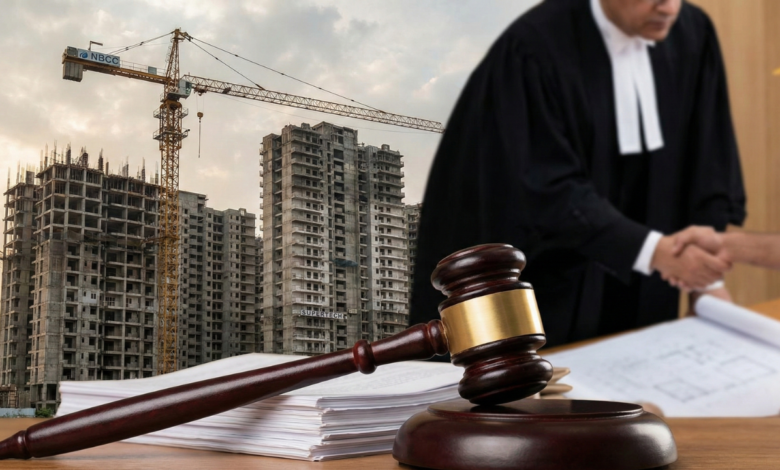
In a significant development for India’s stressed real estate sector, the Supreme Court of India has upheld a ruling by the National Company Law Appellate Tribunal (NCLAT), clearing the way for NBCC to manage 16 housing projects originally developed by Supertech.
The verdict brings long-awaited legal certainty to the management of these stalled developments and establishes a clear operational framework for moving them forward. With the apex court’s approval, NBCC now has full authority to oversee construction and execution across all 16 projects.
What the Court Decided
By affirming the NCLAT order, the Supreme Court has formally validated NBCC’s role as the managing entity. The ruling effectively removes procedural roadblocks that could have delayed progress and gives NBCC a strong legal mandate to take charge of planning, execution, and coordination.
Industry observers say the judgment is a crucial step toward restoring confidence among homebuyers who have been waiting for clarity on the fate of these projects.
Key Project Parameters
-
Managing Entity: NBCC
-
Number of Projects: 16
-
Original Developer: Supertech
-
Approving Authority: NCLAT
-
Final Legal Validation: Supreme Court of India
What This Means for Homebuyers and Projects
The decision is expected to bring much-needed stability to the affected developments. NBCC’s involvement is likely to introduce structured project management, improved oversight, and a clearer timeline for execution. With judicial backing now firmly in place, the focus can shift from litigation to on-ground delivery.
Legal experts note that the ruling also sets an important precedent by demonstrating how stalled real estate projects can be placed under a central, court-approved management framework—reducing uncertainty for buyers and lenders alike.
A Clear Legal Framework Going Forward
By endorsing the NCLAT’s decision, the Supreme Court has created a definitive legal pathway for NBCC to proceed with its responsibilities. This removes ambiguity around authority and accountability, allowing construction activities to move ahead without fear of further legal disruption.
For thousands of affected homebuyers, the judgment offers renewed hope that long-pending projects may finally see steady progress toward completion.