UltraTech Cement: How Strategy and Scale Created India’s Market Leader
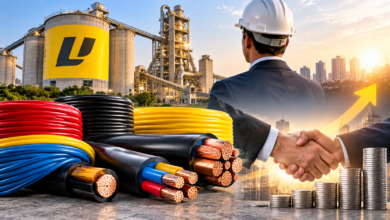
From a former L&T cement unit to India’s biggest producer, UltraTech Cement’s journey highlights the power of timely acquisitions, aggressive capacity expansion, and disciplined execution that reshaped the country’s cement industry.


-
UltraTech grew from under 70 MTPA to nearly 200 MTPA capacity in less than a decade
-
Strategic acquisitions helped build a strong pan-India footprint
-
Company targets crossing 200 MTPA capacity by FY26, ahead of schedule
UltraTech Cement’s journey from a divested business unit in 2004 to India’s largest cement manufacturer is one of the most striking growth stories in Indian industry. Often seen as a late entrant compared to century-old rivals, UltraTech actually began with a strong foundation — and then scaled faster than anyone else.
Today, UltraTech stands among the world’s largest cement producers outside China, driven by a clear strategy: acquire wisely, expand aggressively, and integrate efficiently.
From L&T to UltraTech: The Beginning
UltraTech’s origins trace back to Larsen & Toubro’s cement division, which came into the Aditya Birla Group following a long corporate battle over L&T’s ownership. After Kumar Mangalam Birla acquired L&T shares from the Ambani group in 2001, negotiations led to a landmark deal in 2003: Birla exited L&T in exchange for its cement business.
This, combined with earlier cement assets from Grasim and Indian Rayon, created a solid but fragmented platform. In 2004, these businesses were branded as UltraTech Cement. By 2010, all Aditya Birla Group cement operations were consolidated under UltraTech, forming a single national player.
That consolidation marked the start of UltraTech’s rapid ascent.
Acquisitions That Changed the Game
Unlike many competitors that relied mainly on slow greenfield expansion, UltraTech leaned heavily on acquisitions to build scale quickly.
The turning point came in 2017 with the acquisition of Jaypee Cement’s assets, adding 21.2 million tonnes per annum (MTPA) and strengthening UltraTech’s presence in north and central India. This was followed by the takeover of Binani Cement in 2018 and the merger of Century Textiles’ cement business in 2019 — a move that pushed UltraTech past the 100 MTPA mark, making it the first cement company outside China to achieve that in a single country.
Later acquisitions, including India Cements and Kesoram Industries’ cement business, further strengthened UltraTech’s footprint, particularly in southern India. Analysts expect UltraTech’s southern market share to rise sharply over the next few years as these assets are fully integrated.
Crucially, UltraTech didn’t just buy capacity — it made it productive. Plants acquired from Jaypee saw utilisation jump from around 13% at takeover to over 95% within two years, highlighting the company’s execution strength.
Organic Expansion Keeps Pace
Alongside acquisitions, UltraTech invested heavily in new capacity. Between 2020 and 2024 alone, the company announced multi-thousand-crore expansion plans, including a Rs 5,477 crore investment to add nearly 12.8 MTPA.
By FY25, UltraTech reported grey cement capacity of 192.26 MTPA with sales volumes of 135.83 million tonnes. This dual approach — buying existing assets while simultaneously building new ones — allowed UltraTech to scale at unmatched speed.
The company is now on track to cross 200 MTPA by FY26, achieving a long-term target earlier than expected.
Building a True Pan-India Network
A key advantage for UltraTech has been its national presence. While many rivals remained regionally concentrated, UltraTech built a balanced footprint across north, south, west, east, and central India.
This geographic diversity helps smooth demand cycles and improves logistics efficiency. Integrated supply chains, dealer networks, and optimised freight routes have reduced costs and improved delivery speed — critical factors in a business where transportation makes up a large share of expenses.
Operational Discipline Behind the Scale
UltraTech’s leadership is not just about size. The company invested heavily in operational efficiency, including renewable energy, waste heat recovery systems, and fuel optimisation. These initiatives lowered energy costs and strengthened margins.
By integrating acquired plants into a single operating culture, UltraTech improved productivity across its network, turning expansion into sustainable profitability rather than just headline capacity.
Outrunning the Competition
UltraTech’s capacity has surged from about 66 MTPA in 2016 to nearly 190 MTPA by 2025 — more than doubling in less than a decade. Competitors, including major groups, have expanded but at slower speeds or with stronger regional focus.
Even large portfolios like ACC and Ambuja, now under Adani Group, are targeting capacities significantly below UltraTech’s current levels. Other players such as Shree Cement and Dalmia Bharat have grown steadily but prioritised regional strength and margins over national scale.
UltraTech’s singular focus on volume leadership, cost efficiency, and national reach has given it a structural edge.
Where UltraTech Stands Today
UltraTech Cement is now firmly established as India’s largest cement producer and one of the biggest globally. Its rise reflects a rare combination of strategic timing, acquisition discipline, and operational integration.
With capacity nearing 200 MTPA and further expansion underway, the company continues to consolidate its leadership in a traditionally fragmented industry.
Conclusion
UltraTech Cement’s transformation from an L&T divestment into India’s cement powerhouse is a case study in how scale, strategy, and execution can reshape an entire sector. Through smart acquisitions, aggressive capacity building, and efficient integration, UltraTech created a blueprint for dominance.
From under 70 MTPA to nearly 200 MTPA in less than a decade, its journey underscores the power of long-term planning backed by disciplined execution — proving that in heavy industry, leadership is built not just with assets, but with strategy.