Residential Architecture Trends in 2025: How Modern Homes Are Being Redefined
Residential Architecture Trends in 2025 reveal a decisive shift toward wellness-focused design, sustainability, smart technology, and flexible living spaces, reflecting how modern homes are adapting to evolving lifestyles and climate realities.

-
Wellness, sustainability, and flexibility dominate residential design choices
-
Smart technology is now seamlessly embedded into architecture
-
Homes in 2025 balance global design with local culture and climate
Residential Architecture Trends in 2025 clearly show that homes are no longer designed only for visual appeal or resale value. Instead, residential architecture has entered a more thoughtful phase—one where health, functionality, sustainability, and personal identity are shaping how homes are planned and built.
As lifestyles continue to evolve due to hybrid work, climate challenges, and changing family structures, architects and developers are responding with designs that prioritise everyday comfort and long-term resilience. From compact city apartments to expansive villas, the focus in 2025 is on homes that actively support the people living in them.
Wellness-Driven Design Takes Centre Stage
One of the most defining residential architecture trends in 2025 is the rise of human-centred design. Homes are increasingly viewed as wellness environments rather than static shelters. Layouts now consider mental health, physical comfort, and emotional well-being.
Natural light, cross-ventilation, quiet zones, and strong indoor–outdoor connections are being built into architectural planning from the earliest stages. Biophilic elements—such as indoor plants, courtyards, water features, and natural materials—are no longer decorative extras but core design components. Improved indoor air quality through low-VOC materials and better ventilation systems has also become standard.
Sustainability Moves from Feature to Foundation
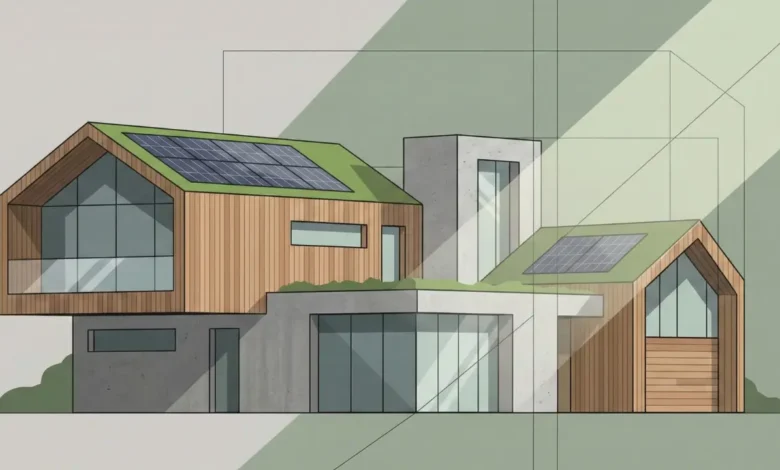
Sustainability is no longer optional in 2025. It is now a baseline expectation across most residential developments. Architects are increasingly designing homes that reduce energy demand through passive strategies such as orientation, shading, insulation, and thermal mass.
Eco-friendly materials, rainwater harvesting systems, solar panels, and efficient waste management solutions are becoming common even in mid-segment housing. In markets like India, green certifications and regulatory incentives have further accelerated the adoption of sustainable architecture, making environmentally responsible homes more accessible.
Smart Homes, Thoughtfully Integrated
Technology has become an invisible yet powerful layer within residential architecture. Instead of standalone gadgets, smart systems are now seamlessly integrated into building design. Lighting, climate control, security, and energy monitoring systems are increasingly automated and centrally managed.
In 2025, smart architecture focuses on practicality—reducing energy waste, improving safety, and simplifying daily routines. Touchless controls, sensor-based monitoring, and predictive energy usage are becoming standard features rather than luxury upgrades.
Flexible Spaces for Modern Living
With work-from-home, online learning, fitness routines, and creative pursuits becoming part of daily life, residential architecture trends in 2025 strongly favour flexibility. Homes are designed with adaptable spaces that can change function throughout the day or over time.
Sliding partitions, multi-purpose rooms, foldable furniture, and semi-open layouts allow residents to personalise spaces without structural changes. Even outdoor areas such as balconies, terraces, and patios are being designed as functional extensions of interior living.
Luxury Redefined: Experience Over Size
Luxury housing in 2025 is no longer defined by sheer scale. Instead, buyers value quality, craftsmanship, and thoughtful detailing. Smaller but well-designed homes with premium materials, intelligent lighting, and curated interiors are often preferred over larger, inefficient layouts.
This shift toward “small-scale luxury” is visible across price segments, where even affordable housing incorporates design elements that enhance comfort and aesthetics without significantly increasing costs.
Cultural Identity Shapes Modern Homes
While global design influences remain strong, there is a growing emphasis on local context and cultural identity. Residential architecture in 2025 increasingly blends contemporary layouts with regional materials, climate-responsive elements, and traditional spatial planning.
In countries with rich architectural heritage, this fusion helps create homes that feel modern yet rooted—balancing global aspirations with local sensibilities.
Outdoor Living Gains Equal Importance
Outdoor spaces are now treated as essential living areas rather than leftover spaces. Landscaped courtyards, rooftop gardens, private decks, and shared green zones are being integrated into residential planning.
These spaces support wellness, social interaction, and climate comfort, especially in dense urban environments. Community-level outdoor amenities are also being prioritised in large housing developments.
Designing for Inclusivity and Resilience
Universal design principles are becoming mainstream in residential architecture trends in 2025. Step-free access, wider doorways, adaptable fixtures, and age-friendly layouts cater to multigenerational living.
At the same time, climate resilience is shaping design decisions. Flood-resistant planning, heat-mitigating façades, backup power systems, and water security features are increasingly seen as necessities rather than upgrades.
Conclusion
Residential Architecture Trends in 2025 reflect a clear transition toward smarter, healthier, and more responsible homes. Architecture is no longer just about form—it is about how spaces function, adapt, and support life over decades.
For architects, developers, and homeowners alike, the message is clear: the homes of 2025 are designed not just to be lived in, but to live with their residents—responding intelligently to people, climate, and culture