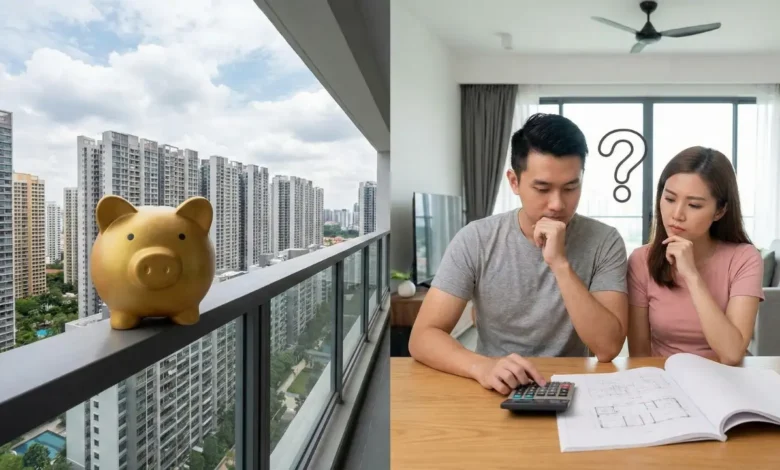
For generations, buying a flat has symbolised financial stability for India’s middle class. Apartments were widely promoted as safe, long-term assets that would appreciate steadily and provide security for future generations. But as buildings age and ownership costs climb, many homebuyers are rethinking whether flats truly create wealth or merely meet housing needs.
This debate has gained traction on social media, where users are increasingly questioning the investment logic behind apartment purchases. In a widely discussed Reddit post, one user cautioned that many buyers—especially non-resident Indians (NRIs)—enter the market believing flats will deliver strong long-term returns, only to face poor resale prospects or illiquidity decades later. According to the post, while the first home remains a necessity, additional purchases often turn speculative and may not justify their cost.
Concerns are not limited to resale alone. Several users highlighted how construction quality and ageing infrastructure can erode value over time. One Redditor shared an example of an independently built house in a small town that began showing cracks and water leakage within five years, despite the use of premium materials. The user pointed to rising labour costs and a shortage of skilled workmanship as challenges that can compromise structural durability, particularly in mass housing projects.
Maintenance expenses have emerged as another major pain point, especially in gated communities. Buyers noted that monthly maintenance charges tend to rise every year, adding to the long-term cost of ownership. Some users claimed that so-called sinking funds—meant to cover future repairs—are often diverted toward upgrades such as electric vehicle charging stations, solar panels, or waste management systems, offering limited protection against large future expenses.
Others compared flat ownership with alternative investment options, arguing that once high purchase prices, taxes, and maintenance costs are factored in, holding an apartment for 30 to 40 years may deliver weaker returns than passive investments. While flats may appreciate in the early years, long-term gains can be offset by rising expenses and uncertainty around redevelopment.
As Indian cities densify and older buildings approach the end of their design life, the question of whether flats remain effective wealth creators is becoming more pressing. For many buyers, the answer may depend less on price appreciation and more on realistic expectations around upkeep, resale potential, and long-term usability.