Sunrise Homes, High-Rises, and Parking: How Indians Are Choosing Housing in 2025
Indian homebuyers in 2025 are prioritizing lifestyle, infrastructure, and functionality, with preferences for sunrise-facing homes, high-rises, parking, and emerging micro-markets across Tier I cities.

-
51% of Tier I buyers prefer mid-segment homes, while luxury housing demand remains concentrated in premium micro-markets.
-
High-rise living gains traction in Mumbai, Bengaluru, Hyderabad, and Kolkata, reflecting urban densification trends.
-
Functional priorities such as parking, infrastructure readiness, and lifestyle amenities increasingly influence home selection.
In 2025, Indian homebuyers are making more informed and intentional decisions, balancing affordability, lifestyle, and long-term livability.
A majority of 51% of buyers in Tier I cities are opting for mid-segment homes, citing affordability as a key factor. Meanwhile, luxury housing continues to attract niche buyers in premium micro-markets such as Dwarka Expressway, Noida Expressway, Sarjapur Road, Gachibowli, and Koregaon Park, where 75–80% of demand is concentrated. These areas benefit from emerging high-end residential pin codes and strong market credibility.
Lifestyle Preferences Take the Lead
Lifestyle considerations are increasingly shaping home selection. Nearly 35–40% of buyers in NCR and Mumbai prefer sunrise-facing residences, highlighting the value placed on natural light, wellness, and overall quality of daily living. In Kolkata, 42% of buyers seek homes overlooking the Ganga, reflecting how cultural and environmental context still strongly influence residential choices in legacy markets.
High-Rises and Vertical Living
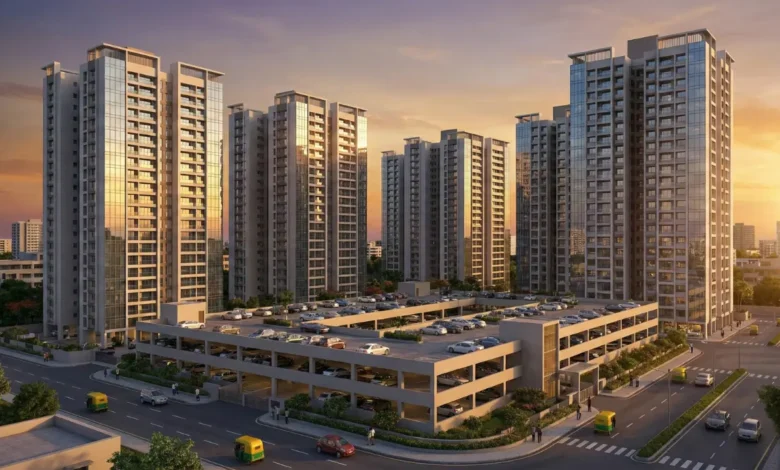
Vertical living is becoming mainstream in India’s congested metros. In Mumbai, 41% of buyers now prefer high-rise developments (G+5 and above). Other cities such as Bengaluru, Hyderabad, and Kolkata report 30–37% of buyers open to tower living, indicating a shift toward denser, globally aligned urban housing patterns.
Infrastructure and Emerging Localities
Infrastructure-led confidence is driving interest in emerging neighborhoods. In Ahmedabad and Hyderabad, 30–35% of buyers are investing in upcoming localities backed by major infrastructure projects, demonstrating a willingness to purchase ahead of completion cycles.
Functional Needs Shape Preferences
Practical considerations such as parking are influencing home layouts. 70–73% of buyers in Gurugram, Greater Noida, and Bengaluru now require at least two parking spaces, while buyers in Thane and Ahmedabad show more flexibility regarding parking norms.
Ownership vs. Resale Dynamics
Home ownership patterns vary by region. Cities like Mumbai, Navi Mumbai, Thane, and Pune see 40–50% of buyers opting for resale homes, driven by readiness and established infrastructure. In contrast, 63–67% of buyers in Ahmedabad, Hyderabad, and New Delhi prefer new project launches, reflecting confidence in upcoming developments and pricing potential.
Rental and PG Trends
Rental behavior is increasingly split between urgency and planning. In Kolkata and Ahmedabad, nearly 50% of renters seek immediate move-in options, while 20–23% of renters in Bengaluru and Mumbai plan their searches three months in advance, reflecting mobility-driven decisions in major job markets. Lifestyle also plays a role, with Chennai and Bengaluru accounting for nearly 50% of India’s rental searches, and 26% of Bengaluru renters prioritizing lifestyle-focused residences.
Demand patterns differ by city: Noida and Greater Noida remain dominated by bachelor tenants, while Thane and Chennai see stronger family-led demand. These trends illustrate a growing sophistication in the housing market, where buyers and renters are making choices based on long-term benefits rather than short-term convenience.
Housing demand in 2025 reflects a clear shift toward informed, intentional decision-making. Buyers and renters prioritize livability, infrastructure readiness, and micro-market credibility. This trend is expected to strengthen in 2026 as urban infrastructure matures.