How Concrete in Buildings Quietly Helps Absorb Carbon Emissions
New research reveals that cement-based buildings and infrastructure gradually absorb carbon dioxide over time, slightly offsetting emissions from cement production and prompting fresh debate on how construction impacts climate change.

-
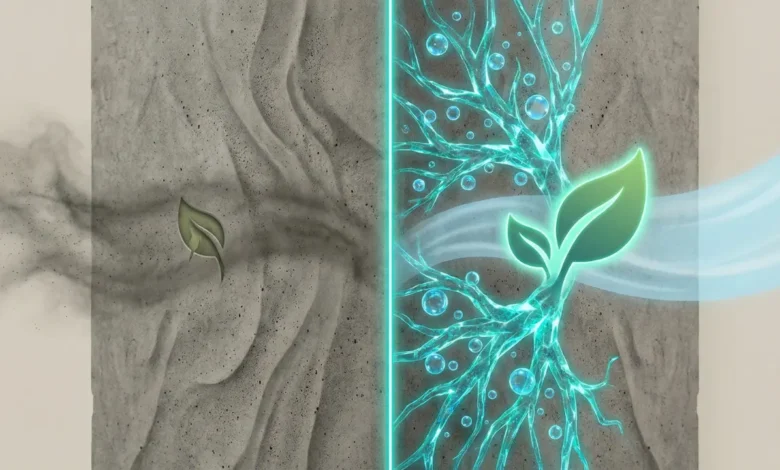
Concrete absorbs CO₂ over decades through a natural chemical process
-
MIT study estimates millions of tonnes of carbon locked annually
-
Findings could reshape how construction emissions are counted globally
Cement is often viewed as one of the biggest climate culprits, and for good reason. Producing cement requires energy-intensive kilns that release vast amounts of carbon dioxide, making it one of the largest industrial sources of global CO₂ emissions, especially in fast-growing economies like India.
However, new research suggests that the climate story of cement does not end once construction is complete.
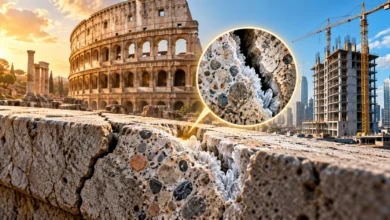
A study by the MIT Concrete Sustainability Hub has found that cement-based structures — including buildings, roads, bridges, and other infrastructure — slowly absorb carbon dioxide from the atmosphere over their lifetime. This phenomenon, known as carbon uptake, means concrete quietly captures and stores carbon for decades after it is poured.
While this process does not negate the emissions generated during cement manufacturing, researchers say it does provide a modest but measurable offset that has largely been ignored in climate accounting.
How Cement Absorbs Carbon
The science behind carbon uptake has been understood for years. Carbon dioxide enters concrete and mortar through tiny pores and reacts with calcium compounds present in cement. This chemical reaction forms calcium carbonate, a stable mineral also found in limestone, effectively trapping carbon in solid form.
What sets the MIT study apart is its scale. Instead of analysing individual buildings, researchers estimated how much carbon is absorbed across entire countries.
Their findings show that cement used in US buildings and infrastructure absorbs more than 6.5 million metric tonnes of CO₂ every year, equivalent to about 13% of the emissions produced during cement manufacturing. In Mexico, carbon uptake was estimated at nearly 5 million tonnes annually, despite significantly lower cement consumption.
Why Some Structures Absorb More Carbon
The study found that carbon uptake varies widely depending on several factors. The most influential include the type of cement, whether it is used in dense concrete or porous mortar, the shape and exposed surface area of structures, and local climate conditions.
For example, exposed pavements and walls absorb carbon differently than buried foundations. Mortar, commonly used in masonry construction, carbonates much faster than dense concrete, making certain buildings more effective at absorbing CO₂.
To manage this complexity, researchers developed hundreds of models representing typical buildings and infrastructure elements. This allowed them to estimate national carbon uptake without evaluating every structure individually.
Two clear trends emerged: newer construction absorbs more carbon because fresh cement reacts more actively with CO₂, and regions that rely heavily on mortar show higher uptake rates.
Implications for Climate Policy
The findings highlight gaps in how industrial emissions are currently calculated. Carbon uptake from concrete is often overlooked or inaccurately represented in national emissions inventories.
“The buildings around us and the concrete beneath our feet are constantly breathing in millions of tonnes of CO₂,” said lead author Hessam AzariJafari, urging global climate frameworks such as those of the Intergovernmental Panel on Climate Change (IPCC) to reflect updated scientific evidence.
Researchers caution that the study does not position cement as climate-friendly. Instead, it underscores the importance of assessing infrastructure over its full lifecycle — from production to decades of use — as countries work to decarbonise construction and adopt more sustainable building practices.