
How can a US citizen transfer his mother’s property in India to himself?

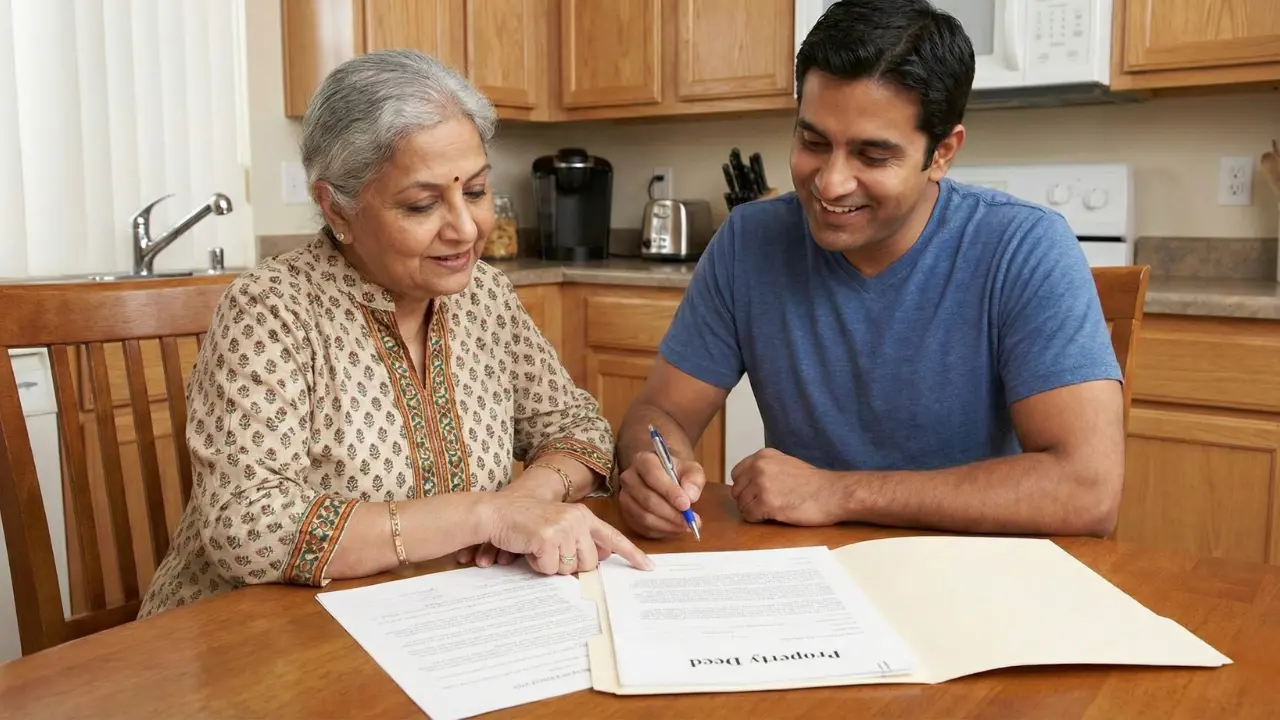
Many Non-Resident Indians (NRIs) and U.S. citizens of Indian origin eventually face a crucial question: “How can I transfer my mother’s property in India to my own name?”
Whether your mother is alive and willing to transfer the property now, or the transfer is intended for after her lifetime, the process can feel confusing from abroad. Indian property laws involve strict documentation, registration, stamp duty, mutation, and specific FEMA regulations.
This guide breaks everything down into simple steps, explaining your legal options, required documents, tax implications, and the safest way to complete the transfer—even if you cannot travel to India.
To acquire property in India (via gift or purchase) without special RBI permission, you generally must hold an OCI (Overseas Citizen of India) or PIO card. If you are a foreign national without an OCI card, the rules are much stricter, though inheritance (via Will) is still allowed.
How to transfer your mother’s property in India to your name?

1. Transfer Through a Gift Deed (Best Method When Mother Is Alive)
A Gift Deed is the most preferred and legally strongest way to transfer the property while your mother is alive. A legal document where your mother voluntarily “gifts” the property to you without monetary exchange.
Why Gift Deed is the Best Method?
- Immediate Ownership: Transfer is effective immediately upon registration.
- Irrevocable: Once registered, it cannot be easily cancelled (preventing future family flips).
- No Disputes: Minimizes future legal conflicts among siblings/heirs compared to a Will.
- Tax Benefit: It is tax-free in India when gifted from mother to child.
Steps to Transfer via Gift Deed
Step 1: Draft the Gift Deed
A lawyer drafts a deed mentioning the donor (Mother), donee (You), full property description, and the voluntary nature of the gift.
Step 2: Prepare Documents
- Mother’s Aadhaar & PAN card.
- Your OCI Card/Passport & Address Proof.
- Original Property Title Deed (Sale Deed/Conveyance Deed).
- Two witnesses (must be physically present at the Registrar’s office).
Step 3: Register the Gift Deed
- Your mother must visit the Sub-Registrar Office (SRO) where the property is located.
- If you are in the U.S.: You do not need to fly down. You can assign a Power of Attorney (POA) to a trusted relative in India to accept the gift on your behalf.
Step 4: Pay Stamp Duty
- Good News: Many states (like Uttar Pradesh and Maharashtra) offer significantly reduced/capped stamp duty fees for blood-relative transfers (e.g., ₹5,000–₹6,000 range in UP).
- Note: Some states still charge the full 2–5%, so check local rates.
2. Transfer Through a Registered Will (Transfer After Mother’s Lifetime)
If your mother prefers to keep ownership during her lifetime, she can transfer it via a Will. Your mother signs a registered Will naming you as the beneficiary. After her passing, the property transfers to you.
The “Probate” Rule (Critical Detail): Probate is a court order validating the Will.
- Mandatory: In “Presidency Towns” (Mumbai, Chennai, Kolkata).
- Optional: In Delhi, UP, Haryana, and most other states (unless there is a dispute).
- Advice: Even if optional, getting a Will probated makes the property title “cleaner” for future buyers.
Pros vs. Cons
- Pros: No stamp duty now; Mother retains control.
- Cons: Transfer is not immediate; Probate (if needed) can take 6–12 months; Wills can be challenged by unhappy relatives.
3. Transfer Using Power of Attorney (If You Cannot Travel)
If you cannot be present for the Gift Deed registration, you can use a Power of Attorney (POA).
- Draft: A lawyer in India drafts the POA.
- Notarize & Apostille: You sign it in the U.S. before a Notary, then get it Apostilled by your State’s Secretary of State.
- Send to India: Courier the physical document to India.
- Adjudication (Don’t Miss This): Your representative in India must take the Apostilled POA to the local District Magistrate/Collector’s office to get it “Adjudicated” (stamped) to make it legally valid for property registration.
- Execution: The POA holder then signs the Gift Deed on your behalf.
Mutation of Property (Very Important)
Registration transfers the title, but Mutation updates the billing.
- Process: Submit the Registered Gift Deed or Will to the local Municipal Authority.
- Why: It changes the name on Property Tax bills and Utility bills. Without Mutation, you cannot sell the property later.
Tax Implications (For U.S. Citizens)
In India 🇮🇳
- Receiving: 100% Tax-Free (Gifts from relatives are exempt).
- Selling: If you sell later, you pay Capital Gains Tax. (TDS of ~20-23% is deducted at source for NRIs).
In the United States 🇺🇸 (IRS Rules)
- Reporting (Form 3520): If the value of the property gift exceeds $100,000 USD in a calendar year, you MUST file IRS Form 3520.
- Penalty: Failure to file can result in penalties up to 25% of the gift value.
- Taxes: You generally do not pay tax on receiving the gift. However, when you sell, you must report the Capital Gain to the IRS. You can claim a Foreign Tax Credit for taxes paid in India to avoid double taxation.
Summary: Which Method is Best?
| Situation | Best Method |
| Mother is alive & willing | Gift Deed (Cleanest title, immediate transfer) |
| Mother wants control for now | Registered Will (Transfer happens after death) |
| You cannot travel to India | Power of Attorney (Used to execute the Gift Deed) |
FAQs
Q1. Can a U.S. citizen own property in India?
Q2. Can I transfer the property without going to India?
Q3. Is Stamp Duty high?
Low Cost: Uttar Pradesh, Maharashtra, Rajasthan (for blood relatives).
Standard Cost: Other states may charge 2%–5%.
Q4. Does a POA transfer ownership